


The US is encouraging Taiawn and China to discuss and resolve their differences over the “one China” policy.
US Secretary of State John Kerry on Wednesday called for cross-strait dialogue on the issue after diplomatic discussions with Chinese Minister of Foreign Affairs Wang Yi (王毅).
A transcript of remarks made during a press conference in Beijing following the talks was issued by the Department of State in Washington.
“Let me just say with respect to one of the issues that the foreign minister raised on Taiwan, that since they’ve [Taiwan] just had an election and a new party has won, the United States does reaffirm the three communiques, which have been the basis of our policy,” Kerry said. “We remain committed to a ‘one China’ policy, but we encourage cross-strait dialogue for resolution of that issue.”
According to the US transcript, Wang said that he had conducted a “candid and in-depth” exchange of views with Kerry and that it had increased mutual understanding.
“I emphasized that Taiwan is the core issue affecting the China-US relationship,” Wang said. “No matter how the situation in Taiwan will evolve, there has been and there will be no change to the basic fact that the mainland and Taiwan belong to one and the same China.”
“The US side should keep its commitment to the ‘one China’ policy, continue to abide by the three Sino-American joint communiques and oppose Taiwan independence and take concrete actions to support the peaceful development of cross-strait relations,” he said.
Kerry said he was looking forward to upcoming meetings with Chinese President Xi Jinping (習近平) and Chinese State Councilor Yang Jiechi (楊潔篪).
While he gave no details, Taiwan is also likely to be discussed at those meetings.
According to the transcript, Kerry said the US and China were determined to cooperate where they could and to deal with differences constructively.
“That determination continues to drive our approach on issues and we have seen it play out as we have made progress and discussed issues like cybersecurity, climate change, wildlife trafficking, implementing the Joint Plan of Action on Iran, the Ebola crisis and Afghanistan,” he said.
Kerry said that when China and the US were able to cooperate, they were better able to work toward a shared goal and accomplish more for everybody.
Wang said that South China Sea islands had historically belonged to China and that China had a right to protect its own territorial sovereignty and lawful and legitimate maritime rights and interests.
“At the same time, China is committed to upholding peace and stability in the South China Sea,” he said.
Wang said that China was committed to managing differences through dialogue and wanted to reach peaceful settlement of the disputes through negotiation.
Kerry said that he had stressed the importance of finding common ground among the claimants in the South China Sea and avoiding a destabilizing cycle of mistrust or escalation.
Wang said that China had given a commitment not to engage in militarization.
“On the islands and the reefs stationed by China, we have built up quite a few civilian installations and facilities for self-defense, but the international law has given all sovereign countries the right of self-protection,” Wang said.
“If one equates such a right to militarization, then the South China Sea was militarized long ago and China was not the first party that started militarization,” he added.

The Centers for Disease Control (CDC) yesterday reported the first case of a new COVID-19 subvariant — BA.3.2 — in a 10-year-old Singaporean girl who had a fever upon arrival in Taiwan and tested positive for the disease. The girl left Taiwan on March 20 and the case did not have a direct impact on the local community, it said. The WHO added the BA.3.2 strain to its list of Variants Under Monitoring in December last year, but this was the first imported case of the COVID-19 variant in Taiwan, CDC Deputy Director-General Lin Ming-cheng (林明誠) said. The girl arrived in Taiwan on

South Korea is planning to revise its controversial electronic arrival card, a step Taiwanese officials said prompted them to hold off on planned retaliatory measures, a South Korean media report said yesterday. A Yonhap News Agency report said that the South Korean Ministry of Foreign Affairs is planning to remove the “previous departure place” and “next destination” fields from its e-arrival card system. The plan, reached after interagency consultations, is under review and aims to simplify entry procedures and align the electronic form with the paper version, a South Korean ministry official said. The fields — which appeared only on the electronic form
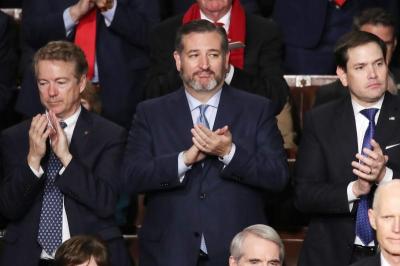
A bipartisan group of US senators has introduced a bill to enhance cooperation with Taiwan on drone development and to reduce reliance on supply chains linked to China. The proposed Blue Skies for Taiwan Act of 2026 was introduced by Republican US senators Ted Cruz and John Curtis, and Democratic US senators Jeff Merkley and Andy Kim. The legislation seeks to ease constraints on Taiwan-US cooperation in uncrewed aerial systems (UAS), including dependence on China-sourced components, limited access to capital and regulatory barriers under US export controls, a news release issued by Cruz on Wednesday said. The bill would establish a "Blue UAS

The Ministry of Foreign Affairs (MOFA) is suspending retaliation measures against South Korea that were set to take effect tomorrow, after Seoul said it is updating its e-arrival system, MOFA said today. The measures were to be a new round of retaliation after Taiwan on March 1 changed South Korea's designation on government-issued alien resident certificates held by South Korean nationals to "South Korea” from the "Republic of Korea," the country’s official name. The move came after months of protests to Seoul over its listing of Taiwan as "China (Taiwan)" in dropdown menus on its new online immigration entry system. MOFA last week


 RSS
RSS