


Democratic Progressive Party (DPP) presidential candidate Tsai Ing-wen’s (蔡英文) campaign office yesterday released data on donations it has received and its campaign expenditures, urging Chinese Nationalist Party (KMT) presidential candidate Eric Chu (朱立倫) to follow suit.
The data — released by the office at a news conference in Taipei yesterday morning — showed that Tsai received NT$405,345,961 (US$12,346,063 at current exchange rates) in donations between May 26 and Nov. 22.
During the same period, the office spent NT$195,055,578 on its campaign, on items including transport, personnel, the rents of its offices, and others.

Photo: Liu Hsin-de, Taipei Times
Based on data released by the office in September, donations to Tsai’s campaign in the past three months have increased by NT$329,681,840, from the NT$75,664,121 received between May 26 and Aug. 31.
“When it comes to campaign funds, the DPP always has to train its own soldiers and grow its own food,” Tsai’s campaign chief executive officer Lin Hsi-yao (林錫耀) told the news conference.
Of the NT$210,290,383 left in its political donations account, NT$73,369,712 is earmarked for spending by Tsai’s national campaign headquarters, while the rest is to be allocated to local campaign offices, Lin said.
Given that Tsai’s national campaign headquarters still has NT$145,333,635 in unpaid bills, it is actually in deficit to a tune of NT$71,963,923, Lin said.
“We spent a little more than NT$700 million on campaigning in the last presidential election and we hope to keep it under that amount this time. However, with only one-and-a-half months left before the Jan. 16 election, we have only managed to raise about NT$400 million so far,” Lin said.
The party received 180,000 micro-donations during the last presidential election, but it has only received 30,000 of these donations so far in this campaign, Lin said, encouraging more DPP supporters to donate to the party.
Lin said a source close to the KMT told him that what that party has paid to a single online advertising company is equivalent to the DPP’s entire budget for online advertising.
“The DPP has twice published data concerning its campaign donations and expenditures. Chu should also make public the sources of his campaign funding and subject them to public scrutiny, so that voters can see whether he has tapped KMT assets to fund his campaign,” Lin said.
When reached by reporters for comment yesterday, Chu said he is considering making the accounts for his campaign office public.
“Tsai’s political donations account has been in existence for six months, while mine was set up only a month ago. We should wait some time before considering whether to release the information,” Chu said.

The Centers for Disease Control (CDC) yesterday reported the first case of a new COVID-19 subvariant — BA.3.2 — in a 10-year-old Singaporean girl who had a fever upon arrival in Taiwan and tested positive for the disease. The girl left Taiwan on March 20 and the case did not have a direct impact on the local community, it said. The WHO added the BA.3.2 strain to its list of Variants Under Monitoring in December last year, but this was the first imported case of the COVID-19 variant in Taiwan, CDC Deputy Director-General Lin Ming-cheng (林明誠) said. The girl arrived in Taiwan on

South Korea is planning to revise its controversial electronic arrival card, a step Taiwanese officials said prompted them to hold off on planned retaliatory measures, a South Korean media report said yesterday. A Yonhap News Agency report said that the South Korean Ministry of Foreign Affairs is planning to remove the “previous departure place” and “next destination” fields from its e-arrival card system. The plan, reached after interagency consultations, is under review and aims to simplify entry procedures and align the electronic form with the paper version, a South Korean ministry official said. The fields — which appeared only on the electronic form
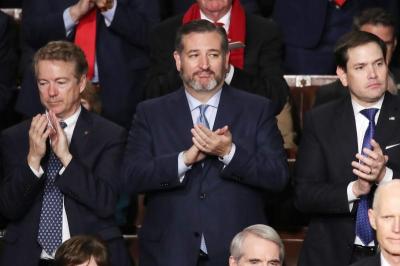
A bipartisan group of US senators has introduced a bill to enhance cooperation with Taiwan on drone development and to reduce reliance on supply chains linked to China. The proposed Blue Skies for Taiwan Act of 2026 was introduced by Republican US senators Ted Cruz and John Curtis, and Democratic US senators Jeff Merkley and Andy Kim. The legislation seeks to ease constraints on Taiwan-US cooperation in uncrewed aerial systems (UAS), including dependence on China-sourced components, limited access to capital and regulatory barriers under US export controls, a news release issued by Cruz on Wednesday said. The bill would establish a "Blue UAS

The Ministry of Foreign Affairs (MOFA) is suspending retaliation measures against South Korea that were set to take effect tomorrow, after Seoul said it is updating its e-arrival system, MOFA said today. The measures were to be a new round of retaliation after Taiwan on March 1 changed South Korea's designation on government-issued alien resident certificates held by South Korean nationals to "South Korea” from the "Republic of Korea," the country’s official name. The move came after months of protests to Seoul over its listing of Taiwan as "China (Taiwan)" in dropdown menus on its new online immigration entry system. MOFA last week


 RSS
RSS