


Taiwan Solidarity Union (TSU) Legislator Chou Ni-an (周倪安) yesterday filed a lawsuit against Chinese Nationalist Party (KMT) Chairman Eric Chu (朱立倫) and Secretary-General Lee Shih-chuan (李四川) for “making arrangements under the table” to replace KMT presidential candidate Hung Hsiu-chu (洪秀柱).
Flanked by members of the TSU Youth Organization, Chou filed a lawsuit with the Supreme Prosecutors’ Office accusing Chu and Lee of conducting so inn a teng (搓圓仔湯, kneading to make rice ball soup), a Hoklo (commonly known as Taiwanese) term that often refers to political schemes involving coaxing a candidate to drop out of a race by offering money, a post-election government position or other enticements.
That would violate Article 84 of the Presidential and Vice Presidential Election and Recall Act (總統副總統選舉罷免法), which stipulates that “anyone who asks for an expected promise or asks a candidate or a person having the qualification of candidate to abandon the campaign or conduct certain actions on by offering bribes or other undue benefits” is punishable by law, Chou said.
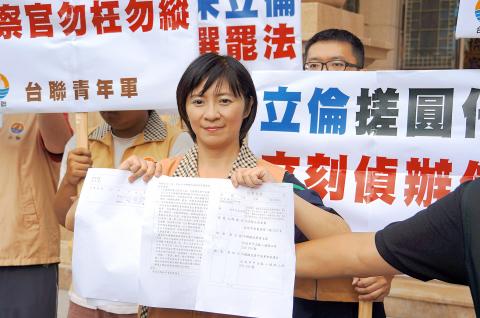
Photo: Chien Lee-chung, Taipei Times
“Chu and Lee met with Hung several times to persuade her to withdraw from the presidential election while presenting some conditions for exchange,” Chou said. “Since [Hung said that] all the meetings have been recorded, I am filing a complaint with the Supreme Prosecutors’ Office, hoping that prosecutors would start an investigation as soon as possible.”
Chou said that although Hung has not registered as a presidential candidate with the Central Election Commission, she has been officially nominated by the KMT national congress and completed all due procedure for party nomination, and thus should be considered “a person having the qualification of candidate” as stipulated in the law.
“It does not matter whether Hung has accepted offers from Chu and Lee. As long as they made the request to persuade Hung to withdraw, they are in violation of the law,” Chou said.
According to the law, violators could be condemned to fixed-term imprisonment of between three and 10 years, and fines of between NT$2 million and NT$20 million (US$60,882 and US$608,828).
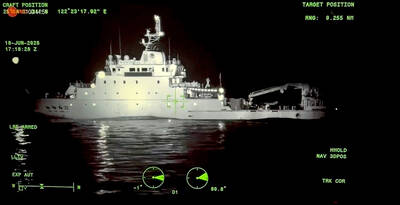
EXCUSES: Beijing is using government and research vessels as a pretext to harass the nation and enter its EEZ, and engage in ‘hegemonic expansion,’ the coast guard said The Coast Guard Administration yesterday said it drove away Chinese oceanographic research vessel Xiang Yang Hong 22 (向陽紅33) from restricted waters after warning it that it was in Taiwan’s exclusive economic zone (EEZ). The Chinese vessel entered restricted waters off the coast of Yilan County’s Suao (蘇澳) at 11:35pm on Thursday, the coast guard said, adding that it dispatched the Lanyu patrol vessel and the boat PP-10077 to shadow the Chinese ship and issue radio warnings ordering it to leave. China has no sovereignty over waters off Taiwan’s east coast, Lanyu’s crew told Xiang Yang Hong 22 over the radio, and demanded

BAIT AND SWITCH: Allowing KMT-run counties to sell to China while the threat of abrupt cancelations hangs overhead is another form of coercion, officials said Beijing is using agricultural purchase offers announced during the Straits Forum to deepen Taiwan’s dependence on the Chinese market, a Taiwanese official said yesterday as they criticized the Taitung County commissioner’s participation in the initiative. During the Straits Forum held in Xiamen on Saturday, Chinese officials announced a sales and purchase agreement for agricultural products from some counties led by the Chinese Nationalist Party (KMT). Taitung County Commissioner Yao Ching-ling (饒慶鈴), who was barred from attending the event in person by the Mainland Affairs Council, participated via video. Under the agreement, China would purchase atemoyas, pomeloes, tea and grouper harvested in Taitung,
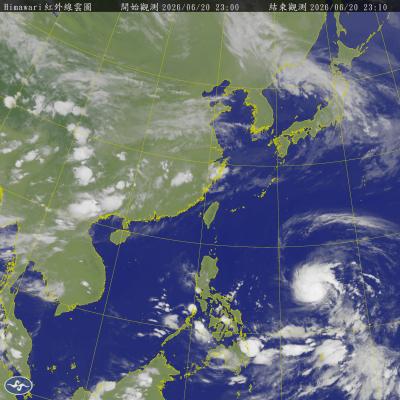
Tropical Storm Mekkhala is forecast to strengthen into a typhoon tomorrow and could come close enough to Taiwan later in the week to prompt a sea warning, the Central Weather Administration (CWA) said yesterday. As of 2 pm, the storm was located 1,870 kilometers southeast of Taiwan's southern tip and moving west- northwest at 23 km per hour. CWA forecaster Cheng Chieh-jen (鄭傑仁) said Mekkhala is expected to continue moving west-northwest through Tuesday under the influence of the Pacific high- pressure system before gradually turning north toward waters east of Taiwan or south of the Ryukyu Islands. The timing and angle of the
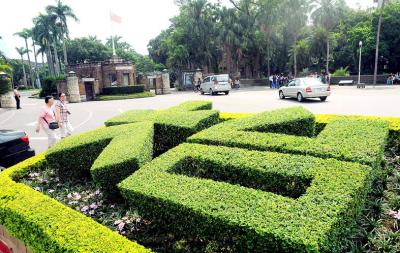
Four Taiwanese universities have been ranked among the world's top 200 institutions in the Quacquarelli Symonds (QS) World University Rankings for next year, the highest Taiwan has ever placed in the category, with National Taiwan University (NTU) achieving its best performance at 54th globally and 17th in Asia. The four Taiwanese institutions in the global top 200 are NTU (54th), National Tsing Hua University (142nd), National Yang Ming Chiao Tung University (177th) and National Cheng Kung University (191st), the rankings showed. All four universities achieved their highest-ever global rankings this year, QS data showed. National Cheng Kung University entered the top 200 for


 RSS
RSS