


The Environmental Protection Administration (EPA) said it has developed technology to manufacture an environmental pavement material using scrapped tires, which could provide better skid resistance and better traction than conventional asphalt, with the material to be widely adopted in Taipei.
The EPA said it produces “rubber-asphalt” concrete by blending ground recycled tires with paving grade asphalt cement and other aggregate materials.
A section of Expressway No. 61 in Taoyuan’s Dayuan District (大園), where heavy-duty vehicles commonly use, was paved with the material on a trial basis in June, the EPA said, adding that the road showed higher resistance to skidding, better road evenness and better drainage ability.
The rubber-asphalt-based surfaces generate less vibration, lower noise and lower carbon dioxide emission than roads made with conventional asphalt, Resource Recycling Fund Management Committee director Hsu Yung-hsing (許永興) said.
While the manufacturing cost of the rubber asphalt concrete is higher than for conventional materials, it is more durable and cost-effective in the long term, as it resists cracking and could thereby reduce maintenance costs, while it can be used at a reduced thickness to significantly reduce building costs, Hsu said.
The concrete drains rainwater faster than conventional asphalt, helping to prevent water accumulation while increasing driving safety, he said.
The nation generates up to 170,000 tonnes of waste tires and recycles about 110,000 tonnes every year, Hsu said, adding that more than 70 percent of recycled tires are supplied to plants as auxiliary fuel, which is not in accordance with environmental demands.
Twenty percent of recycled tires are processed to use in tiles, mattress and collision impact absorbers, he added.
The EPA developed the rubber-asphalt concrete to deal with surplus tires and boost the recycling rate, the EPA said, adding that reusable rubber accounts for about 8 percent of a waste tire, while it takes about 40 tires to make paving material for 1km of road.
The EPA is working with the Taipei City Government to set up an environmental pavement pilot program by having road constructions in the city use rubber-asphalt concrete to make “tires run on tires,” Hsu said.

Taiwanese paleontologists have discovered fossil evidence that pythons up to 4m long inhabited Taiwan during the Pleistocene epoch, reporting their findings in the international scientific journal Historical Biology. National Taiwan University (NTU) Institute of Ecology and Evolutionary Biology associate professor Tsai Cheng-hsiu (蔡政修) led the team that discovered the largest snake fossil ever found in Taiwan. The single trunk vertebra was discovered in Tainan at the Chiting Formation, dated to between 400,000 and 800,000 years ago in the Middle Pleistocene, the paper said. The area also produced Taiwan’s first avian fossil, as well as crocodile, mammoth, saber-toothed cat and rhinoceros fossils, it said. Discoveries
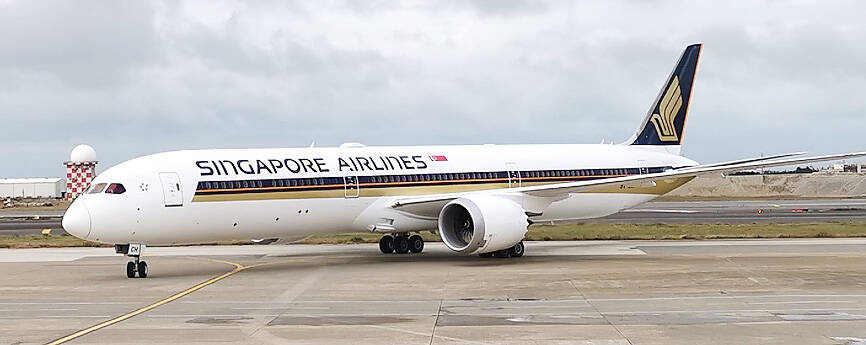
INCREASED CAPACITY: The flights on Mondays, Wednesdays, Fridays and Sundays would leave Singapore in the morning and Taipei in the afternoon Singapore Airlines is adding four supplementary flights to Taipei per week until May to meet increased tourist and business travel demand, the carrier said on Friday. The addition would raise the number of weekly flights it operates to Taipei to 18, Singapore Airlines Taiwan general manager Timothy Ouyang (歐陽漢源) said. The airline has recorded a steady rise in tourist and business travel to and from Taipei, and aims to provide more flexible travel arrangements for passengers, said Ouyang, who assumed the post in July last year. From now until Saturday next week, four additional flights would depart from Singapore on Monday, Wednesday, Friday

WATCH FOR HITCHHIKERS: The CDC warned those returning home from Japan to be alert for any contagious diseases that might have come back with them People who have returned from Japan following the World Baseball Classic (WBC) games during the weekend are recommended to watch for symptoms of infectious gastroenteritis, flu and measles for two weeks, the Centers for Disease Control (CDC) said. Flu viruses remain the most common respiratory pathogen in Taiwan in the past four weeks and the influenza B virus accounted for 55.7 percent of the tested cases, exceeding the percentage of influenza A (H3N2) infections and becoming the local dominant strain, CDC Epidemic Intelligence Center Deputy Director Lee Chia-lin (李佳琳) said at a news conference on Tuesday. There were 82,187 hospital visits for

Alumni from Japan’s Kyoto Tachibana Senior High School marching band, widely known as the “Orange Devils,” staged a flash mob performance at the Grand Hotel in Taipei yesterday to thank Taiwan for its support after the Great East Japan Earthquake. The show, performed on the earthquake’s 15th anniversary, drew more than 100 spectators, some of whom arrived two hours before the show to secure a good viewing spot. The 26-member group played selections from “High School Musical,” “Beauty and the Beast,” and their signature piece “Sing Sing Sing” and shouted “I love


 RSS
RSS