


Kaohsiung is to stop incinerating trash from municipalities that are in arrears of waste management payments in October, which could fuel a national garbage war engulfing municipalities with limited or no capacity to burn trash.
Kaohsiung has been processing garbage from other municipalities as it has four of the nation’s 26 incineration plants nationwide.
It raised a processing fee from NT$1,365 to NT$2,307 per tonne of garbage this year to reflect management costs, resulting in delayed payments by seven municipalities — Yunlin County, Taitung County, Nantou County, Changhua County, Penghu County, Kinmen County and Taichung — totaling NT$183.3 million (US$5.593 million).
With the Kaohsiung plants undergoing an annual overhaul, the Kaohsiung Environmental Protection Bureau on Thursday said that from October it would stop processing garbage from municipalities that have delayed payments, adding that cities and counties like Taitung, Yunlin, Changhua and Taichung either do not use or underuse their own incineration plants and instead have Kaohsiung handle their trash.
The move would affect counties without an incineration plant like Hsinchu and Nantou, as Taichung has capped the amount of trash Nantou can divert to it following the Kaohsiung fee hike, resulting in 3,000 tonnes of unprocessed garbage piling up in Nantou, the Nantou County Government said.
Without ever having their own incineration plants start operation for legal and environmental reasons, Taitung and Yunlin are among the municipalities most affected by Kaohsiung’s policy change.
The Taitung Environmental Protection Bureau said the county generates about 120 tonnes of trash every day, and the bureau has to store trash in the county’s 13 landfills, which are expected to reach capacity in three to six months, as there is no immediate plan to start up an incineration plant that has been idle for a decade since its completion in 2005.
Taitung Environmental Protection Bureau Director Hsieh Ching-chuan (謝清泉) said it is unlikely to activate its incineration plant due to local opposition and environmental concerns, while the plant’s maximum capacity is 300 tonnes per day.
However, Taitung has cleared its debt with Kaohsiung, Hsieh said.
Yunlin has an incineration plant that is designed to process 600 tonnes of garbage per day, but it has been idle since its completion in 2004, while there is more than 17,000 tonnes of trash waiting to be processed in the county, the Yunlin Environmental Protection Bureau said.
The Yunlin County Government said earlier that it did not rule out the possibility of utilizing two incineration plants in Formosa Petrochemical Corp’s naphtha cracker complex in the county’s Mailiao Township (麥寮).
Yunlin Environmental Protection Bureau Deputy Director Chang Chiao-wei (張喬維) said that many incinerators are overloaded with industrial waste, which is allowed to be managed at plants designed to process household waste because the amount of household trash was overestimated.
The central government should set up industrial waste treatment centers to free capacity of the incineration plants, Chang said.
An Environmental Protection Administration (EPA) official said the nation’s 24 active incineration plants — excluding the two inactive plants in Taitung and Yunlin — could process 19,150 tonnes of trash per day, which is enough capacity to handle the 11,807 tonnes of household trash and the 6,253 tonnes of industrial waste produced nationwide daily.
However, local governments have autonomy over their waste disposal plans and pricing mechanisms for processing garbage from other municipalities, and the EPA could only help with negotiations between local governments to accommodate waste treatment needs, Bureau of Environmental Inspection director-general Hsiao Ching-lang (蕭清郎) said.

The military has spotted two Chinese warships operating in waters near Penghu County in the Taiwan Strait and sent its own naval and air forces to monitor the vessels, the Ministry of National Defense (MND) said. Beijing sends warships and warplanes into the waters and skies around Taiwan on an almost daily basis, drawing condemnation from Taipei. While the ministry offers daily updates on the locations of Chinese military aircraft, it only rarely gives details of where Chinese warships are operating, generally only when it detects aircraft carriers, as happened last week. A Chinese destroyer and a frigate entered waters to the southwest
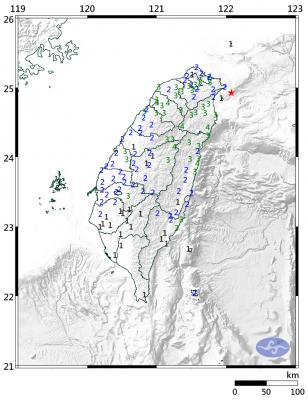
A magnitude 6.1 earthquake struck off the coast of Yilan County at 8:39pm tonight, the Central Weather Administration (CWA) said, with no immediate reports of damage or injuries. The epicenter was 38.7km east-northeast of Yilan County Hall at a focal depth of 98.3km, the CWA’s Seismological Center said. The quake’s maximum intensity, which gauges the actual physical effect of a seismic event, was a level 4 on Taiwan’s 7-tier intensity scale, the center said. That intensity level was recorded in Yilan County’s Nanao Township (南澳), Hsinchu County’s Guansi Township (關西), Nantou County’s Hehuanshan (合歡山) and Hualien County’s Yanliao (鹽寮). An intensity of 3 was

Japanese Prime Minister Sanae Takaichi’s comment last year on Tokyo’s potential reaction to a Taiwan-China conflict has forced Beijing to rewrite its invasion plans, a retired Japanese general said. Takaichi told the Diet on Nov. 7 last year that a Chinese naval blockade or military attack on Taiwan could constitute a “survival-threatening situation” for Japan, potentially allowing Tokyo to exercise its right to collective self-defense. Former Japan Ground Self-Defense Force general Kiyofumi Ogawa said in a recent speech that the remark has been interpreted as meaning Japan could intervene in the early stages of a Taiwan Strait conflict, undermining China’s previous assumptions
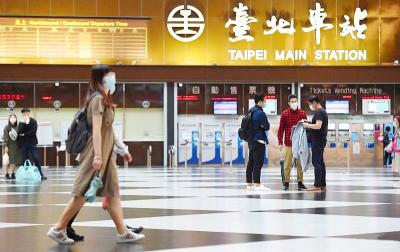
Taiwan Railways Corp (TRC) today announced that Shin Kong Mitsukoshi has been selected as the preferred bidder to operate the Taipei Railway Station shopping mall, replacing the current operator, Breeze Development Co Ltd. Among eight qualified firms that delivered presentations and were evaluated by a review committee, Shin Kong Mitsukoshi was ranked first, while Breeze was named the runner-up, the rail company said in a statement. Contract negotiations are to proceed in accordance with regulations, it said, adding that if negotiations with the top bidder fail, it could invite the second-ranked applicant to enter talks. Breeze in a statement today expressed doubts over


 RSS
RSS