


The Green Party Taiwan and Social Democratic Party (SDP) yesterday said they would register a “Green-SDP Alliance” party with the Ministry of the Interior to field a joint slate of at-large candidates in January’s legislative elections.
Green Party conveners Lee Ken-cheng (李根政) and Chang Yu-ching (張育憬) shook hands with SDP convener Fan Yun (范雲) at a press conference in Taipei after signing a memorandum of understanding.
Legislative candidates from the two parties stood together promising to “fight together to win for the people.”

Photo: Lo Pei-der, Taipei Times
“Compatriots must stand together, because true strength is found in solidarity,” Lee and Fan Yun both said in their speeches at the event, quoting Taiwanese democracy pioneer Chiang Wei-shui (蔣渭水).
“Taiwan needs a new political force aside from two main political parties, which are both biased towards corporations — a political force that would always stand up to defend land, the weak and human rights,” Lee said. “The Green-SDP Alliance will act as a watchdog and an opposition party.”
While negotiating cooperation had been “difficult,” requiring six months of talks, solidarity was important to both sides, he said.
Fan said the alliance would work to “eliminate” the Chinese Nationalist Party (KMT) while “balancing” the Democratic Progressive Party by striving to become the “crucial minority” in the Legislative Yuan.
She urged other “progressive social forces” to stand with them in the legislative elections, saying the alliance’s current membership was “insufficient.”
The Green Party Taiwan was founded in 1996 and won two county and city councilor seats in last year’s local elections.
The Social Democratic Party was founded by members of the civic group Taiwan Citizen’s Union (TCU) in March, following disagreements with TCU members who had launched the New Power Party earlier in the year.
Efforts by the Green Party and New Power Party aimed at collaboration failed.
Lee said that while he remained open to “cooperation” with the New Power Party, registration deadlines would make it difficult to include that party in the alliance’s slate of at-large candidates after they officially register the ticket with the interior ministry.
Any cooperation would likely be limited to harmonizing candidates for legislative districts, he said.
“This is a temporary alliance created to participate in the elections,” said Ku Yu-ling (顧玉玲), a former secretary-general of the Taiwan International Workers’ Association, who was invited to witness the signing of the memorandum. “Exactly where they compromise and how they define the basis for their cooperation is very interesting and important.”
While the memorandum calls for joint campaigning and splitting any campaign contributions and subsidies, the two parties have not drafted a common platform or even drawn up a list of candidates.
Parties must attract 5 percent of the national vote to be eligible for an at-large legislative seat.
A report by the Chinese-language Storm Media on opinion polls released last week placed support for the New Power Party at 5.6 percent of respondents, the Green Party at 2.6 percent and the SDP at less than 1 percent.
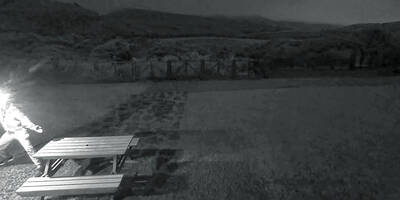
Yangmingshan National Park authorities yesterday urged visitors to respect public spaces and obey the law after a couple was caught on a camera livestream having sex at the park’s Qingtiangang (擎天崗) earlier in the day. The Shilin Police Precinct in Taipei said it has identified a suspect and his vehicle registration number, and would summon him for questioning. The case would be handled in accordance with public indecency charges, it added. The couple entered the park at about 11pm on Thursday and began fooling around by 1am yesterday, the police said, adding that the two were unaware of the park’s all-day live

Yangmingshan National Park’s Qingtiangang (擎天崗) nature area has gone viral after a park livestream camera observed a couple in the throes of intimate congress, which was broadcast live on YouTube, drawing large late-night crowds and sparking a backlash over noise, bright lights and disruption to wildlife habitat. The area’s livestream footage appeared to show a couple engaging in sexual activity on a picnic table in the park on Friday last week, with the uncensored footage streamed publicly online. The footage quickly spread across social media, prompting a tide of visitors to travel to the site to “check in” and recreate the

Minister of Digital Affairs Lin Yi-ching (林宜敬) yesterday cited regulatory issues and national security concerns as an expert said that Taiwan is among the few Asian regions without Starlink. Lin made the remarks on Facebook after funP Innovation Group chief executive officer Nathan Chiu (邱繼弘) on Friday said Taiwan and four other countries in Asia — China, North Korea, Afghanistan and Syria — have no access to Starlink. Starlink has become available in 166 countries worldwide, including Ukraine, Malaysia, the Philippines and Vietnam, in the six years since it became commercial, he said. While China and North Korea block Starlink, Syria is not
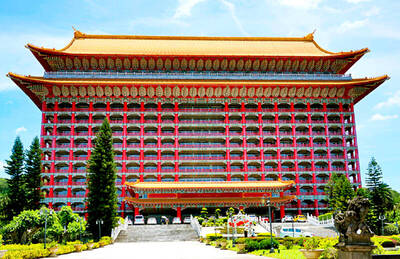
The Grand Hotel Taipei has rejected media reports claiming that the hotel had prevented CBS from broadcasting coverage of the Beijing summit between U.S. President Donald Trump and Chinese President Xi Jinping (習近平) on its premises. Media reports alleging that the hotel owner, dissatisfied with CBS’s coverage, prohibited the network from broadcasting political content on the hotel premises, are not true, the hotel said in a statement issued last night. The reports were “inconsistent with how the hotel actually handled the matter,” it said. The hotel said it received a refund request from a


 RSS
RSS