


Nearly 60 percent of Taiwanese disapprove of students’ rallies and the encirclement of the Ministry of Education compound to express their opposition to a series of revisions to the history curriculum guidelines for senior-high schools, according to the results of a survey commissioned by the Chinese Nationalist Party (KMT) released yesterday
The survey, conducted by Trend Survey and Research on Aug. 1 and Aug. 2, showed that 58.9 percent of respondents said they disapproved of the methods used by the students to express their objections to the revised textbook guidelines, while 36.2 percent said they supported the students’ actions.
Asked if they supported surrounding the compound to demand the resignation of Minister of Education Wu Se-hwa (吳思華), 58.4 percent of respondents replied “No,” while 32.3 percent said “Yes.”
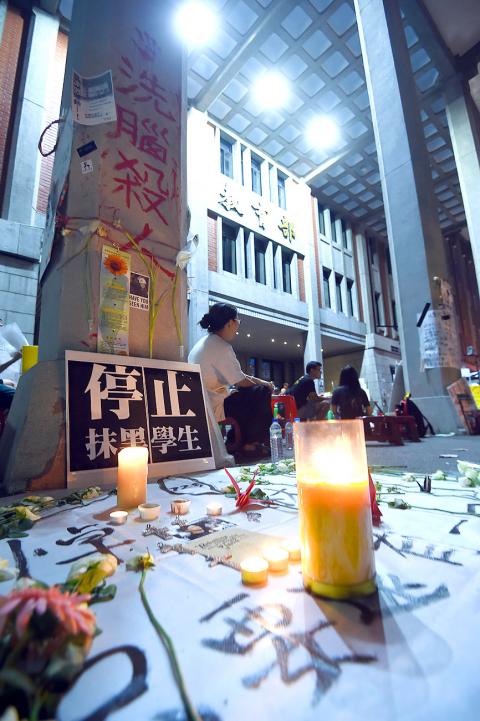
Photo: Fang Pin-chao, Taipei Times
Students have taken to the streets in recent weeks to oppose changes to high-school history curriculum guidelines, which, according to the demonstrators, “are presented from the perspective of Chinese unification.”
The rallies saw student activists climb over a police barrier late on Friday last week into the forecourt of the ministry building, from where they have been confronting police ever since.
The protesters are demanding the withdrawal of the revised curriculum guidelines and the minister of eductaion’s resignation.
In a news conference at the Legislative Yuan after the publication of the survey results, KMT caucus secretary-general Lin Te-fu (林德福) said that the poll was conducted to reveal what “normal people” think about the protesting students’ behavior.
Other social opinions can be observed through the poll, Lin said, adding that “the survey data shows that 57.4 percent [of respondents] think political force should not be used to push students to the front line.”
KMT Legislator Alicia Wang (王育敏) said that many school teachers and principals have agreed that the old and new curriculum guidelines should be adopted at the same time.
She said that true education should present different points of view, allowing students to know that history is not something any particular party can determine.
“If we admit that in Taiwanese society the Republic of China perspective of history and the Taiwanese perspective of history now coexist, subsequent generations should have the right to know both of them,” Wang said.
The survey was conducted among people aged 20 and over in 22 counties and cities nationwide. A total of 800 valid samples were collected. The margin of error was plus or minus 3.5 percentage points.
In response, Democratic Progressive Party (DPP) Legislator Chen Ting-fei (陳亭妃) said the that survey does nothing but raise the tensions between the protesters and the government.
The DPP has also conducted a survey on the issue, the results of which are totally opposite to those of the KMT poll, she said.
According to a survey conducted by the DPP and released on Thursday last week, as many as 72.1 percent of respondents said that implementation of the ministry’s new high-school curriculum guidelines should be postponed, while more than 60 percent think it is inappropriate for the ministry to prosecute the students who stormed the ministry’s compound on Thursday last week.

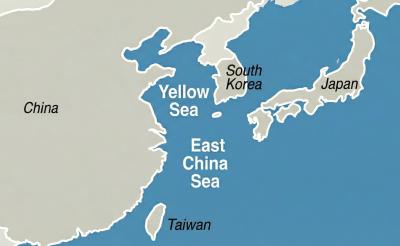
China has reserved offshore airspace in the Yellow Sea and East China Sea from March 27 to May 6, issuing alerts usually used to warn of military exercises, although no such exercises have been announced, the Wall Street Journal (WSJ) reported yesterday. Reserving such a large area for 40 days without explanation is an “unusual step,” as military exercises normally only last a few days, the paper said. These alerts, known as Notice to Air Missions (Notams), “are intended to inform pilots and aviation authorities of temporary airspace hazards or restrictions,” the article said. The airspace reserved in the alert is
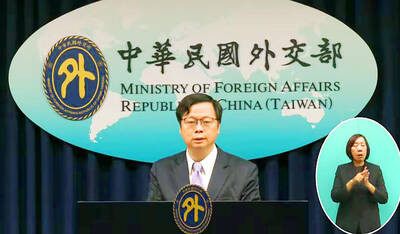
NAMING SPAT: The foreign ministry called on Denmark to propose an acceptable solution to the erroneous nationality used for Taiwanese on residence permits Taiwan has revoked some privileges for Danish diplomatic staff over a Danish permit that lists “Taiwan” as “China,” Eric Huang (黃鈞耀), head of the Ministry of Foreign Affairs’ Department of European Affairs, told a news conference in Taipei yesterday. Reporters asked Huang whether the Danish government had responded to the ministry’s request that it correct the nationality on Danish residence permits of Taiwanese, which has been listed as “China” since 2024. Taiwan’s representative office in Denmark continues to communicate with the Danish government, and the ministry has revoked some privileges previously granted to Danish representatives in Taiwan and would continue to review
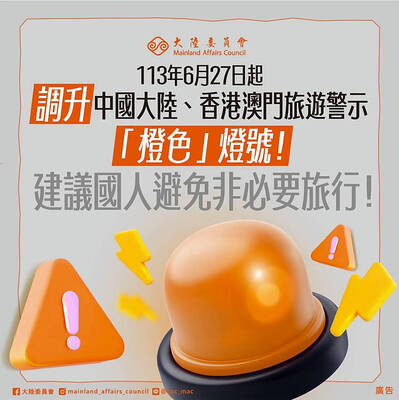
More than 6,000 Taiwanese students have participated in exchange programs in China over the past two years, despite the Mainland Affairs Council’s (MAC) “orange light” travel advisory, government records showed. The MAC’s publicly available registry showed that Taiwanese college and university students who went on exchange programs across the Strait numbered 3,592 and 2,966 people respectively. The National Immigration Agency data revealed that 2,296 and 2,551 Chinese students visited Taiwan for study in the same two years. A review of the Web sites of publicly-run universities and colleges showed that Taiwanese higher education institutions continued to recruit students for Chinese educational programs without
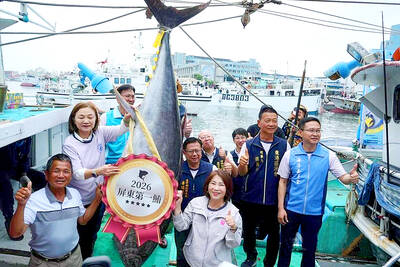
The first bluefin tuna of the season, brought to shore in Pingtung County and weighing 190kg, was yesterday auctioned for NT$10,600 (US$333.5) per kilogram, setting a record high for the local market. The auction was held at the fish market in Donggang Fishing Harbor, where the Siaoliouciou Island-registered fishing vessel Fu Yu Ching No. 2 delivered the “Pingtung First Tuna” it had caught for bidding. Bidding was intense, and the tuna was ultimately jointly purchased by a local restaurant and a local company for NT$10,600 per kilogram — NT$300 ,more than last year — for a total of NT$2.014 million. The 67-year-old skipper


 RSS
RSS