

The voting age for Taipei referendums should be lowered to 18, Taipei Mayor Ko Wen-je (柯文哲) said yesterday.
At a meeting of the city government’s Civil Participation Committee, Ko backed a proposal to ask the Taipei City Council to revise the Referendum Autonomous Articles under consideration, lowering the voting age by two years to 18.
Ko backs voting at 18 because that is the age at which people must shoulder legal responsibility for crimes, he said, expressing incredulity that proposals to lower the voting age had “disappeared” in the fight over potential constitutional amendments.
On being told the municipal change would conflict with the Referendum Act (公民投票法), he said the city should still include it and see whether the national government “dares to remove it.”
Taipei City Councilor Rosalia Wu (吳思瑤), of the Democratic Progressive Party, said she affirmed Ko’s advocacy of the change, but its true importance was symbolic, putting pressure on the national government.
Taipei City Council Chinese Nationalist Party (KMT) caucus secretary-general Chen Yung-te (陳永德) said the KMT would oppose Ko’s proposal.
“Who do you think you are to ‘sass’ the national government?” he asked, adding that Ko had failed to justify why 18 was an appropriate age threshold.
People First Party City Councilor Vivian Huang (黃珊珊), who is the lead sponsor of the Referendum Autonomous Articles draft and considered the swing vote of the council’s legislation committee, said Ko’s proposal was “nonsense” and “a waste of time” because it went beyond the scope of the city council’s power.

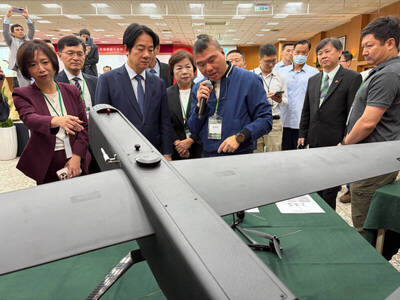
Two executives of drone supplier Jiin Ming Industry Co (錦明實業) have been detained and held incommunicado over the company's alleged use of prohibited China-made chips and camera lenses in drones supplied under recent military contracts, the Taoyuan District Prosecutors' Office said today. In a statement, prosecutors said they raided the offices of Jiin Ming — headquartered in Taoyuan — as well as those of its subsidiaries and its suppliers on Thursday last week. The raids followed a report that the company had breached its procurement contracts by putting the prohibited components into drones delivered to the military. During the raids, prosecutors summoned

South Korean boy band BigBang drew 120,000 fans to three concerts at Taipei Dome from Friday through yesterday, as the band thanked them for their support over their 20-year career. The Taipei Dome concerts were part of BigBang's "2026-2027 World Tour XX: Cosmos." Friday's concert was BigBang's first performance in Taiwan in 11 years. During the encore, group leader G-Dragon (GD) shouted "I love you" in Chinese and said he was especially happy to perform in Taiwan with bandmates Taeyang and Daesung. "Taipei, I'm very grateful to you all," GD said in Chinese, asking fans to wait for the band's return. Daesung thanked
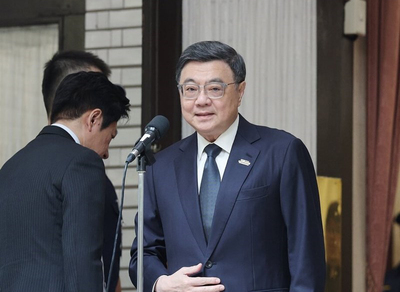
The government would continue monitoring online rumors that a pneumonic plague outbreak has spread from Russia into China and could enhance existing quarantine measures, Premier Cho Jung-tai (卓榮泰) said today. During a legislative meeting, Democratic Progressive Party Legislator Wang Ting-yu (王定宇) said rumors were circulating that the disease had spread across several Chinese provinces. He asked Cho whether the government was prepared to prevent the disease from spreading to Taiwan, given the frequent exchanges between Taiwan and China, and how concerned the government was about the alleged outbreak. The Ministry of Health and Welfare implemented border quarantine measures after briefing the Executive Yuan
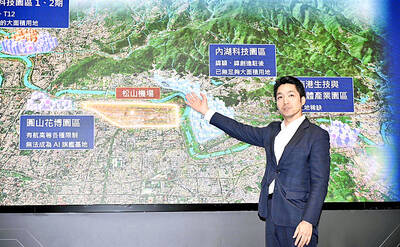
DETAILED PLAN NEEDED: Relocating the airport would affect not just travelers, but also undermine national defense and emergency medical services, a legislator said Taipei Mayor Chiang Wan-an (蔣萬安) yesterday proposed relocating Taipei International Airport (Songshan airport) and turning the site into an artificial intelligence (AI) park, drawing opposition from politicians across party lines. Chiang’s plan would turn the 300 hectares into an AI park featuring tech clusters, residential communities and green space. The industrial cluster would host 200 domestic enterprises, generate NT$12 trillion (US$376.47 billion) in output, and accommodate 65,000 jobs and 35,000 residents, he said. Cabinet spokeswoman Michelle Lee (李慧芝) said the Executive Yuan was surprised by the announcement, as the Taipei City Government did not discuss the proposal with the central government before making


 RSS
RSS