


The Ministry of National Defense yesterday called on veterans who fought in the Second Sino-Japanese War not to be influenced by Beijing’s “united front” campaign and to avoid attending an event in September to commemorate what China claims is “the victory of the Chinese people” in the eight-year war.
Ministry spokesman Major General David Lo (羅紹和) said that the victory belongs to the Republic of China (ROC) and said that this fact cannot be distorted.
He urged veterans who fought in the War of Resistance Against Japan (1937-1945) to keep the ROC in mind and not to be swayed by Beijing’s unification propaganda, when asked about China’s plan to invite former soldiers to participate in a military parade scheduled for Sept. 3 at Tiananmen Square in Beijing.
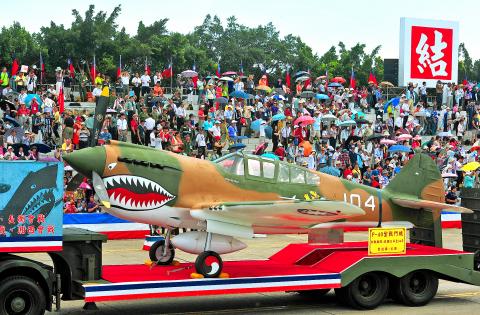
Photo: Chien Jung-fong, Taipei Times
Chinese officials earlier yesterday announced that there would be a large-scale event at Tiananmen Square, including a grand military parade, to mark the 70th anniversary of “the Chinese people’s victory” over Japan in the war that ended in 1945. The parade is expected to be attended by some soldiers loyal to the Chinese Nationalist Party (KMT), they said.
Luo called on people on both sides of the Taiwan Strait to look squarely at the historical facts and learn the truth behind the war and the importance of peace.
In 1937, the Chinese Communist Party and the KMT agreed to cooperate to defend China against a Japanese invasion, though that cooperation was often cursory at best, he said.
The ROC government relocated to Taiwan in 1949 after losing to the Chinese communist forces in a civil war, he said.
There will be a military display next month to mark the ROC’s victory over Japan in the war, he added.
The military held a rehearsal yesterday in preparation for the display, scheduled for July 4, at an army base in Hukou, Hsinchu County.
Minister of National Defense Kao Kuang-chi (高廣圻), who presided over the rehearsal, said that the 70th anniversary of the war is a significant moment for the country and for the military, describing the war as the toughest fight in the history of all Chinese people.
Kao added that China has not renounced its attempt to use force against Taiwan and the Taiwanese military must remain on guard, despite warming ties across the Taiwan Strait in recent years.
Rigorous training is key to building combat readiness, he said.
The military display is also a way to test the joint combat capabilities of the army, navy and air force, he said.
He pledged that the military is confident about safeguarding the country no matter what challenges it might encounter.
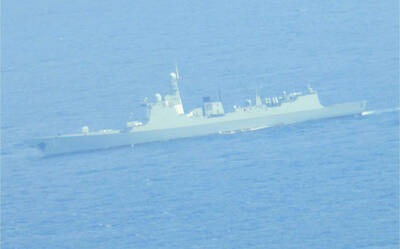
The military has spotted two Chinese warships operating in waters near Penghu County in the Taiwan Strait and sent its own naval and air forces to monitor the vessels, the Ministry of National Defense (MND) said. Beijing sends warships and warplanes into the waters and skies around Taiwan on an almost daily basis, drawing condemnation from Taipei. While the ministry offers daily updates on the locations of Chinese military aircraft, it only rarely gives details of where Chinese warships are operating, generally only when it detects aircraft carriers, as happened last week. A Chinese destroyer and a frigate entered waters to the southwest
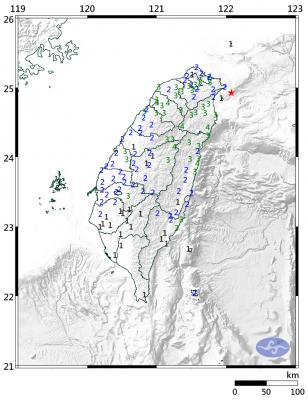
A magnitude 6.1 earthquake struck off the coast of Yilan County at 8:39pm tonight, the Central Weather Administration (CWA) said, with no immediate reports of damage or injuries. The epicenter was 38.7km east-northeast of Yilan County Hall at a focal depth of 98.3km, the CWA’s Seismological Center said. The quake’s maximum intensity, which gauges the actual physical effect of a seismic event, was a level 4 on Taiwan’s 7-tier intensity scale, the center said. That intensity level was recorded in Yilan County’s Nanao Township (南澳), Hsinchu County’s Guansi Township (關西), Nantou County’s Hehuanshan (合歡山) and Hualien County’s Yanliao (鹽寮). An intensity of 3 was
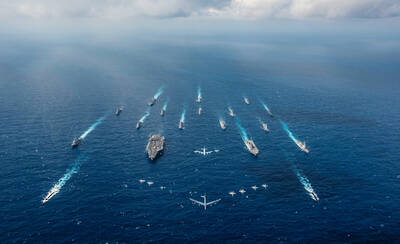
Japanese Prime Minister Sanae Takaichi’s comment last year on Tokyo’s potential reaction to a Taiwan-China conflict has forced Beijing to rewrite its invasion plans, a retired Japanese general said. Takaichi told the Diet on Nov. 7 last year that a Chinese naval blockade or military attack on Taiwan could constitute a “survival-threatening situation” for Japan, potentially allowing Tokyo to exercise its right to collective self-defense. Former Japan Ground Self-Defense Force general Kiyofumi Ogawa said in a recent speech that the remark has been interpreted as meaning Japan could intervene in the early stages of a Taiwan Strait conflict, undermining China’s previous assumptions
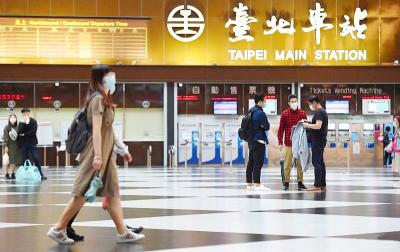
Taiwan Railways Corp (TRC) today announced that Shin Kong Mitsukoshi has been selected as the preferred bidder to operate the Taipei Railway Station shopping mall, replacing the current operator, Breeze Development Co Ltd. Among eight qualified firms that delivered presentations and were evaluated by a review committee, Shin Kong Mitsukoshi was ranked first, while Breeze was named the runner-up, the rail company said in a statement. Contract negotiations are to proceed in accordance with regulations, it said, adding that if negotiations with the top bidder fail, it could invite the second-ranked applicant to enter talks. Breeze in a statement today expressed doubts over


 RSS
RSS