


The Executive Yuan yesterday denied that pressure from vested interests forced it to “suspend” a planned amendment to the Regulations Governing the Building of Agricultural Houses on Agricultural Land (農業用地興建農舍辦法) that would prohibit non-farmers from purchasing or selling farmland.
“The Executive Yuan has not deviated from its principles of ‘agricultural land solely for agricultural use,’” Executive Yuan spokesperson Sun Lih-chyun said (孫立群).
Sun made the remarks in response to rumors that the government has suspended the planned amendment — that the Council of Agriculture had said would be completed by this month — with an eye on the upcoming elections.
“It has nothing to do with the elections. As you can see, the proposal has stirred up different opinions from all sides, including legislators, farmers and advocacy groups, and the Executive Yuan needs more time to process their concerns, so although council Minister Chen Bao-ji (陳保基) had said the amendment would be passed by the end of June, that now looks unlikely,” Sun said. “The amendment has definitely not been suspended or delayed; it is simply at the process stage.”
Chinese Nationalist Party (KMT) Legislator Chen Chao-ming (陳超明), who represents Miaoli County, issued a press release on Monday saying that following his continuous petitions, “Executive Yuan Secretary-General Chien Tai-lang (簡太郎) has decided to put off the amendment to the act in respect of the diverse voices and needs of the nation’s cities and counties.”
The Taiwan Rural Front and several environmental groups on Wednesday castigated the “turn” made by the government.
“It made us suspect that the call for the amendment has all been for show, and the calculation made for the coming election could easily trade the protection of farmland for land speculation,” the groups said in a joint statement.
“Since the central government lifted the farmland-for-farmers-only restriction in the Agricultural Development Act (農業發展條例) 15 years ago, farmland speculation and building of houses for non-agricultural use has been rampant, particularly in Yilan, Nantou and Miaoli counties,” they said.
“While the Yilan County Government pledged to tighten its oversight in February and the council promised to amend the regulations by June, the Executive Yuan suddenly agreed to halt the process due to the petition of a legislator who has led a series of land development projects in Miaoli County. We express our serious criticism of this ridiculous move,” the groups said.

The Centers for Disease Control (CDC) yesterday reported the first case of a new COVID-19 subvariant — BA.3.2 — in a 10-year-old Singaporean girl who had a fever upon arrival in Taiwan and tested positive for the disease. The girl left Taiwan on March 20 and the case did not have a direct impact on the local community, it said. The WHO added the BA.3.2 strain to its list of Variants Under Monitoring in December last year, but this was the first imported case of the COVID-19 variant in Taiwan, CDC Deputy Director-General Lin Ming-cheng (林明誠) said. The girl arrived in Taiwan on

South Korea is planning to revise its controversial electronic arrival card, a step Taiwanese officials said prompted them to hold off on planned retaliatory measures, a South Korean media report said yesterday. A Yonhap News Agency report said that the South Korean Ministry of Foreign Affairs is planning to remove the “previous departure place” and “next destination” fields from its e-arrival card system. The plan, reached after interagency consultations, is under review and aims to simplify entry procedures and align the electronic form with the paper version, a South Korean ministry official said. The fields — which appeared only on the electronic form

The Ministry of Foreign Affairs (MOFA) is suspending retaliation measures against South Korea that were set to take effect tomorrow, after Seoul said it is updating its e-arrival system, MOFA said today. The measures were to be a new round of retaliation after Taiwan on March 1 changed South Korea's designation on government-issued alien resident certificates held by South Korean nationals to "South Korea” from the "Republic of Korea," the country’s official name. The move came after months of protests to Seoul over its listing of Taiwan as "China (Taiwan)" in dropdown menus on its new online immigration entry system. MOFA last week
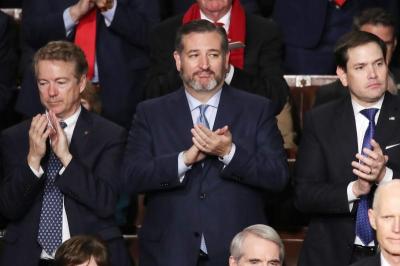
A bipartisan group of US senators has introduced a bill to enhance cooperation with Taiwan on drone development and to reduce reliance on supply chains linked to China. The proposed Blue Skies for Taiwan Act of 2026 was introduced by Republican US senators Ted Cruz and John Curtis, and Democratic US senators Jeff Merkley and Andy Kim. The legislation seeks to ease constraints on Taiwan-US cooperation in uncrewed aerial systems (UAS), including dependence on China-sourced components, limited access to capital and regulatory barriers under US export controls, a news release issued by Cruz on Wednesday said. The bill would establish a "Blue UAS


 RSS
RSS