


The Executive Yuan passed its draft act on long-term care insurance yesterday and called for its review and swift passage in the legislature to support the Long-term Care Services Act (長期照護服務法) which cleared the legislature last month.
The long-term care insurance bill is one of two laws that are to regulate the nation’s long-term care system, Minister Without Portfolio Joyce Feng (馮燕) said.
The long-term care insurance system expected to be rolled out in two years and with the allocation of NT$110 billion (US$3.54 billion) in funds, “it is guaranteed that the welfare benefit promised by the new system would surpass what we have now,” Feng said.
The long-term care insurance, as with the National Health Insurance (NHI), would require people pay a proportion of the premium. Policyholders are to shoulder 30 percent, employers 40 percent and the government 30 percent, Premier Mao Chi-kuo (毛治國) said.
“The premium rate on payees’ monthly salaries would be 1.19 percent, which is about one-fifth of the NHI premium rate set at 4.91 percent. For a person with a monthly wage of NT$30,300, for example, they would need to pay NT$108 a month,” Feng said.
The original bill drafted by the Ministry of Health and Welfare had set the proportions of the contribution to the premium at 30 percent, 60 percent and 10 percent for individual policyholders, the employers and the government respectively.
The ratio has been adjusted following the protests of business and industry groups.
When asked whether the numbers would be subject to changes again if the groups continue to voice opposition, Feng said the Executive Yuan has reached a consensus over the ratio with the groups, who have said that although the changes are unsatisfactory, they are acceptable.
Of the 30 percent of the NT$110 billion that the government has to shoulder, which is about NT$40 billion, “about NT$10 billion is covered by the budget for the existing long-term care services and welfare, and the rest would be covered by the health surcharges on tobacco products, which could be raised with an extra NT$20 added to the price of each pack of 20, and by a variety of sources of tax revenues including the ‘joint tax on building and land sales’ that the government has proposed and the legislature is expected to pass soon,” Feng said.
Feng said that while it is called “insurance,” the long-term care insurance is more a kind of social welfare.
“It is granted not only to the individual policyholders but their whole families, so they can claim the benefit if any of their family members fall ill and need support,” she said.

The Centers for Disease Control (CDC) yesterday reported the first case of a new COVID-19 subvariant — BA.3.2 — in a 10-year-old Singaporean girl who had a fever upon arrival in Taiwan and tested positive for the disease. The girl left Taiwan on March 20 and the case did not have a direct impact on the local community, it said. The WHO added the BA.3.2 strain to its list of Variants Under Monitoring in December last year, but this was the first imported case of the COVID-19 variant in Taiwan, CDC Deputy Director-General Lin Ming-cheng (林明誠) said. The girl arrived in Taiwan on

South Korea is planning to revise its controversial electronic arrival card, a step Taiwanese officials said prompted them to hold off on planned retaliatory measures, a South Korean media report said yesterday. A Yonhap News Agency report said that the South Korean Ministry of Foreign Affairs is planning to remove the “previous departure place” and “next destination” fields from its e-arrival card system. The plan, reached after interagency consultations, is under review and aims to simplify entry procedures and align the electronic form with the paper version, a South Korean ministry official said. The fields — which appeared only on the electronic form

The Ministry of Foreign Affairs (MOFA) is suspending retaliation measures against South Korea that were set to take effect tomorrow, after Seoul said it is updating its e-arrival system, MOFA said today. The measures were to be a new round of retaliation after Taiwan on March 1 changed South Korea's designation on government-issued alien resident certificates held by South Korean nationals to "South Korea” from the "Republic of Korea," the country’s official name. The move came after months of protests to Seoul over its listing of Taiwan as "China (Taiwan)" in dropdown menus on its new online immigration entry system. MOFA last week
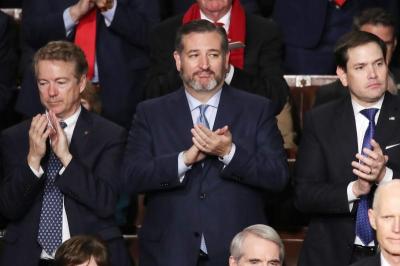
A bipartisan group of US senators has introduced a bill to enhance cooperation with Taiwan on drone development and to reduce reliance on supply chains linked to China. The proposed Blue Skies for Taiwan Act of 2026 was introduced by Republican US senators Ted Cruz and John Curtis, and Democratic US senators Jeff Merkley and Andy Kim. The legislation seeks to ease constraints on Taiwan-US cooperation in uncrewed aerial systems (UAS), including dependence on China-sourced components, limited access to capital and regulatory barriers under US export controls, a news release issued by Cruz on Wednesday said. The bill would establish a "Blue UAS


 RSS
RSS