


It is estimated that more than 3,700 people with first-degree injuries each year are stuck in emergency units for two days before they are transferred to inpatient beds in hospitals, the Taiwan Health Reform Foundation said yesterday.
That figure is five times the time needed for an Australian hospital to make the same transfer, the foundation said.
“After cross-analyzing national emergency room monitoring data and National Health Insurance statistics, the foundation discovered three vital concerns stemming from the constant overcrowding in the emergency departments of most of the nation’s hospitals,” foundation chairperson Liu Mei-chun (劉梅君) told a press conference in Taipei.
Liu said the first problem was delays in getting inpatient beds, citing the foundation’s recent monitoring of 19 medical institutions between April 1 and Tuesday.
The survey found that the total number of patients kept waiting in emergency rooms and unable to transfer to an inpatient bed or waiting for admission to an intensive care unit (ICU) was 818 and 32 respectively.
Only 48 people in these cases were actually waiting to see an emergency room physician on average, Liu said.
Liu said the second problem is that patients with first-degree injuries are more likely to be stuck in emergency departments for more than two days than those with less serious conditions.
Emergency room patients are categorized into five degrees based on the severity of their conditions or injuries, with one being the most serious.
In 2012, 5.4 percent, or 3,742, of people with first-degree injuries waited more than 48 hours to be transferred to an inpatient bed, compared with 4 percent for those with second-degree injuries and 1.7 percent for those with third-degree ones, she said.
“It is worth noting that in Australia, it only takes about 9.5 hours for people with the same level of injuries to get a hospital bed,” she added.
Third problem is about 30 percent of patients who required ICU care could not get transferred within six hours, increasing their mortality rate from 8.4 percent to 10.7 percent and lengthening their average hospital stay, she said.
Foundation CEO Joanne Liu (劉淑瓊) said all three problems could be traced back to one factor: hospitals’ preference to treat patients with minor conditions due to staff shortages or those requiring expensive surgeries because they bring in more revenue.
She urged the government to include medical institutions’ ability to clear out patients with first-degree injuries in one day and admitting patients into ICUs within six hours into their routine evaluation.
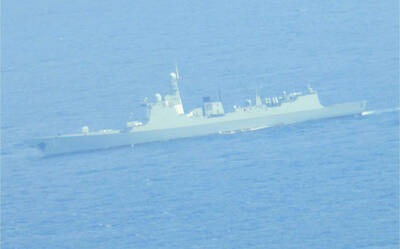
The military has spotted two Chinese warships operating in waters near Penghu County in the Taiwan Strait and sent its own naval and air forces to monitor the vessels, the Ministry of National Defense (MND) said. Beijing sends warships and warplanes into the waters and skies around Taiwan on an almost daily basis, drawing condemnation from Taipei. While the ministry offers daily updates on the locations of Chinese military aircraft, it only rarely gives details of where Chinese warships are operating, generally only when it detects aircraft carriers, as happened last week. A Chinese destroyer and a frigate entered waters to the southwest
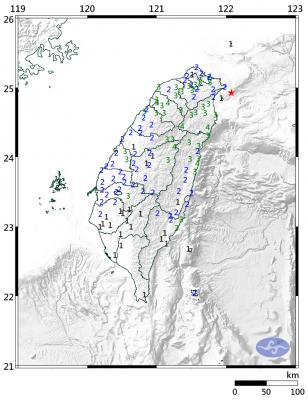
A magnitude 6.1 earthquake struck off the coast of Yilan County at 8:39pm tonight, the Central Weather Administration (CWA) said, with no immediate reports of damage or injuries. The epicenter was 38.7km east-northeast of Yilan County Hall at a focal depth of 98.3km, the CWA’s Seismological Center said. The quake’s maximum intensity, which gauges the actual physical effect of a seismic event, was a level 4 on Taiwan’s 7-tier intensity scale, the center said. That intensity level was recorded in Yilan County’s Nanao Township (南澳), Hsinchu County’s Guansi Township (關西), Nantou County’s Hehuanshan (合歡山) and Hualien County’s Yanliao (鹽寮). An intensity of 3 was
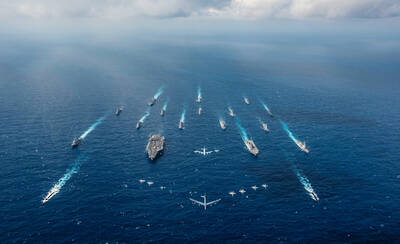
Japanese Prime Minister Sanae Takaichi’s comment last year on Tokyo’s potential reaction to a Taiwan-China conflict has forced Beijing to rewrite its invasion plans, a retired Japanese general said. Takaichi told the Diet on Nov. 7 last year that a Chinese naval blockade or military attack on Taiwan could constitute a “survival-threatening situation” for Japan, potentially allowing Tokyo to exercise its right to collective self-defense. Former Japan Ground Self-Defense Force general Kiyofumi Ogawa said in a recent speech that the remark has been interpreted as meaning Japan could intervene in the early stages of a Taiwan Strait conflict, undermining China’s previous assumptions
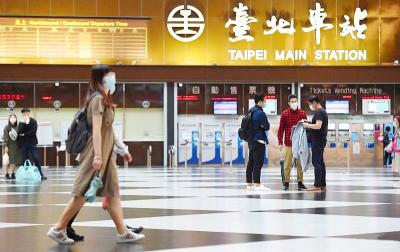
Taiwan Railways Corp (TRC) today announced that Shin Kong Mitsukoshi has been selected as the preferred bidder to operate the Taipei Railway Station shopping mall, replacing the current operator, Breeze Development Co Ltd. Among eight qualified firms that delivered presentations and were evaluated by a review committee, Shin Kong Mitsukoshi was ranked first, while Breeze was named the runner-up, the rail company said in a statement. Contract negotiations are to proceed in accordance with regulations, it said, adding that if negotiations with the top bidder fail, it could invite the second-ranked applicant to enter talks. Breeze in a statement today expressed doubts over


 RSS
RSS