


The Ministry of Education’s (MOE) recent reinstatement of calligraphy to curriculum guidelines and decision to allocate NT$4 million (US$128,000) to set up calligraphy centers in 24 elementary and middle schools across the nation has produced mixed reactions from legislators and educators.
Academics said calligraphy education has been seen as less important since the implementation in 2004 of the Nine-Year Educational Program — which allowed schools partial autonomy in establishing curricula — adding that the then-Democratic Progressive Party (DPP) administration underestimated the importance of calligraphy and its place within Chinese culture.
However, calligraphy education was viewed with greater significance when President Ma Ying-jeou (馬英九) of the Chinese Nationalist Party (KMT) came to power in 2008, they said.
In 2011, the ministry published curriculum guidelines for calligraphy, and later included the standard of calligraphy education in criteria used to evaluate a school’s performance and eligibility for ministry subsidization, they said.
The level of calligraphy education in the nation has received increasing attention ever since — with calligrapher Tong Yang-tze’s (董陽孜) saying last year that Taiwan’s calligraphy education standards had fallen behind those in China, and Ma donating NT$1 million to an elementary school in Taichung for the construction of a classroom dedicated to calligraphy education.
Minister of Education Wu Se-hwa (吳思華) said that the 12-year education curriculum highlights pluralism, and that calligraphy is a form of art worthy of conservation, which can help students learn how to concentrate and relax.
K-12 Education Administration division head Hsu Li-chuan (許麗娟) said the ministry recently formulated a set of regulations on subsidizing calligraphy education, with a NT$4 million budget available for teaching staff, learning activities and schools specializing in calligraphy education.
The ministry designated 24 schools as calligraphy schools, which would be provided with relevant teaching materials and specialized curricula, she said.
Calligraphy education is the only subject that has received special funding from the ministry, and many schools nationwide have been subsidized, except those in Taoyuan and Hsinchu counties and Tainan, she added.
DPP Legislator Cheng Li-chun (鄭麗君) said the unique art of Oriental calligraphy should be preserved, but it should be the responsibility of the Ministry of Culture and not the Ministry of Education.
It is unnerving that the education ministry not only formulated curriculum guidelines on calligraphy, but also earmarked a specialized fund simply to cater to Ma’s personal penchant for calligraphy, she said, adding that the ministry should be tasked with allocating educational resources reasonably instead of varying education policies to please those in power.
“The Ma administration should avoid using calligraphy as a way to connect with China,” DPP Legislator Chen Ting-fei (陳亭妃) said.
National Alliance of Parents Organizations chairman Wu Fu-pin (吳福濱) said that as Taiwan uses traditional Chinese characters, the education ministry should put more focus on traditional Taiwanese arts, such as glove puppetry and shadow play.
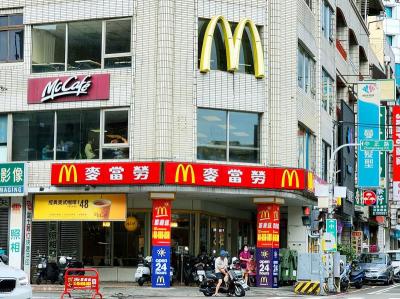
Fast food chain McDonald's is to raise prices by up to NT$5 on some products at its restaurants across Taiwan, starting on Wednesday next week, the company announced today. The prices of all extra value meals and sharing boxes are to increase by NT$5, while breakfast combos and creamy corn soup would go up by NT$3, the company said in a statement. The price of the main items of those meals, if ordered individually, would remain the same. Meanwhile, the price of a medium-sized lemon iced tea and hot cappuccino would rise by NT$3, extra dipping sauces for chicken nuggets would go up

Nvidia Corp CEO Jensen Huang (黃仁勳) arrived in Taiwan yesterday ahead of upcoming AI and technology events, saying he plans to meet with clients and Taiwan Semiconductor Manufacturing Co Chairman C.C. Wei (魏哲家) during his visit. After landing at Taipei Songshan Airport, Huang posed for photos with fans and handed out Yakult drinks to reporters and supporters waiting at the scene, saying he has “a lot to do” during the trip. Asked about reports that Nvidia’s planned headquarters site in Taipei’s Beitou Shilin Technology Park could break ground on May 27, Huang said that if the company holds an event, he would

FUKUOKA SITUATION: Japanese media reported that the pathogen is expected to be identified by the summer, while the CDC downplayed the idea that it was hMPV A “mysterious cold-like illness” reported in Japan’s Fukuoka Prefecture does not seem to be a new disease, but Japanese authorities have been asked about the situation, the Centers for Disease Control (CDC) said yesterday. The Fukuoka Prefectural Medical Association on Wednesday told a news conference that a “mystery cold” that has become a hot topic on social media is “highly likely to be caused by some kind of viral infection,” Japan’s KBC News reported. “Many people are experiencing symptoms starting with a sore throat, followed by a runny nose, phlegm and a severe cough,” KBC News reported, citing association officials. Health authorities are
Carrefour Taiwan is to begin using a new name from the start of July, but it cannot divulge the name until then, the chairman of the supermarket chain's parent company said today. President Chain Store Co chairman Lo Chih-hsien (羅智先) was asked by reporters after a shareholders' meeting to confirm whether the company has settled on a new name for the supermarket brand. In March, the government-registered name of two Carrefour Taiwan branches was quietly changed to "Le Chia Kang" (樂家康) in Chinese, raising speculation that has been selected as the name. Lo said that because of local regulations and contractual obligations, the


 RSS
RSS