


Several Democratic Progressive Party (DPP) lawmakers yesterday urged the Ministry of Health and Welfare to require importers of Japanese food products to clearly label the place of origin in Chinese instead of in code, in an effort to prevent the recurrence of fraudulent origin labeling.
DPP legislators Liu Chien-kuo (劉建國) and Tien Chiu-chin (田秋堇) made the demand at a meeting of the legislature’s Social Welfare and Environmental Hygiene Committee in Taipei.
Several ministry officials were asked to deliver reports and answer questions at the meeting about the ongoing labeling scandal involving more than 350 imported foodstuffs believed to have been manufactured in Japan’s Fukushima, Ibaraki, Tochigi, Gunma and Chiba prefectures, which have been placed under an import ban since the 2011 Fukushima Dai-ichi nuclear power plant disaster.
Minister of Health and Welfare Chiang Been-huang (蔣丙煌) and Food and Drug Administration (FDA) Director-General Chiang Yu-mei (姜郁美) told the committee that officials have examined more than 3,000 products and identified 348 codes used by Japanese food companies to indicate which factories manufactured the foodstuffs.
The officials promised to submit a report on the matter and in response to the lawmakers’ demand within two weeks.
FDA Northern Center for Regional Administration senior specialist Wang Te-yuan (王德原) said some Japanese food firms have their own coding system to represent the manufacturing location for each of their products, generally consisting of one or more English letters and sometimes even numerals.
“The code is usually printed next to a food item’s expiration date. However, as Japanese firms are not legally required to print such a code on the package, some of them simply list the location of their companies, rather than the factory where the product is actually produced, as the place of origin,” Wang said.
Wang said that following the labeling scandal, Taiwanese firms planning to import food items from Japan are required to identify the location of factories where the products were manufactured and provide the information on the goods’ customs declaration form.
During the meeting, Liu also accused the ministry and the FDA of attempting to cover up for Taiwanese firms that illegally imported the food products using falsified origin labeling.
Liu said an assistant researcher responsible for border inspection at Keelung Harbor surnamed Ko (柯) filed a document with his superior on March 4 requesting that the import permit of Taipei-based Sheng Yu Trading Co (盛裕貿易) be revoked after discovering on Feb. 26 that the company’s imported soy sauce products had falsified origin labels.
“The document was later referred to FDA Northern Center for Regional Administration Director Feng Jun-lan (馮潤蘭) on the same day after Ko’s superior approved the request. However, Feng returned the document five times during the period of March 4 to March 19,” Liu said, casting doubt on the reasons behind what he referred to as an unusual move.
Feng said the process to nullify an import permit must be meticulous, but Ko’s document did not explain the matter clearly enough.
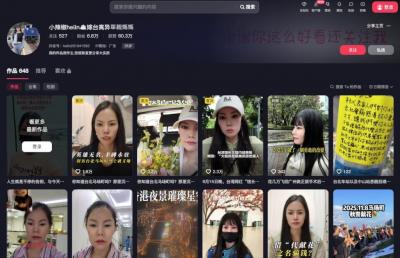
Chinese spouse and influencer Guan Guan’s (關關) residency permit has been revoked for repeatedly posting pro-China videos that threaten national security, the National Immigration Agency confirmed today. Guan Guan has said many controversial statements in her videos posted to Douyin (抖音), including “the red flag will soon be painted all over Taiwan” and “Taiwan is an inseparable part of China,” and expressing hope for expedited reunification. The agency last year received multiple reports alleging that Guan Guan had advocated for armed reunification. After verifying the reports, the agency last month issued a notice requiring her to appear and explain her actions. Guan

GIVE AND TAKE: Blood demand continues to rise each year, while fewer young donors are available due to the nation’s falling birthrate, a doctor said Blood donors can redeem points earned from donations to obtain limited edition Formosan black bear travel mugs, the Kaohsiung Blood Center said yesterday, as it announced a goal of stocking 20,000 units of blood prior to the Lunar New Year. The last month of the lunar year is National Blood Donation Month, when local centers seek to stockpile blood for use during the Lunar New Year holiday. The blood demand in southern Taiwan — including Tainan and Kaohsiung, as well as Chiayi, Pingtung, Penghu and Taitung counties — is about 2,000 units per day, the center said. The donation campaign aims to boost

The Kaohsiung Tourism Bureau audited six hotels in an effort to prevent price gouging ahead of Korean band BTS’ concert tour in the city scheduled for Nov. 19, 21 and 22 this year. The bureau on Friday said that the audits — conducted in response to allegations of unfair pricing posted on social media — found no wrongdoing. These establishments included the local branches of Chateau de Chine, Hotel Nikko, My Humble House, and Grand Hai Lai, it said, adding that the Consumer Protection Commission would have penalized price gougers had the accusations been substantiated. The bureau said the Tourism Development Act
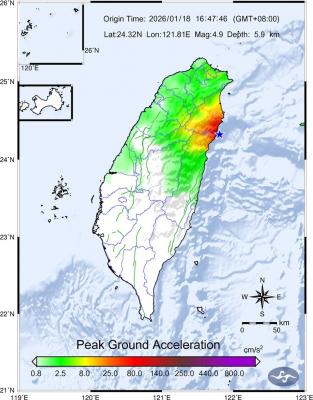
The Central Weather Administration (CWA) said a magnitude 4.9 earthquake that struck off the coast of eastern Taiwan yesterday was an independent event and part of a stress-adjustment process. The earthquake occurred at 4:47pm, with its epicenter at sea about 45.4km south of Yilan County Hall at a depth of 5.9km, the CWA said. The quake's intensity, which gauges the actual effects of a temblor, was highest in several townships in Yilan and neighboring Hualien County, where it measured 4 on Taiwan's seven-tier intensity scale, the CWA said. Lin Po-yu (林柏佑), a division chief at the CWA's Seismological Center, told a news conference


 RSS
RSS