


The Shilin District Prosecutors’ Office on Thursday summoned Taitung-based wood dealer Su Chung-shan (蘇中山), his younger brother Su Chung-fu (蘇中福) and Xingshan Temple (興善宮) chairman Wang Chao-chin (王朝卿) amid controversies over the legitimacy of the trio’s acquisition and possession of a consignment of valuable lumber.
Prosecutors said the trio were summoned to clarify when the wood was sourced and donated, and whether the Su siblings have any personal relationship with Taipei’s Neihu District (內湖) office head Lin Shih-chung (林世崇), who has been detained for allegedly taking a bribe to build a farm road reportedly used to transport the lumber.
While Su Chung-fu did not show up in court, Su Chung-shan denied allegations that he conducted illegal logging, insisting that the logs were driftwood collected in compliance with the Forestry Act (森林法).
The consignment, reportedly donated by the brothers to the temple in New Taipei City’s Sijhih District (汐止) in 2012, consists of 20 logs weighing more than 10 tonnes, including two Taiwan yellow cedar and nine red cypress logs, each measuring up to 60cm in diameter.
The lumber was discovered in a protected zone in Neihu earlier this month, and was later moved to a factory in Miaoli’s Sanyi Township (三義) where it was seized by the police.
According to data published by the Forestry Bureau, top quality Taiwan yellow cedar and red cypress logs sell for NT$133,420 and NT$100,825 respectively.
Su Chung-fu initially told media outlets that he obtained the wood — which he said washed ashore after Typhoon Morakot — in 2009, but later said the wood was harvested between 2012 and 2013.
Responding to criticism over the inconsistencies in his accounts, Su Chung-fu said on a talk show on Thursday that his establishment has been continuously harvesting wood since Typhoon Morakot hit Taiwan in 2009, operating on permits issued by the Taitung Forest District Office.
He also blamed the Taitung office for failing to label the driftwood according to its financial value, which he said has given rise to the controversy.
The act stipulates that local governments should clear away all wood washed ashore after a natural disaster within one month after authorities cancel a disaster warning, and that members of the public can collect wood that does not have economic value after this period by obtaining permits from local river and forest management agencies.
Yang Hung-chih (楊宏志), deputy director-general of the Forestry Bureau, yesterday said that, although the red cypress and Taiwan yellow cedar logs in dispute are valuable, whether the Su brothers have broken the law would depend on the results of an investigation regarding when they harvested the wood.
Regarding Su Chung-fu’s allegation of negligence by the Taitung office in labeling the wood, Yang said that it is yet unclear whether the trio actually sourced the wood from Taitung and when it was sourced, saying that it is still premature to be laying blame.
He also denied Kao’s allegation that the wood had been replaced with cheap lumber before arriving in Sanyi, saying that documentation by bureau staffers proved that it was the same batch found in Neihu.
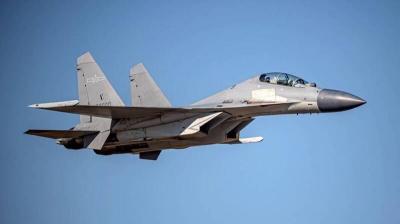
Eight Chinese naval vessels and 24 military aircraft were detected crossing the median line of the Taiwan Strait between 6am yesterday and 6am today, the Ministry of National Defense said this morning. The aircraft entered Taiwan’s northern, central, southwestern and eastern air defense identification zones, the ministry said. The armed forces responded with mission aircraft, naval vessels and shore-based missile systems to closely monitor the situation, it added. Eight naval vessels, one official ship and 36 aircraft sorties were spotted in total, the ministry said.
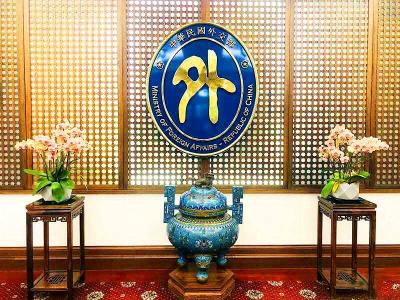
The Ministry of Foreign Affairs (MOFA) today said that if South Korea does not reply appropriately to its request to correct Taiwan’s name on its e-Arrival card system before March 31, it would take corresponding measures to alter how South Korea is labeled on the online Taiwan Arrival Card system. South Korea’s e-Arrival card system lists Taiwan as “China (Taiwan)” in the “point of departure” and “next destination” fields. The ministry said that it changed the nationality for South Koreans on Taiwan’s Alien Resident Certificates from “Korea” to “South Korea” on March 1, in a gesture of goodwill and based on the

Taiwanese officials were shown the first of 66 F-16V fighter jets purchased by Taiwan from the United States, the Ministry of National Defense said yesterday, adding the aircraft has completed an initial flight test and is expected to be delivered later this year. A delegation led by Deputy Minister of National Defense Hsu Szu-chien (徐斯儉) visited Lockheed Martin’s F-16 C/D Block 70 (also known as F-16V) assembly line in South Carolina on March 16 to view the aircraft. The jet will undergo a final acceptance flight in the US before being delivered to Taiwan, the
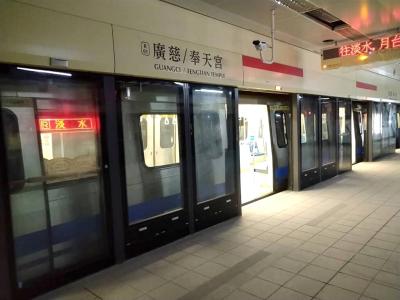
The New Taipei Metro's Sanyin Line and the eastern extension of the Taipei Metro's Tamsui-Xinyi Line (Red Line) are scheduled to begin operations in June, the National Development Council said today. The Red Line, which terminates at Xiangshan Station, would be connected by the 1.4km extension to a new eastern terminal, Guangci/Fengtian Temple Station, while the Sanyin Line would link New Taipei City's Tucheng and Yingge stations via Sanxia District (三峽). The council gave the updates at a council meeting reviewing progress on public construction projects for this year. Taiwan's annual public infrastructure budget would remain at NT$800 billion (US$25.08 billion), with NT$97.3


 RSS
RSS