


A 50-year-old woman suffered a minor stroke recently after a failed attempt to lower her high blood pressure using banana peels.
According to Shin Kong Wu Ho-Su Memorial Hospital cardiologist Chiu Chiung-zuan (邱俊仁), the patient, surnamed Lin (林), was diagnosed with high blood pressure six months ago, but her fear of long-term dependency on medications prompted her to search for folk remedies on the Internet.
“Lin read that consuming banana peels can help to lower blood pressure and began eating them half a year ago. However, due to a lack of proper medication, recent temperature changes caused her blood pressure to fluctuate dramatically and eventually led to a minor stroke,” Chiu said.
Chiu said he has noticed a gradual increase in the number of people who seek professional medical assistance only after folk remedies prove ineffective.
The trend is alarming, Chiu said, citing an article published in the New England Journal of Medicine in June last year, which showed that people with poorly managed high blood pressure face a 70 percent greater risk of suffering a stroke.
The Internet is saturated with an array of alleged remedies believed to be helpful in reducing blood pressure, such as washing one’s feet with baking soda, drinking red wine soaked with onion and eating vinegar-marinated peanuts.
According to statistics compiled by the Ministry of Health and Welfare, the incidence rate of high blood pressure is 29.7 percent among Taiwanese aged 40 and older, but only two-thirds of patients with hypertension seek treatment.
A guidebook published by the Taiwan Society of Cardiology and the Taiwan Hypertension Society on the management of high blood pressure last year advises people with two consecutive blood pressure readings of above 140/90 millimeters of mercury — which qualifies as hypertension — to seek medical attention, carry out dietary control and exercise regularly.
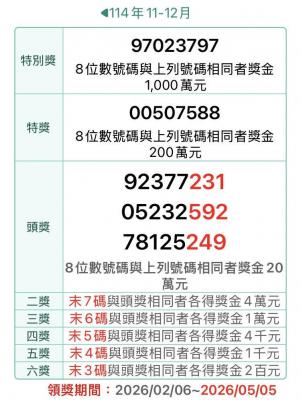
Seven of the 17 NT$10 million (US$311,604) winning receipts from the November-December uniform invoice lottery remain unclaimed as of today, the Ministry of Finance said, urging winners to redeem their prizes by May 5. The reminder comes ahead of the release of the winning numbers for the January-February lottery tomorrow. Among the unclaimed receipts was one for a NT$173 phone bill in Keelung, while others were for a NT$5,913 purchase at Costco in Taipei's Neihu District (內湖), a NT$49 purchase at a FamilyMart in New Taipei City's Tamsui District (淡水), and a NT$500 purchase at a tea shop in New Taipei City's

Taiwanese officials were shown the first of 66 F-16V fighter jets purchased by Taiwan from the United States, the Ministry of National Defense said yesterday, adding the aircraft has completed an initial flight test and is expected to be delivered later this year. A delegation led by Deputy Minister of National Defense Hsu Szu-chien (徐斯儉) visited Lockheed Martin’s F-16 C/D Block 70 (also known as F-16V) assembly line in South Carolina on March 16 to view the aircraft. The jet will undergo a final acceptance flight in the US before being delivered to Taiwan, the
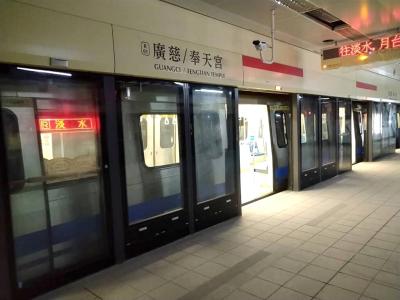
The New Taipei Metro's Sanyin Line and the eastern extension of the Taipei Metro's Tamsui-Xinyi Line (Red Line) are scheduled to begin operations in June, the National Development Council said today. The Red Line, which terminates at Xiangshan Station, would be connected by the 1.4km extension to a new eastern terminal, Guangci/Fengtian Temple Station, while the Sanyin Line would link New Taipei City's Tucheng and Yingge stations via Sanxia District (三峽). The council gave the updates at a council meeting reviewing progress on public construction projects for this year. Taiwan's annual public infrastructure budget would remain at NT$800 billion (US$25.08 billion), with NT$97.3

Deliveries of delayed F-16V jets are expected to begin in September, Minister of National Defense Wellington Koo (顧立雄) said today, after senior defense officials visited the US last week. The US in 2019 approved a US$8 billion sale of Lockheed Martin F-16 jets to Taiwan, a deal that would take the nation’s F-16 fleet to more than 200 jets, but the project has been hit by issues including software problems. Koo appeared today before a meeting of the legislature’s Foreign Affairs and National Defense Committee, which is discussing different versions of the special defense budget this week. The committee is questioning officials today,


 RSS
RSS