


A coalition of organizations yesterday filed a lawsuit at the Taipei District Court seeking to overturn the government policy of having Mandarin as the nation’s only official language.
The two main plaintiffs are Brian Qo (吳崑松), an expert in Hoklo (commonly known as Taiwanese) and author of Tong Iong Taiwanese Dictionary (通用台語字典), and Taiwanese National Party (TNP) Chairman Tsua Gim-liong (蔡金龍).
Qo said he is acting on behalf of everyone who loves the nation and wants to protect the local cultures and Taiwan’s many mother tongues.
“We must refute the notion that Mandarin is the only official language in Taiwan,” Qo said. “It is an illegitimate policy, designed by the Chinese Nationalist Party [KMT] to eradicate the nation’s culture, identity and linguistic diversity.”
Mandarin is the language of China’s Beijing area, he said, adding that it has no link to Taiwanese, “yet it was imposed on us by force and the threat of persecution by the authoritarian rule of the KMT during the Martial Law era.”
Qo said it is time to end the Mandarin-only policy practiced in government, education and judicial circles, as well as the media, most state agencies, and most of the public and private sectors, adding that increased use of local languages should be promoted.
Other groups supporting the litigation included Taiwan Society North, Taiwanese National Congress, Alliance of Referendum for Taiwan, Organization for Taiwanese National Declaration, Taiwan Human Rights and Cultural Association, 908 Taiwan Republic Campaign and Happy National Connections in Taiwan.
Tsua said that the KMT government has violated people’s right to cultural identity and the right to use their mother-tongue languages, adding that it was also a violation of several international conventions.
“After losing the Chinese Civil War, the KMT was an exile regime that fled China and occupied Taiwan illegally,” Tsua said.
“It used totalitarian methods to silence any dissent,” he said, adding that the litigation is also seeking a judicial review by calling into question the legitimacy of the KMT’s Republic of China government structure and the current use of what he labeled the KMT’s national anthem and flag.
Those three things have no legal basis and do not represent Taiwanese at all, he said.
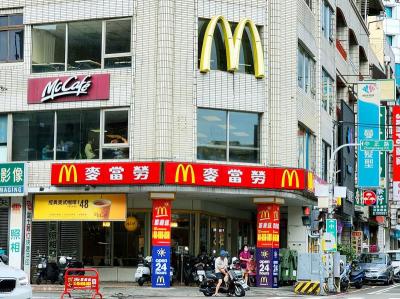
Fast food chain McDonald's is to raise prices by up to NT$5 on some products at its restaurants across Taiwan, starting on Wednesday next week, the company announced today. The prices of all extra value meals and sharing boxes are to increase by NT$5, while breakfast combos and creamy corn soup would go up by NT$3, the company said in a statement. The price of the main items of those meals, if ordered individually, would remain the same. Meanwhile, the price of a medium-sized lemon iced tea and hot cappuccino would rise by NT$3, extra dipping sauces for chicken nuggets would go up
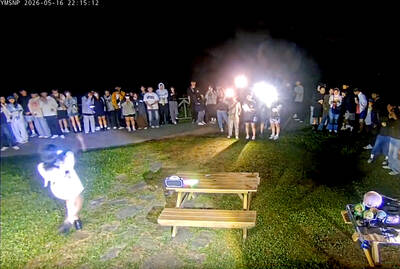
Yangmingshan National Park’s Qingtiangang (擎天崗) nature area has gone viral after a park livestream camera observed a couple in the throes of intimate congress, which was broadcast live on YouTube, drawing large late-night crowds and sparking a backlash over noise, bright lights and disruption to wildlife habitat. The area’s livestream footage appeared to show a couple engaging in sexual activity on a picnic table in the park on Friday last week, with the uncensored footage streamed publicly online. The footage quickly spread across social media, prompting a tide of visitors to travel to the site to “check in” and recreate the
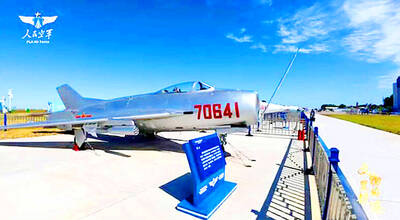
GROUNDED: A KMT lawmaker proposed eliminating drone development programs and freezing funding for counterdrone systems, despite China’s adoption of the technology China has deployed attack drones at air bases near the Taiwan Strait in a strategy aimed at overwhelming Taiwan’s air defense systems through saturation attacks, the Mainland Affairs Council (MAC) said. The council’s latest quarterly report on China said that satellite imagery and open-source intelligence indicate that the Chinese People’s Liberation Army (PLA) had converted retired J-6 fighter jets into J-6W drones, which the PLA has stationed at six air bases near Taiwan, five in China’s Fujian Province and one in Guangdong Province. The report cited J. Michael Dahm, a senior fellow at the US-based Mitchell Institute, as saying that China has

Carrefour Taiwan is to begin using a new name from the start of July, but it cannot divulge the name until then, the chairman of the supermarket chain's parent company said today. President Chain Store Co chairman Lo Chih-hsien (羅智先) was asked by reporters after a shareholders' meeting to confirm whether the company has settled on a new name for the supermarket brand. In March, the government-registered name of two Carrefour Taiwan branches was quietly changed to "Le Chia Kang" (樂家康) in Chinese, raising speculation that has been selected as the name. Lo said that because of local regulations and contractual obligations, the


 RSS
RSS