


Taipei Mayor Ko Wen-je (柯文哲) yesterday said that reporters should wear press vests during demonstrations for identification purposes, after a recent plan by the Taipei City Police Department to restrict media to designated press zones was postponed due to strong opposition from journalists.
Ko has said that the city government will not implement the police department’s unilateral plan, but his new requirement for reporters to don press vests provoked equal resistance.
Since the government will soon require police officers to bear identification numbers on their uniforms — which will help identify individual officers in cases of police brutality — reporters should also be readily identifiable under the “principle of reciprocity,” Ko said.
Last week, nearly 600 journalists and netizens signed a petition against the city police’s announcement on Thursday that it would restrict reporters to designated “press zones” during demonstrations.
The measure was part of a new protocol that aims to regulate relations between police and the media, including plans to designate a media relations officer from the police during demonstrations.
Organizers of the petition blasted the plan, saying it would undermine freedom of the press and would prevent reporters from conveying the full picture to the public.
Following the announcement, Ko’s assistant, Hung Chih-kun (洪智坤), said on Thursday night that the city government was shocked when it heard the news.
On Sunday, in response to mounting public pressure, the police department said it had decided to “postpone” its plan to designate press zones during protests, but that the other parts of the new protocol would remain largely unchanged.
Later in the day, in an interview with Chinese-language Web site NOWnews, Ko said he disagreed with the police department’s plan.
“I don’t know why the Taipei City Police Department would come up with such a stupid policy,” Ko said.
However, his plan to have reporters wear press vests may be equally unpopular.
Hsu Chun-feng (許純鳳), a member of the production team of a Public Television Service news commentary show, said more importance should be placed on establishing regulations for the police to avoid instances of police brutality.
“Who will issue the press vests, and who will decide which people get to wear them?” Hsu asked, adding that many citizen journalism organizations have encountered difficulties with the police.
With journalists readily identifiable by their vests, police officers might infringe on the rights of demonstrators when reporters are not visibly present, Hsu said.
The Association of Taiwan Journalists — which has recently been criticized for taking part in discussions with the police on establishing press zones — said in a statement that press vests should not be used as method to bar citizen journalists from exercising their reporting rights.
The association added that the Ko administration should further discuss its plans with media outlet, reporters’ organizations and citizen journalists about how the policy would be implemented.
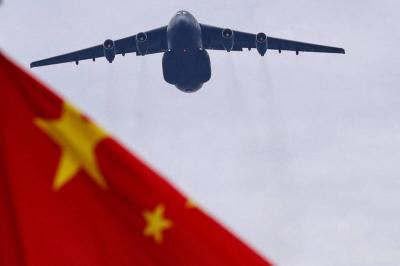
Beijing could eventually see a full amphibious invasion of Taiwan as the only "prudent" way to bring about unification, the US Department of Defense said in a newly released annual report to Congress. The Pentagon's "Annual Report to Congress: Military and Security Developments Involving the People's Republic of China 2025," was in many ways similar to last year’s report but reorganized the analysis of the options China has to take over Taiwan. Generally, according to the report, Chinese leaders view the People's Liberation Army's (PLA) capabilities for a Taiwan campaign as improving, but they remain uncertain about its readiness to successfully seize
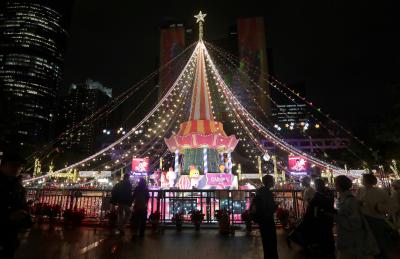
Taiwan is getting a day off on Christmas for the first time in 25 years. The change comes after opposition parties passed a law earlier this year to add or restore five public holidays, including Constitution Day, which falls on today, Dec. 25. The day marks the 1947 adoption of the constitution of the Republic of China, as the government in Taipei is formally known. Back then the Chinese Nationalist Party (KMT) governed China from Nanjing. When the KMT, now an opposition party in Taiwan, passed the legislation on holidays, it said that they would help “commemorate the history of national development.” That

Taiwan has overtaken South Korea this year in per capita income for the first time in 23 years, IMF data showed. Per capita income is a nation’s GDP divided by the total population, used to compare average wealth levels across countries. Taiwan also beat Japan this year on per capita income, after surpassing it for the first time last year, US magazine Newsweek reported yesterday. Across Asia, Taiwan ranked fourth for per capita income at US$37,827 this year due to sustained economic growth, the report said. In the top three spots were Singapore, Macau and Hong Kong, it said. South

Snow fell on Yushan (Jade Mountain, 玉山) yesterday morning as a continental cold air mass sent temperatures below freezing on Taiwan’s tallest peak, the Central Weather Administration (CWA) said. Snowflakes were seen on Yushan’s north peak from 6:28am to 6:38am, but they did not fully cover the ground and no accumulation was recorded, the CWA said. As of 7:42am, the lowest temperature recorded across Taiwan was minus-5.5°C at Yushan’s Fengkou observatory and minus-4.7°C at the Yushan observatory, CWA data showed. On Hehuanshan (合歡山) in Nantou County, a low of 1.3°C was recorded at 6:39pm, when ice pellets fell at Songsyue Lodge (松雪樓), a


 RSS
RSS