


The Environmental Protection Administration (EPA) aims to impose a nationwide ban on the use of Styrofoam cups by the end of the year.
The agency has mapped out draft measures restricting the use of expanded foam plastic to manufacture drink containers such as Styrofoam cups, of which more than 200 million are used per year, but only about 20 percent are recycled.
The ban was proposed because the popular material does not disintegrate easily, thereby damaging landscapes and causing pollution, the administration said.
It also poses a threat to marine and even human life, it added. Ocean life can consume pieces of discarded Styrofoam, putting themselves, their ecosystem and people who consume seafood at risk.
Under the administration’s plan, there will be a grace period after the ban goes into effect because it expects that about 2,000 beverage shops and 10 Styrofoam manufacturers will be affected.
Once that period is up, ban violators will be fined between NT$1,200 and NT$6,000 and ordered to make improvements, while serious offenders could face having their shop shut down.
A toxicology expert at Linkou Chang Gung Memorial Hospital said Styrofoam is bad for human health, expressing hope that people will stop using cups and bowls made from the material.
Yen Tzung-hai (顏宗海), director of the hospital’s Department of Nephrology and Division of Clinical Toxicology, said that Styrofoam can only withstand temperatures of up to about 70?C before it starts releasing the highly toxic compound benzene, which can increase the risk of an array of cancers over a long period of exposure.
He advised eating lots of fruit and vegetables to help metabolize any possible toxins in food or drinks held in Styrofoam containers.

UPGRADE: The Kang Ding-class frigate is replacing its Chaparall missiles with Tien Chien II and Hua Yang VLS, which would provide it with long-range, 360° air defense Taiwan plans to produce 1,200 to 1,376 Hai Chien II missiles (海劍二, Sea Sword II) — also known as TC-2N — to serve as the standard air defense system of the navy’s surface combatant fleet, a source said yesterday. Last week, the Hai Chien II, the naval version of the Tien Kung II missile (天劍二, Sky Sword II), completed a live-fire test in waters off the National Chungshan Institute of Science and Technology’s Jiupeng facility (九鵬) in Pingtung County’s Manjhou Township (滿州). The MIM72 Chaparral and other dated air defense missiles that currently arm Taiwanese ships have inadequate range to combat Chinese
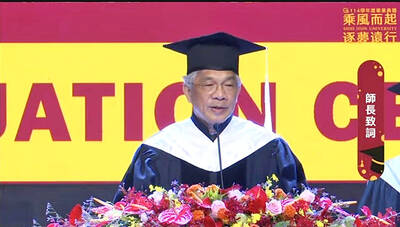
Shih Hsin University President Chen Ching-he (陳清河) yesterday issued a public apology for comments made in his commencement speech last week, stating that he has asked the school to suspend his duties and halt his wages for two months as a show of contrition. At the commencement ceremony on May 30, Chen said, “If you don’t manage your time well, or your own emotions, or your health, then I am telling every one of you — put a quick end to ‘you,’ because the world has no need for ‘you.’” The comments have sparked significant controversy online, and Chen through an open

Johanne Liou (劉喬安), a Taiwanese woman who shot to unwanted fame during the Sunflower movement protests in 2014, returned to Taiwan last night after being deported from the US. She is to stand trial in Taiwan for charges involving embezzlement, fraud and drug crimes. The Criminal Investigation Bureau (CIB) said it took her into custody at Taiwan Taoyuan International Airport and would first question her before transferring her to the New Taipei District Prosecutors’ Office. She was arrested upon disembarking a flight from San Francisco that landed shortly before 7pm. Liou absconded to the US in 2019 after jumping bail
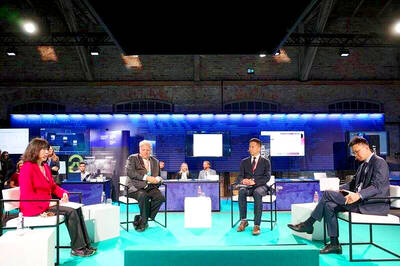
In a historic first, Taiwanese officials participated in this year’s Riga Strategic Communications Dialogue in Latvia from Wednesday to Friday last week, which debuted a breakout session focused on Taiwan The event organizer, the NATO Strategic Communications Center of Excellence, displayed Taiwan’s national flag and the officials’ formal titles on their Web site. Taiwanese attendees included National Security Council (NSC) Deputy Secretary-General Lin Fei-fan (林飛帆) and deputy head of the Taipei Representative Office in the UK, Chiang Ya-chi (江雅綺). In addition to the session discussing Taiwan titled “Taiwan: Navigating Strategic Communication in a Tense Environment,” the dialogue also included sessions


 RSS
RSS