


Statements issued by the Presidential Office seeking to clarify allegations that an inappropriate relationship exists between President Ma Ying-jeou (馬英九) and Ting Hsin International Group (頂新國際集團) have not convinced the public, long-time political activist Shih Ming-te (施明德) said yesterday.
In a post on Facebook commenting on the statements the Presidential Office made on Friday, Shih urged the Democratic Progressive Party and its chairperson, Tsai Ing-wen (蔡英文), to “take the necessary political action” to address the situation.
Ridding the government of corruption would require the efforts of not only the prosecutorial system and anticorruption activists, but also of the DPP, Shih said, referring to media personality Clara Chou’s (周玉蔻) allegation that Ma accepted an off-the-books political donation from Ting Hsin.
Chou’s claim is now being probed by the Special Investigation Division of the Supreme Prosecutors’ Office.
With the revelation of the most recent cooking oil scandal — in which recycled waste oil and animal feed-grade oil was found in products produced by Ting Hsin subsidiaries — Ma’s relationship with the food conglomerate was called into question as it became evident that some of the Ting Hsing executives who are part of the Wei (魏) family that owns the group had emerged relatively unscathed from previous food safety incidents involving the company.
Chou has alleged that Ting Hsin offered NT$200 million (US$6.29 million) to Ma during his presidential re-election campaign in 2012.
Had it not been for the benefits Ma received from Ting Hsin, the Wei family would not have been allowed to “go on a rampage” throughout the nation, Shih said.
In an opinion piece published in the Chinese-language Apple Daily on Friday, Shih said that after carefully going through the allegations regarding the relationship between the Wei family and Ma, his confidence in Ma being a clean president had been badly shaken.
It is not out of the question that Ma could face jail time on charges of corruption after he completes his tenure, just like former president Chen Shui-bian (陳水扁), who has been serving a sentence for graft at Taichung Prison since 2008, Shih said.
Ma must clarify allegations that Wei Ying-heng (魏應行), the youngest of the four Wei brothers, reported to him on the cross-strait trade of agricultural products at the Presidential Office and that he instructed Council of Agriculture Minister Chen Bao-ji (陳保基) to assist the Wei family in the matter, Shih said.
Despite the difficulty of proving Chou’s claim — because if the donation was made in cash, there would be no trail of evidence to follow — it appears to be based on sound reasoning, judging from how Ting Hsin was able to engage in various investments in Taiwan after returning empty-handed from China, Shih said.
Ma should come forward to clarify these doubts, he said.

Taiwan must first strengthen its own national defense to deter a potential invasion by China as cross-strait tensions continue to rise, multiple European lawmakers said on Friday. In a media interview in Taipei marking the conclusion of an eight-member European parliamentary delegation’s six-day visit to Taiwan, the lawmakers urged Taipei to remain vigilant and increase defense spending. “All those who claim they want to protect you actually want to conquer you,” Ukrainian lawmaker Serhii Soboliev said when asked what lessons Taiwan could draw from Russia’s invasion of Ukraine. Soboliev described the Kremlin as a “new fascist Nazi regime” that justified
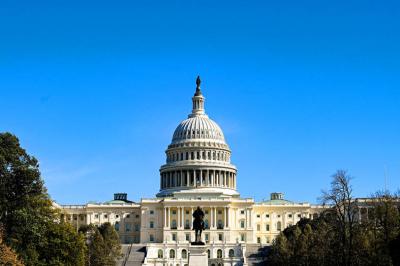
The US House of Representatives yesterday passed the PROTECT Taiwan Act, which stipulates that Washington would exclude China from participating in major global financial organizations if its actions directly threaten Taiwan’s security. The bill, proposed by Republican US Representative Frank Lucas, passed with 395 votes in favor and two against. It stipulates that if China’s actions pose any threat to Taiwan’s security, economic or social systems, the US would, “to the maximum extent practicable,” exclude China from international financial institutions, including the G20, the Bank for International Settlements and the Financial Stability Board. The bill makes it clear that China

‘T-DOME’: IBCS would increase Taiwan’s defense capabilities, enabling air defense units to use data from any sensor system and cut reaction time, a defense official said A defense official yesterday said that a purported new arms sale the US is assembling for Taiwan likely includes Integrated Battle Command Systems (IBCS). The anonymous official’s comments came hours after the Financial Times (FT) reported that Washington is preparing a US$20 billion arms sale encompassing “Patriot missiles and other weapons,” citing eight sources. The Taiwanese official said the IBCS is an advanced command and control system that would play a key role in President William Lai’s (賴清德) flagship defense program, the “T-Dome,” an integrated air defense network to counter ballistic missiles and other threats. The IBCS would increase Taiwan’s

NOMINAL NEWLYWEDS: A man’s family and his wife — his long-term caregiver — are engaged in a legal dogfight over the propriety and validity of the recent union A centenarian’s marriage to his caregiver unbeknownst to his children has prompted legal action, as the caregiver accuses the man’s children of violating her personal liberty and damaging her reputation, while the children have sought a legal option to have the marriage annulled. According to sources, the 102-year-old man surnamed Wang (王) lives in Taipei’s Zhongshan District (中山) and previously worked as a land registration agent. Wang reportedly owns multiple properties and parcels of land worth several hundred million New Taiwan dollars and has ten children. His caregiver, a 69-year-old surnamed Lai (賴), has been caring for him since about 1999,


 RSS
RSS