


Mainland Affairs Council Minister Wang Yu-chi (王郁琦) yesterday said that the council expected China to toughen its stance on adherence to the “1992 consensus” on the “one China” principle as a precondition for cross-strait exchanges and against Taiwan’s independence in the wake of the nine-in-one elections on Nov. 29.
The “1992 consensus,” a term that former Mainland Affairs Council chairman Su Chi (蘇起) admitted to making up in 2000, refers to a purported agreement reached by Taipei and Beijing that there is “one China, with each side having its own interpretation.”
Wang delivered an analysis on how the election — which saw the Chinese Nationalist Party (KMT) suffer massive losses — would affect cross-strait relations when he was invited by the KMT to participate in its weekly Central Standing Committee meeting yesterday.
After the election, China is likely stick to its current policy line on pushing for peaceful development of cross-strait relations, but Beijing would also likely review its on-the-ground approaches and enforce its effort to consolidate the consensus and to repress forces seeking Taiwan’s independence, Wang said.
Wang added that China would bolster efforts to reach out to the nation’s younger generations and grassroots-level groups in Taiwan, because younger people have demonstrated their powerful political influence in the elections.
For its part, the council has been steering cross-strait relations in the right direction over recent years, Wang said, adding that it would find more effective ways to communicate with the younger generations, Internet users and people from all walks of life on cross-strait issues and take their views into consideration.
Wang said that academics in Hong Kong and Macau have predicted more difficulties in cross-strait negotiations on a trade in goods pact and the establishment of representative offices on both sides of the Taiwan Strait for the rest of President Ma Ying-jeou’s (馬英九) term, saying that the chances of the Democratic Progressive Party (DPP) changing its attitudes on such issues would be slim.
After listening to the analysis, Vice President and KMT acting chairman Wu Den-yih (吳敦義) said the post-election situation has evolved in a way that would affect the government’s approach to cross-strait issues, even though the election results were not a barometer of the public’s view of cross-strait policies.
Wu emphasized the importance adhering to the principle of the “1992 consensus” to continue developing cross-strait ties, but added that the executive branch should make its policymaking process more transparent and accessible, enabling the public to voice its views.
Earlier yesterday, when asked to comment on independent Taipei mayor-elect Ko Wen-je’s (柯文哲) desire to continue intercity exchanges between Taipei and Shanghai, China’s Taiwan Affairs Office spokesperson Fan Liqing (范麗青) said that the consensus was a prerequisite for cross-strait engagement.
At a regular news conference, Fan was also asked to comment on a statement recently made by DPP Secretary-General Joseph Wu (吳釗燮) during a trip to Washington.
Wu said that the party would be open to discussions with China over the so-called “1992 consensus,” but was opposed to the position held by Beijing that the consensus was a prerequisite for talks.
“Our policy toward the DPP has been clear and consistent. The position we have held against [the forces] seeking Taiwan’s independence to separate [Taiwan from China] is unshakeable,” Fan said.
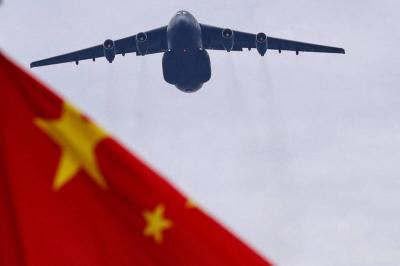
Beijing could eventually see a full amphibious invasion of Taiwan as the only "prudent" way to bring about unification, the US Department of Defense said in a newly released annual report to Congress. The Pentagon's "Annual Report to Congress: Military and Security Developments Involving the People's Republic of China 2025," was in many ways similar to last year’s report but reorganized the analysis of the options China has to take over Taiwan. Generally, according to the report, Chinese leaders view the People's Liberation Army's (PLA) capabilities for a Taiwan campaign as improving, but they remain uncertain about its readiness to successfully seize
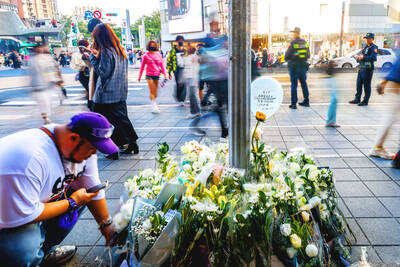
HORROR STORIES: One victim recounted not realizing they had been stabbed and seeing people bleeding, while another recalled breaking down in tears after fleeing A man on Friday died after he tried to fight the knife-wielding suspect who went on a stabbing spree near two of Taipei’s busiest metro stations, Taipei Mayor Chiang Wan-an (蔣萬安) said. The 57-year-old man, identified by his family name, Yu (余), encountered the suspect at Exit M7 of Taipei Main Station and immediately tried to stop him, but was fatally wounded and later died, Chiang said, calling the incident “heartbreaking.” Yu’s family would receive at least NT$5 million (US$158,584) in compensation through the Taipei Rapid Transit Corp’s (TRTC) insurance coverage, he said after convening an emergency security response meeting yesterday morning. National

Taiwan has overtaken South Korea this year in per capita income for the first time in 23 years, IMF data showed. Per capita income is a nation’s GDP divided by the total population, used to compare average wealth levels across countries. Taiwan also beat Japan this year on per capita income, after surpassing it for the first time last year, US magazine Newsweek reported yesterday. Across Asia, Taiwan ranked fourth for per capita income at US$37,827 this year due to sustained economic growth, the report said. In the top three spots were Singapore, Macau and Hong Kong, it said. South

PLANNED: The suspect visited the crime scene before the killings, seeking information on how to access the roof, and had extensively researched a 2014 stabbing incident The suspect in a stabbing attack that killed three people and injured 11 in Taipei on Friday had planned the assault and set fires at other locations earlier in the day, law enforcement officials said yesterday. National Police Agency (NPA) Director-General Chang Jung-hsin (張榮興) said the suspect, a 27-year-old man named Chang Wen (張文), began the attacks at 3:40pm, first setting off smoke bombs on a road, damaging cars and motorbikes. Earlier, Chang Wen set fire to a rental room where he was staying on Gongyuan Road in Zhongzheng District (中正), Chang Jung-hsin said. The suspect later threw smoke grenades near two exits


 RSS
RSS