


A public plea to US President Barack Obama to help Taiwan build its own submarines is being made by one of Washington’s best-known and most respected experts on China’s military development.
“Taiwan would like help acquiring additional design consulting and sub-systems from the United States or potential European suppliers,” said Richard Fisher, senior fellow with the International Assessment and Strategy Center.
The plea, published by the conservative Washington Times, said that the help could also include combat systems, sonar systems, periscopes and weapons.
“By any consideration, Taiwan seeks a modest submarine fleet to provide a deterrent force,” Fisher said.
It is not meant to go sub-to-sub with the 65 to 73 diesel and nuclear-powered subs China may have by 2020, he added.
Still, four to eight submarines could complicate China’s real goal of amassing an amphibious military force sufficient to invade Taiwan, Fisher said.
Fisher said that China’s invasion plans envision using up to 12 new, large naval amphibious-assault ships and scores of new, very large civilian roll-on, roll-off ferries.
Taiwan’s submarines could effectively threaten these ships and force China to reconsider future invasion plans, Fisher said.
Providing Taiwan with the means to deter Chinese attack and to buy sufficient time to achieve a mutually acceptable peace with China has been a goal of US policy on Taiwan since the early 1950s. Unfortunately, this could take some time, for Beijing is unlikely to agree to any peace that allows Taiwan’s vibrant democracy to thrive, he said.
Supporting Taiwan’s ability to defend its freedom, advances immediate US interests in opposing Chinese aggression and defending a maritime balance of power favorable to the US and its Asian allies, Fisher said.
Also, China could quickly turn Taiwan into a military base for missile, air and naval forces that would threaten US allies Japan, South Korea and the Philippines.
Fisher said that for two years Obama has advocated finding Taiwan appropriate “asymmetric” weapons to offset China’s growing conventional military superiority.
“Helping Taiwan to achieve indigenous production of submarines would be consistent with this goal,” Fisher said.
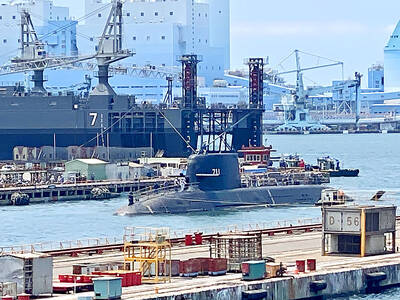
AGING: While Japan has 22 submarines, Taiwan only operates four, two of which were commissioned by the US in 1945 and 1946, and transferred to Taiwan in 1973 Taiwan would need at least 12 submarines to reach modern fleet capabilities, CSBC Corp, Taiwan chairman Chen Cheng-hung (陳政宏) said in an interview broadcast on Friday, citing a US assessment. CSBC is testing the nation’s first indigenous defense submarine, the Hai Kun (海鯤, Narwhal), which is scheduled to be delivered to the navy next month or in July. The Hai Kun has completed torpedo-firing tests and is scheduled to undergo overnight sea trials, Chen said on an SET TV military affairs program. Taiwan would require at least 12 submarines to establish a modern submarine force after assessing the nation’s operational environment and defense
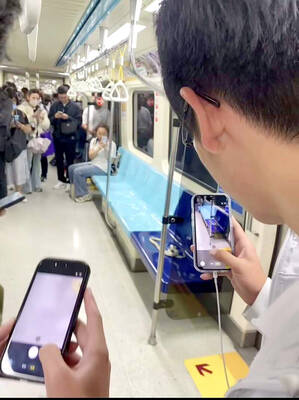
A white king snake that frightened passengers and caused a stir on a Taipei MRT train on Friday evening has been claimed by its owner, who would be fined, Taipei Rapid Transit Corp (TRTC) said yesterday. A person on Threads posted that he thought he was lucky to find an empty row of seats on Friday after boarding a train on the Bannan (Blue) Line, only to spot a white snake with black stripes after sitting down. Startled, he jumped up, he wrote, describing the encounter as “terrifying.” “Taipei’s rat control plan: Release snakes on the metro,” one person wrote in reply, referring
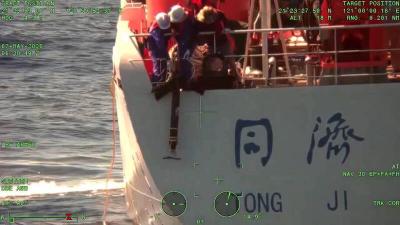
The coast guard today said that it had disrupted "illegal" operations by a Chinese research ship in waters close to the nation and driven it away, part of what Taipei sees a provocative pattern of China's stepped up maritime activities. The coast guard said that it on Thursday last week detected the Chinese ship Tongji (同濟號), which was commissioned only last year, 29 nautical miles (54km) southeast of the southern tip of Taiwan, although just outside restricted waters. The ship was observed lowering ropes into the water, suspected to be the deployment of scientific instruments for "illegal" survey operations, and the coast
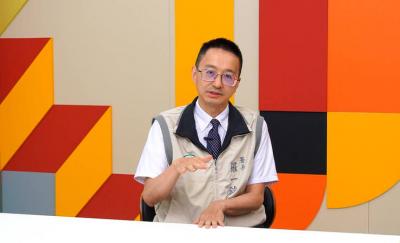
Taiwan’s two cases of hantavirus so far this year are on par with previous years’ case numbers, and the government is coordinating rat extermination work, so there should not be any outbreaks, Centers for Disease Control (CDC) Director-General Philip Lo (羅一鈞) said today in an interview with the Liberty Times (the Taipei Times’ sister newspaper). An increase in rat sightings in Taipei and New Taipei City has raised concerns about the spread of hantavirus, as rats can carry the disease. In January, a man in his 70s who lived in Taipei’s Daan District (大安) tested positive posthumously for hantavirus, Taiwan’s


 RSS
RSS