


The establishment of the Sunflower movement earlier this year signified not only the public’s dissatisfaction with how the ruling Chinese Nationalist Party (KMT) handled a controverial cross-strait agreement; it also revealed the currently unbridgeable gap between the nation’s anticipation of what a democratically elected legislature should do and its failure to meet the expectation, academics said in Taipei yesterday.
As Hong Kong is facing off against Chinese authorities in demonstrations for full suffrage and real democracy, the Youth Synergy Taiwan Foundation has organized a series of forums spanning the month of October to discuss the predicament of Taiwan’s representational democracy and the role referendums could play to either supplement or, on certain issues, replace representational politics.
Broadening civic participation, in the form of public deliberation and referendums, is the aim of much-called-for constitutional reforms, which are expected to alleviate the dissonance in the interactions between, and the respective expectations of, the government, the representational system and the public, according to the academics whose backgrounds are in law, sociology and public administration.
National Taiwan University law professor Yeh Jiunn-rong (葉俊榮) trumpeted civic constitutionalism as the approach the nation should adopt, referring to the book New Democracies in Crisis, which says that overdependence on courts and rigid constitutions creates estranged democratic engagement of citizens in public affairs.
“A constitution is sure to have content, spirit, values and culture; it has to engage in conversation with people democratically. It could lead or sometimes restrain democracy. In a transitional democracy, it could draw up a schedule for democratic reforms,” Yeh said. “This is what [Jurgen] Habermas underlines in his Between Facts and Norms, which acknowledges the conflicts, but strives to find harmony between the two.”
National Taiwan University associate professor of sociology Lin Kuo-min (林國民) said the predicament of representational democracy is made possible by two political phenomena: the lure of modern authoritarianism and the lure of majoritarianism.
“We can call the first one the ‘China factor,’ which has affected the world, not in the direct way it has influenced Taiwan, but with a mode of development the Chinese government has been touting that is authoritarian and removes transparency and democracy from the decisionmaking process,” he said. “The other is believing that a majority in congress could trump the minority’s opinions.”
“The Sunflower movement embodied this crisis of democracy: The cross-strait service trade agreement was negotiated clandestinely, and the majority party tried to ram it through in the legislature,” Lin said.
People need to have access to political participation other than elections, and referendums might be a way to complement representational democracy, but the nation’s rights to referendum have been restricted by the president-nominated “referendum review committee,” he said.
“And even if we have referendums, a more progressive institution cannot be created if people fail to have sufficient knowledge in and debate over the public issues,” he added. “This is where civic deliberation comes in.”
National Taipei University professor Chen Yao-hsiang (陳耀祥) said that what the nation needs now is the construction of substantive democracy — as opposed to having only a form of it — that is predicated on the deconstruction of the party-state residues not only in political structure, but also in social, economic and cultural realms.
Academia Sinica research fellow Huang Kuo-chang (黃國昌), who had an active role in the Sunflower movement and is now petitioning for an amendment to the Referendum Act (公民投票法), said the check and balance mechanism that is guaranteed by the Constitution has been proved a failure in Taiwan’s democracy.
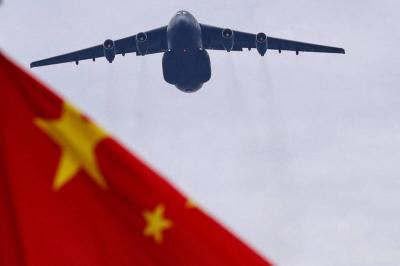
Beijing could eventually see a full amphibious invasion of Taiwan as the only "prudent" way to bring about unification, the US Department of Defense said in a newly released annual report to Congress. The Pentagon's "Annual Report to Congress: Military and Security Developments Involving the People's Republic of China 2025," was in many ways similar to last year’s report but reorganized the analysis of the options China has to take over Taiwan. Generally, according to the report, Chinese leaders view the People's Liberation Army's (PLA) capabilities for a Taiwan campaign as improving, but they remain uncertain about its readiness to successfully seize

Taiwan is getting a day off on Christmas for the first time in 25 years. The change comes after opposition parties passed a law earlier this year to add or restore five public holidays, including Constitution Day, which falls on today, Dec. 25. The day marks the 1947 adoption of the constitution of the Republic of China, as the government in Taipei is formally known. Back then the Chinese Nationalist Party (KMT) governed China from Nanjing. When the KMT, now an opposition party in Taiwan, passed the legislation on holidays, it said that they would help “commemorate the history of national development.” That

Taiwan has overtaken South Korea this year in per capita income for the first time in 23 years, IMF data showed. Per capita income is a nation’s GDP divided by the total population, used to compare average wealth levels across countries. Taiwan also beat Japan this year on per capita income, after surpassing it for the first time last year, US magazine Newsweek reported yesterday. Across Asia, Taiwan ranked fourth for per capita income at US$37,827 this year due to sustained economic growth, the report said. In the top three spots were Singapore, Macau and Hong Kong, it said. South

Snow fell on Yushan (Jade Mountain, 玉山) yesterday morning as a continental cold air mass sent temperatures below freezing on Taiwan’s tallest peak, the Central Weather Administration (CWA) said. Snowflakes were seen on Yushan’s north peak from 6:28am to 6:38am, but they did not fully cover the ground and no accumulation was recorded, the CWA said. As of 7:42am, the lowest temperature recorded across Taiwan was minus-5.5°C at Yushan’s Fengkou observatory and minus-4.7°C at the Yushan observatory, CWA data showed. On Hehuanshan (合歡山) in Nantou County, a low of 1.3°C was recorded at 6:39pm, when ice pellets fell at Songsyue Lodge (松雪樓), a


 RSS
RSS