


Amid a backdrop of a recent string of disasters and food scandals, the Democratic Progressive Party (DPP) yesterday marked its 28th anniversary with nationwide picnics instead of its usual large-scale celebrations, in a move meant to symbolize that the party is on the side of the general public, not the privileged few.
In light of July’s plane crash in Penghu, which killed 48 people, a series gas pipeline blasts in Greater Kaohsiung that killed 30, a tainted oil scare and other events, the DPP decided that it would celebrate its 28th birthday by staging picnic events around the country.
“The picnics symbolize that the DPP is not a party for the privileged, rather, it will always stand with the general populace,” DPP Chairperson Tsai Ing-wen (蔡英文) said at a picnic in Greater Taichung, where she was campaigning for the party’s mayoral candidate, Lin Chia-lung (林佳龍). “All of our candidates [in the year-end nine-in-one elections] share the same idea: to enable people to live happily.”
She said that what the public wants may be ordinary, but it takes extraordinary government leadership to fulfil those needs, such as safe food, security and a good transportation network. Tsai added that she is confident the DPP nominees will be extraordinary leaders.
Tsai also took part in a picnic in Changhua County’s Lukang Township (鹿港), after campaigning for the party’s candidate for Changhua County commissioner, Wei Ming-ku (魏明谷).
Prior to the its anniversary celebrations yesterday, the party decided to expel several of its members for insisting on running in the Nov. 29 elections despite not receiving party nominations.
Those expelled were Hsinchu mayoral candidate James Tsai (蔡仁堅), Hualien County commissioner hopeful Chu Kuo-hua (朱國華), Greater Taoyuan mayoral candidate Hsu Jui-chih (許睿智) and 18 local councilor hopefuls, including New Taipei City Councilor Lee Wan-yu (李婉鈺) and Taoyuan County Councilor Lo Wen-chin (羅文欽).
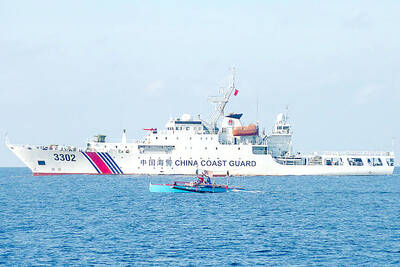
EXPANSIONIST: China deploys an average of 40 to 50 warships and coast guard vessels daily in the South China Sea, despite pledges not to militarize the region, an official said China is attempting to expand its influence across the First Island Chain and increase pressure on Japan by sending coast guard vessels into waters off of Taiwan under the pretext of maritime negotiations with Japan and the Philippines, a national security official said yesterday. China’s recent actions in the waters east of Taiwan and Japan and the Philippines’ exclusive economic zones (EEZ) are attempts to establish dominance in First Island Chain waters, said the official who declined to be named, adding that this is “expansion disguised as law enforcement.” Framing China’s actions solely as a cross-strait issue is a serious misjudgment that
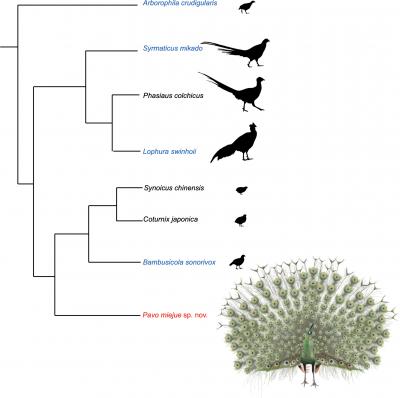
Through analyzing fossil evidence, a research team at National Taiwan University (NTU) discovered the largest endemic bird to have lived in Taiwan, naming it Pavo miejue, or extinct peafowl (滅絕孔雀). The Mikado pheasant, which is printed on the back of the NT$1,000 bank note, was previously believed to be the biggest endemic bird to Taiwan. The research team’s findings suggest that Pavo miejue lived during the Pleistocene epoch tens of thousands of years ago. It is the first endemic extinct bird species discovered and formally named in Taiwan. The study was coauthored by NTU Institute of Ecology and Evolutionary Biology professor Tsai Cheng-hsiu (蔡政修),
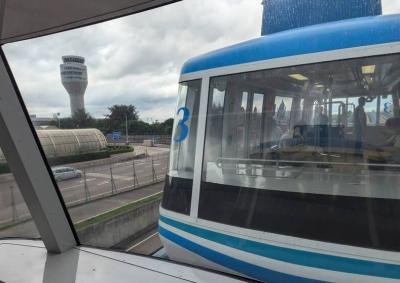
Taiwan Taoyuan International Airport is to suspend its automated Skytrain service connecting Terminal 1 and Terminal 2 starting on July 1 to facilitate connection works for the upcoming Terminal 3, the airport operator said today. Passengers and staff who need to travel between the two terminals after the suspension can instead use the Taoyuan MRT or the airport's 24-hour shuttle bus service, Taoyuan International Airport Corp said. The Taoyuan MRT Airport Line directly links the two terminals, while the shuttle buses are to operate around the clock, the company added. The Skytrain provides free transportation between the airport’s two terminals for travelers and
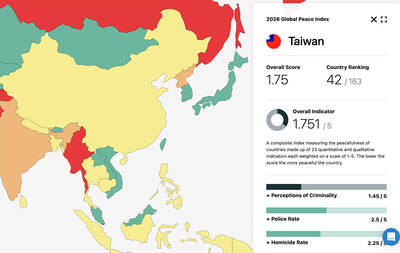
Taiwan ranked 42nd in terms of peacefulness among 163 countries, down five places from last year, according to this year’s Global Peace Index. With an overall score of 1.751, Taiwan dropped from 37th last year, the report published by the global Institute for Economics and Peace showed. The overall score measures a country’s level of peacefulness using 23 quantitative and qualitative indicators across three domains — ongoing domestic and international conflict, societal safety and security, and militarization. While Taiwan ranked 42nd worldwide, it was listed in ninth place among the 19 Asian-Pacific countries in the report, after New Zealand, Singapore, Japan, Malaysia,


 RSS
RSS