


A Taiwanese company has withdrawn notice to use Chinese vessels on a renewable energy project off the coast, the port authority said yesterday, after opposition lawmakers cited security concerns about the joint operation.
The last-minute decision to drop the vessels underscores the nation’s concerns about possible surveillance by Beijing, and comes a day after the government said it was making security checks on a Chinese smartphone company.
The Huadian 1001, a Chinese platform vessel and a towing vessel, departed China’s Nantong in Jiangsu Province earlier this month for the Port of Taichung, after receiving the all-clear from the Maritime and Port Bureau to ply Taiwanese waters.
The Chinese-registered vessels had been contracted to work on Taiwan’s first offshore wind project.
Two Chinese companies, China Huadian Engineering Co Ltd and Jiangsu-based Blue Water Windmill Engineering Co Ltd, were awarded contracts.
However, opposition lawmakers this week raised concerns at a committee hearing into the project that the Chinese vessels could carry out surveillance and gather sensitive information about Taiwan’s coastline and oceanography.
“How can you safely allow this Chinese ship to enter Taiwan?” Democratic Progressive Party (DPP) Legislator Kuan Bi-ling (管碧玲) asked the committee hearing.
Wednesday’s hearing included senior officials from Taiwan’s defense, national security, transportation and maritime, science and technology, economics and interior ministries, in addition to the Mainland Affairs Council.
Maritime and Port Bureau Secretary-General Hsu Kuo-ching (許國慶) yesterday said the Taiwanese contractor CBSC Corp Taiwan, through one of its subcontractors for the project, had advised authorities that it would rescind an application to use the Chinese vessel.
An official from the Ministry of Economic Affairs involved with the wind project said that other options, such as using a ship and crew from another country, were now being considered.
The Ministry of Interior said in a report to lawmakers that it would also revoke the entry certificates of 37 Chinese technicians who were due to take part in the project.
The Chinese vessel and technicians had been contracted to assist in constructing and installing an ocean meteorological observation tower and other seabed structures in the first phase of the project.
Meanwhile, the National Communications Commission on Wednesday said it was investigating whether Xiaomi Inc, China’s leading smartphone company by domestic shipments, was a cybersecurity threat.
It said independent tests were being made on Xiaomi phones after reports in recent months that some models automatically sent user data back to the firm’s servers in China.
Privately owned Xiaomi has faced several allegations of security leaks in recent months.
Last month, the company publicly apologized and said it would change a default cloud feature after a Finnish security company found proof that Xiaomi collected address book data without permission.
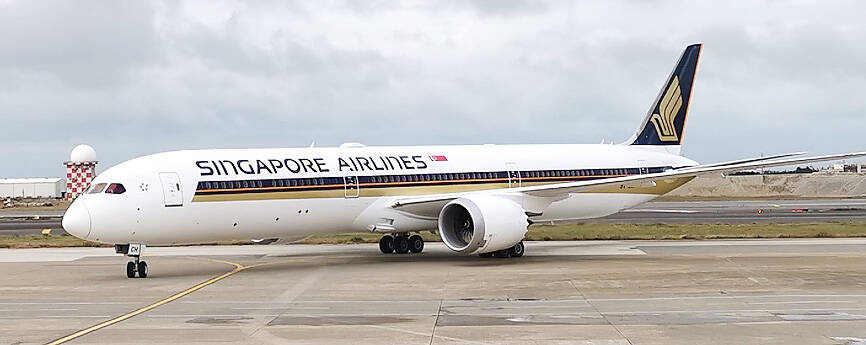
INCREASED CAPACITY: The flights on Mondays, Wednesdays, Fridays and Sundays would leave Singapore in the morning and Taipei in the afternoon Singapore Airlines is adding four supplementary flights to Taipei per week until May to meet increased tourist and business travel demand, the carrier said on Friday. The addition would raise the number of weekly flights it operates to Taipei to 18, Singapore Airlines Taiwan general manager Timothy Ouyang (歐陽漢源) said. The airline has recorded a steady rise in tourist and business travel to and from Taipei, and aims to provide more flexible travel arrangements for passengers, said Ouyang, who assumed the post in July last year. From now until Saturday next week, four additional flights would depart from Singapore on Monday, Wednesday, Friday
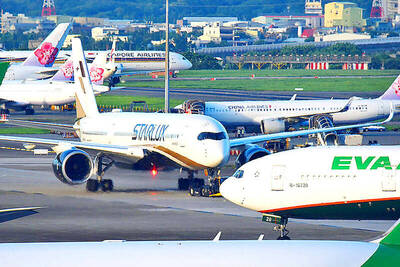
Taiwan’s three major international carriers are increasing booking fees, with EVA Airways having already increased the charge to US$28 per flight segment from US$25, while China Airlines (CAL) and Starlux Airlines are set to follow suit. Booking fees are charged by airlines through a global distribution system (GDS) and passed on to passengers. Carriers that apply the fees include CAL, EVA, Starlux and Tigerair Taiwan. A GDS is a computerized network operated by a company that connects airlines with travel agents and ticketing platforms, allowing reservations to be made and processed in real time. Major players include Amadeus, Sabre and Travelport. EVA Air began
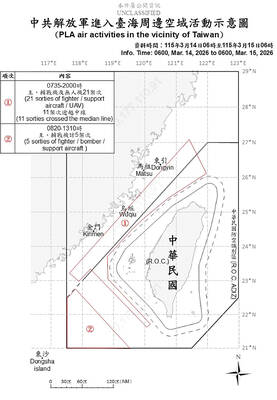
The Ministry of National Defense yesterday reported the return of large-scale Chinese air force activities after their unexplained absence for more than two weeks, which had prompted speculation regarding Beijing’s motives. China usually sends fighter jets, drones and other military aircraft around the nation on a daily basis. Interruptions to such routine are generally caused by bad weather. The Ministry of National Defense said it had detected 26 Chinese military aircraft in the Taiwan Strait over the previous 24 hours. It last reported that many aircraft on Feb. 25, when it spotted 30 aircraft, saying Beijing was carrying out another “joint combat
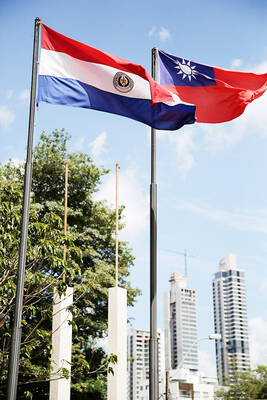
When Paraguayan opposition lawmaker Leidy Galeano returned from an all-expenses-paid tour of six Chinese cities late last year, she was convinced Paraguay risked missing out on major economic gains by sticking with longtime ally Taipei over Beijing — a message that participants on the trip heard repeatedly from Chinese officials. “Everything I saw there, I wanted for my country,” said Galeano, a member of the newly-formed Yo Creo party whose senior figures have spoken favorably about China. This trip and others like it — which people familiar with the visits said were at the invitation of the Chinese consulate in Sao Paulo


 RSS
RSS