


President Ma Ying-jeou (馬英九) reiterated his hopes of meeting with Chinese President Xi Jinping (習近平) at this year’s APEC leadership summit as he tried to dismiss Beijing’s concerns that his presence could jeopardize its “one China” principle during a recent interview with three European media outlets.
Ma gave a joint interview at the Presidential Office on Monday to Beijing-based correspondents for Deutsche Presse-Agentur (DPA), German newspaper Allgemeine Zeitung and French newspaper Le Figaro.
According to the DPA report, Ma said Beijing was afraid that the presence of the leaders of Taiwan and China at APEC would give the world the false impression that they have abandoned the “one China” principle.
“I don’t think it could be substantiated... I hope more favorable conditions can be created to make it happen,” Ma was quoted by DPA as saying.
Ma stressed that APEC was designed for economic leaders to meet without using their official titles, DPA said.
“The idea is to accommodate the participation by countries like us. And that’s why we consider that is a good opportunity for us to use that format for leaders of two sides to meet without generating other unnecessary sensitivities,” DPA quoted Ma as saying.
Ma said that his administration would continue its current policy toward China because his “one China, respective interpretations” push has received the support of more than 50 percent of the public, DPA said.
He also promised to increase communication with the public about his cross-strait policies, the report said.
The Ma administration has received a letter from China inviting Taiwan to the APEC leaders’ meeting on Nov. 10 and 11 in Beijing, but has withheld the protocol details, including how Ma was referred to in the letter.
Mainland Affairs Council Minister Wang Yu-chi (王郁琦), who said on Monday that the letter was handed to him by China’s Taiwan Affairs Office Deputy Director Gong Qinggai (龔清概) at the end of last month, said he “did not pay attention” to how Beijing addressed Ma in the letter.
In line with established APEC practices, Ma is likely to decline the invitation and appoint an envoy in his stead.
Premier Jiang Yi-huah (江宜樺) was also optimistic about a Ma-Xi meeting, telling lawmakers yesterday that until Ma appoints an envoy, there is still a chance for a meeting.
However, “the chances are slim,” he told Chinese Nationalist Party (KMT) Legislator Lai Shyh-bao (賴士葆) during a question-and-answer session.
China is reluctant to have the two meet at an “international event,” but “we still consider the most suitable occasion for a Ma-Xi meeting would be the APEC leaders’ summit,” Wang said. “We will continue in our efforts.”
Meanwhile, according to Beijing’s online media accreditation and registration system for the summit, reporters for Taiwanese media outlets are required to register under the category of “media from Chinese Taipei.”
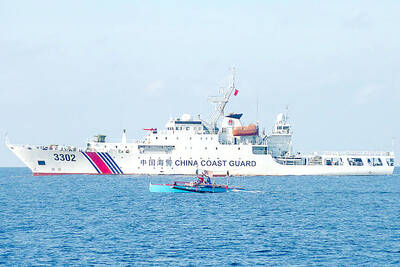
EXPANSIONIST: China deploys an average of 40 to 50 warships and coast guard vessels daily in the South China Sea, despite pledges not to militarize the region, an official said China is attempting to expand its influence across the First Island Chain and increase pressure on Japan by sending coast guard vessels into waters off of Taiwan under the pretext of maritime negotiations with Japan and the Philippines, a national security official said yesterday. China’s recent actions in the waters east of Taiwan and Japan and the Philippines’ exclusive economic zones (EEZ) are attempts to establish dominance in First Island Chain waters, said the official who declined to be named, adding that this is “expansion disguised as law enforcement.” Framing China’s actions solely as a cross-strait issue is a serious misjudgment that
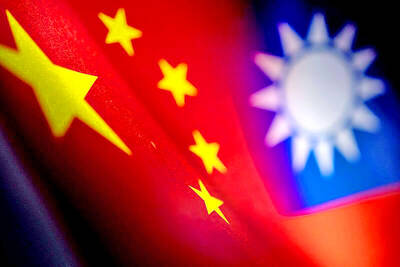
BAIT AND SWITCH: Allowing KMT-run counties to sell to China while the threat of abrupt cancelations hangs overhead is another form of coercion, officials said Beijing is using agricultural purchase offers announced during the Straits Forum to deepen Taiwan’s dependence on the Chinese market, a Taiwanese official said yesterday as they criticized the Taitung County commissioner’s participation in the initiative. During the Straits Forum held in Xiamen on Saturday, Chinese officials announced a sales and purchase agreement for agricultural products from some counties led by the Chinese Nationalist Party (KMT). Taitung County Commissioner Yao Ching-ling (饒慶鈴), who was barred from attending the event in person by the Mainland Affairs Council, participated via video. Under the agreement, China would purchase atemoyas, pomeloes, tea and grouper harvested in Taitung,
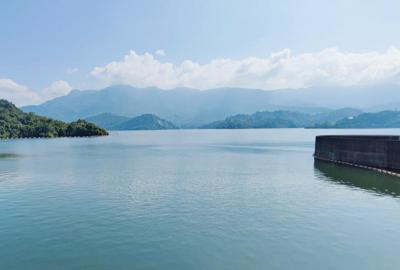
Several major reservoirs are estimated to have received 590 million tonnes of water inflow from June 4 to this morning, with storage levels at Wushantou Reservoir exceeding 50 percent and Zengwen Reservoir approaching 30 percent as of 9am today, data from the Water Resources Agency showed. Of the estimated 590 million tonnes, 450 million have already been stored in reservoirs, the data showed. As of 9am today, Baoshan Reservoir storage levels reached 100 percent, while Baoshan Second Reservoir, Yongheshan Reservoir and Techi Reservoir all exceeded 90 percent, data on the Water Resources Agency’s Web site showed. In addition, the Shimen Reservoir is at

SHIFTING FIRE: While the tempo of purely military exercises around Taiwan has gone down somewhat, Beijing is working to isolate Lai diplomatically from support abroad Chinese President Xi Jinping (習近平) is shifting tactics in his campaign to pressure Taiwan, ramping up diplomatic isolation of the nation while dialing down provocative displays of military aggression. Taiwan recorded a daily average of five Chinese military aircraft crossing the Taiwan Strait’s buffer line with China through May this year — half the number logged in the same period last year. In March, Beijing did not send a single fighter jet near Taiwan for seven days, the longest absence on record outside of typhoon season. In comparison, China sent 153 planes near Taiwan during one day at its peak in


 RSS
RSS