


The US is worried about Taiwan’s treatment of pork imports containing the leanness-enhancing drug ractopamine, despite Taiwan’s recent progress in seeking trade liberalization, a top US trade official said at a recent WTO meeting in Switzerland.
Michael Punke, a US trade representative and ambassador to the WTO, said that while Taiwan has been “an active and positive partner” in trade liberalization initiatives, there are some areas that need greater attention.
“The United States commends Chinese Taipei [Taiwan] on the strong efforts it has made over the past four years to liberalize its trade and investment regime, and further integrate with the global economy,” Punke said on Tuesday at the third WTO Trade Policy Review of Taiwan in Geneva.
For instance, Punke said, the nation had implemented important legal reforms to improve its trade secrets enforcement regime.
Proposed amendments intended to reduce regulatory reviews and to increase transparency reviewing foreign investment in the nation are also pending legislative review, he said.
The nation also implemented regulatory changes this year that brought its technical standards into compliance with international norms in certain industries, Punke added.
“While Chinese Taipei has reason to be pleased with the results of its efforts to date, the United States would like to highlight several areas that we believe need greater attention,” Punke said.
He said that although Taiwan established a maximum residue level (MRL) for ractopamine in beef cuts in 2012, it has not set an MRL for ractopamine in pork and other beef products, despite the Codex Alimentarius Commission’s adoption of MRLs for ractopamine in these products.
Taiwan also maintains “unpredictable policies” that impede the importation of rice and organic products, among others, he said.
In other areas, he added, Taiwan needs to continue improving the transparency and predictability of the investment review process.
He said statements made this year by Taiwan’s leadership, encouraging proactive liberalization of the nation’s trade and investment regime, were heartening.
“For Chinese Taipei to meet its ambitious trade and investment goals, these statements must be backed up with swift and concrete action,” Punke added.
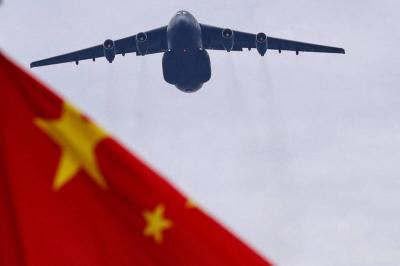
Beijing could eventually see a full amphibious invasion of Taiwan as the only "prudent" way to bring about unification, the US Department of Defense said in a newly released annual report to Congress. The Pentagon's "Annual Report to Congress: Military and Security Developments Involving the People's Republic of China 2025," was in many ways similar to last year’s report but reorganized the analysis of the options China has to take over Taiwan. Generally, according to the report, Chinese leaders view the People's Liberation Army's (PLA) capabilities for a Taiwan campaign as improving, but they remain uncertain about its readiness to successfully seize

Taiwan is getting a day off on Christmas for the first time in 25 years. The change comes after opposition parties passed a law earlier this year to add or restore five public holidays, including Constitution Day, which falls on today, Dec. 25. The day marks the 1947 adoption of the constitution of the Republic of China, as the government in Taipei is formally known. Back then the Chinese Nationalist Party (KMT) governed China from Nanjing. When the KMT, now an opposition party in Taiwan, passed the legislation on holidays, it said that they would help “commemorate the history of national development.” That

Taiwan has overtaken South Korea this year in per capita income for the first time in 23 years, IMF data showed. Per capita income is a nation’s GDP divided by the total population, used to compare average wealth levels across countries. Taiwan also beat Japan this year on per capita income, after surpassing it for the first time last year, US magazine Newsweek reported yesterday. Across Asia, Taiwan ranked fourth for per capita income at US$37,827 this year due to sustained economic growth, the report said. In the top three spots were Singapore, Macau and Hong Kong, it said. South

Snow fell on Yushan (Jade Mountain, 玉山) yesterday morning as a continental cold air mass sent temperatures below freezing on Taiwan’s tallest peak, the Central Weather Administration (CWA) said. Snowflakes were seen on Yushan’s north peak from 6:28am to 6:38am, but they did not fully cover the ground and no accumulation was recorded, the CWA said. As of 7:42am, the lowest temperature recorded across Taiwan was minus-5.5°C at Yushan’s Fengkou observatory and minus-4.7°C at the Yushan observatory, CWA data showed. On Hehuanshan (合歡山) in Nantou County, a low of 1.3°C was recorded at 6:39pm, when ice pellets fell at Songsyue Lodge (松雪樓), a


 RSS
RSS