


Former American Institute in Taiwan (AIT) chairman Richard Bush said on Monday that he was speaking only for himself when he said last week that the US felt a need to express its views on how its interests would be affected by Taiwan’s elections.
He told reporters in Washington that his remarks — the subject of major news stories in Taiwan — had been over-interpreted.
Later, Bush wrote in a blog published by the Brookings Institution, where he is director of the Center for East Asia Policy Studies, that he had received a lot of coverage in the Taiwanese media for his remarks concerning how the US government would approach the 2016 presidential election.
“I suppose I should be flattered by all the attention my remarks evoked,” Bush wrote.
He said that he appreciated the mature and measured response from Democratic Progressive Party (DPP) Secretary-General Joseph Wu (吳釗燮) and had “absolutely no objection” to the comment of the AIT spokesman that he was no longer a government official and was speaking for himself.
“I was not surprised that some reporters didn’t get their facts exactly right; that’s not unheard of in either the Taiwan [sic] or the American media, but what I’ve seen from the Taipei Times is truly puzzling,” he wrote.
The Taipei Times said that Bush had indicated that Washington would declare a preference for the Chinese Nationalist Party (KMT) candidate because there were lingering doubts about the DPP’s cross-strait policies.
“As can be seen from the text of my remarks, the US government clearly understands the tension between not stating support for a particular candidate and expressing itself on the US interests at stake, when there are interests at stake (I have felt that tension myself),” he wrote. “I provided the examples where we have expressed views in the past on the implications of the election for US interests, by way of predicting that it would happen again. It was up to Taiwan voters in the past to decide what those statements meant and how to weight them in their voting decisions. It will be up to Taiwan voters to do so in the future, which is as it should be, but I don’t see any basis for extrapolating from my actual remarks to conclude that I was predicting that the US government would side with one party over another.”
Separately, US Department of State deputy spokesperson Marie Harf was asked directly on Monday about Bush’s statement last week, about US policy on Taiwan’s presidential election and if the US would prefer a party or candidate based on its China policy.
She said that she had not seen Bush’s comments, but that the US did not take a position on “who we would like to see anywhere as the leader of another place.”
“Obviously, that’s not something that we here take positions on. When it comes to Taiwan, as you’re probably aware, we remain fully committed to the one China policy, to the three communiques and our responsibilities under the Taiwan Relations Act,” Harf said. “Beyond that, I don’t have much more analysis of the election.”
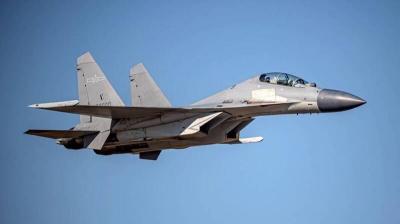
Eight Chinese naval vessels and 24 military aircraft were detected crossing the median line of the Taiwan Strait between 6am yesterday and 6am today, the Ministry of National Defense said this morning. The aircraft entered Taiwan’s northern, central, southwestern and eastern air defense identification zones, the ministry said. The armed forces responded with mission aircraft, naval vessels and shore-based missile systems to closely monitor the situation, it added. Eight naval vessels, one official ship and 36 aircraft sorties were spotted in total, the ministry said.
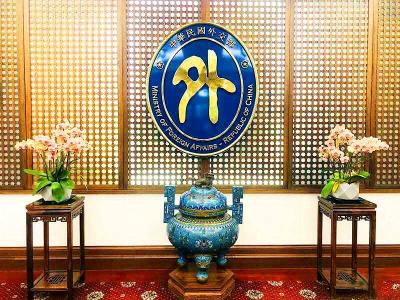
The Ministry of Foreign Affairs (MOFA) today said that if South Korea does not reply appropriately to its request to correct Taiwan’s name on its e-Arrival card system before March 31, it would take corresponding measures to alter how South Korea is labeled on the online Taiwan Arrival Card system. South Korea’s e-Arrival card system lists Taiwan as “China (Taiwan)” in the “point of departure” and “next destination” fields. The ministry said that it changed the nationality for South Koreans on Taiwan’s Alien Resident Certificates from “Korea” to “South Korea” on March 1, in a gesture of goodwill and based on the

Taiwanese officials were shown the first of 66 F-16V fighter jets purchased by Taiwan from the United States, the Ministry of National Defense said yesterday, adding the aircraft has completed an initial flight test and is expected to be delivered later this year. A delegation led by Deputy Minister of National Defense Hsu Szu-chien (徐斯儉) visited Lockheed Martin’s F-16 C/D Block 70 (also known as F-16V) assembly line in South Carolina on March 16 to view the aircraft. The jet will undergo a final acceptance flight in the US before being delivered to Taiwan, the
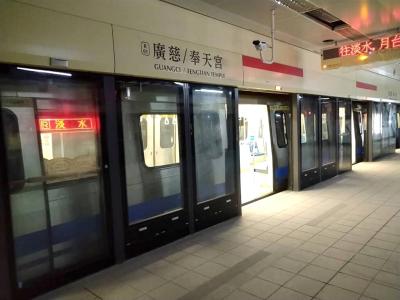
The New Taipei Metro's Sanyin Line and the eastern extension of the Taipei Metro's Tamsui-Xinyi Line (Red Line) are scheduled to begin operations in June, the National Development Council said today. The Red Line, which terminates at Xiangshan Station, would be connected by the 1.4km extension to a new eastern terminal, Guangci/Fengtian Temple Station, while the Sanyin Line would link New Taipei City's Tucheng and Yingge stations via Sanxia District (三峽). The council gave the updates at a council meeting reviewing progress on public construction projects for this year. Taiwan's annual public infrastructure budget would remain at NT$800 billion (US$25.08 billion), with NT$97.3


 RSS
RSS