


Opposition parties and pro-independence groups yesterday called for the elimination of the Control Yuan and the Examination Yuan, with groups advocating the drafting of a new constitution to better fit the nation’s needs.
As lawmakers are set to review the qualification standards of the nominees for the two yuans this week and next week in the extra legislative session, the Democratic Progressive Party (DPP) and the Taiwan Solidarity Union (TSU) said the two institutions are better off being eliminated.
“The separation of the five powers system of the Republic of China [ROC] Constitution, as designed by founding father Sun Yat-sen (孫逸仙), has proven to be a failed system and it is time to adopt a system that separates the three powers, like in most Western democracies,” TSU caucus whip Lai Cheng-chang (賴振昌) told a press conference.
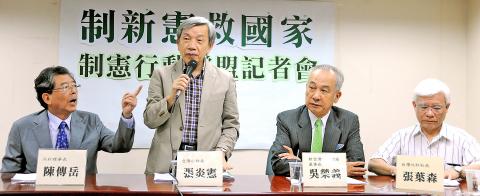
Photo: Liu Hsin-de, Taipei Times
The TSU caucus will boycott the review of nominees of the institutions, Lai said.
Seven of the 21 Examination Yuan candidates, including president nominee Wu Jin-lin (伍錦霖) and vice president nominee Kao Yuang-kuang (高永光), have either served as high-ranking Chinese Nationalist Party (KMT) officials, had close relations with the ruling party or worked for its think tank, DPP Legislator Tsai Chi-chang (蔡其昌) told a separate press conference.
“President Ma Ying-jeou (馬英九) has used nominations for the two institutions as his personal tool to hand out political rewards,” DPP Legislator Lee Chun-yi (李俊俋) said.
The People First Party also raised concerns with Ma’s nomination, with PFP Legislator Chen Yi-chieh (陳怡潔) saying that several Control Yuan member nominees were either “incompetent” former government officials, or politicians with close KMT ties.
“Is a Control Yuan [with such members] capable of being the government’s watchdog? It is questionable,” Chen said, adding that the Control Yuan’s right of investigation could be relegated to the Legislative Yuan.
Another press conference co-organized by pro-independence groups called for a new constitution tailor-made for Taiwan as Taiwan Society president Chang Yen-hsien (張炎憲) also favored a “three-powers” constitutional system.
With Ma’s pro-China policy and repeated infringement of the Constitution, Taiwanese would not be able to safeguard the country’s sovereignty without a new constitution, Chang said.
Drafted in China in the 1930s, the ROC Constitution does not now meet the contemporary needs of the nation’s political and economic development, despite having been amended seven times, said former vice premier Wu Rong-i (吳榮義), who is now president of the Taiwan Brain Trust think tank.
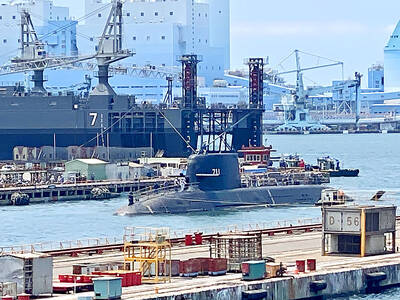
AGING: While Japan has 22 submarines, Taiwan only operates four, two of which were commissioned by the US in 1945 and 1946, and transferred to Taiwan in 1973 Taiwan would need at least 12 submarines to reach modern fleet capabilities, CSBC Corp, Taiwan chairman Chen Cheng-hung (陳政宏) said in an interview broadcast on Friday, citing a US assessment. CSBC is testing the nation’s first indigenous defense submarine, the Hai Kun (海鯤, Narwhal), which is scheduled to be delivered to the navy next month or in July. The Hai Kun has completed torpedo-firing tests and is scheduled to undergo overnight sea trials, Chen said on an SET TV military affairs program. Taiwan would require at least 12 submarines to establish a modern submarine force after assessing the nation’s operational environment and defense
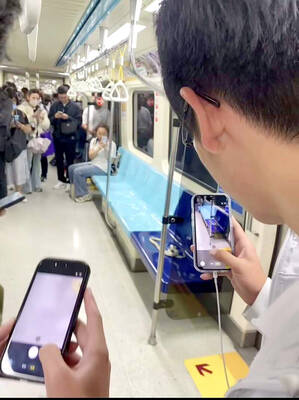
A white king snake that frightened passengers and caused a stir on a Taipei MRT train on Friday evening has been claimed by its owner, who would be fined, Taipei Rapid Transit Corp (TRTC) said yesterday. A person on Threads posted that he thought he was lucky to find an empty row of seats on Friday after boarding a train on the Bannan (Blue) Line, only to spot a white snake with black stripes after sitting down. Startled, he jumped up, he wrote, describing the encounter as “terrifying.” “Taipei’s rat control plan: Release snakes on the metro,” one person wrote in reply, referring
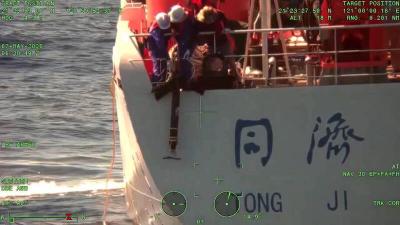
The coast guard today said that it had disrupted "illegal" operations by a Chinese research ship in waters close to the nation and driven it away, part of what Taipei sees a provocative pattern of China's stepped up maritime activities. The coast guard said that it on Thursday last week detected the Chinese ship Tongji (同濟號), which was commissioned only last year, 29 nautical miles (54km) southeast of the southern tip of Taiwan, although just outside restricted waters. The ship was observed lowering ropes into the water, suspected to be the deployment of scientific instruments for "illegal" survey operations, and the coast
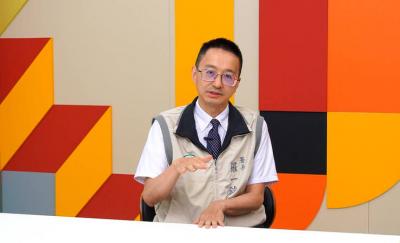
Taiwan’s two cases of hantavirus so far this year are on par with previous years’ case numbers, and the government is coordinating rat extermination work, so there should not be any outbreaks, Centers for Disease Control (CDC) Director-General Philip Lo (羅一鈞) said today in an interview with the Liberty Times (the Taipei Times’ sister newspaper). An increase in rat sightings in Taipei and New Taipei City has raised concerns about the spread of hantavirus, as rats can carry the disease. In January, a man in his 70s who lived in Taipei’s Daan District (大安) tested positive posthumously for hantavirus, Taiwan’s


 RSS
RSS