


Animal rights activists yesterday rallied in front of the Legislative Yuan building, urging lawmakers to pass laws to ban animal testing in the making of cosmetics products.
More than a dozen people wearing white T-shirts that read: “Beauty with Heart,” fake bunny ears and holding signs that read: “Say no to animal testing” or bearing pictures of white rabbits used in such animal testing marched to the Legislative Yuan’s front gate yesterday morning.
The organizers of the rally — animal rights group the Life Conservationist Association and an international cosmetics company, said yesterday marked the one-year anniversary since the European Commission announced a total ban on animal testing for cosmetics.

Photo: Liao Chen-huei, Taipei Times
The phasing out of animal testing for cosmetics in the EU began in 2003 with a ban on testing cosmetics products and cosmetics ingredients on animals. The EU later banned the sale of cosmetics products and ingredients that were tested on animals.
“Animal testing is only done because it is relatively cheap, but it limits the marketability of the products, because they cannot be sold to countries in the EU,” association member Tang Yi-jhih (湯宜之) said. “Taiwanese should learn from the EU’s example and refuse to use cosmetic products that were tested on animals.”
Taiwan Society for the Prevention of Cruelty to Animals executive director Connie Chiang (姜怡如) said that many cosmetics sold by international brands have proved that thousands of ingredients are safe, and no longer require animal testing.
She said animal testing for cosmetics include applying the ingredients or products on the skin of rabbits after their fur has been shaved off, dripping the substances into rabbits’ eyes and observing their reactions and “lethal dose tests” that test the limit of the animals’ survivability after being exposed to different dosages of chemicals.
Democratic Progressive Party (DPP) Legislator Tien Chiu-chin (田秋堇) urged women in Taiwan to take a stand against animal testing by only using products that guaranteed they had not been tested on animals.
DPP Legislator Hsiao Bi-khim (蕭美琴) and Chinese Nationalist Party (KMT) legislators Ting Shou-chung (丁守中) and Apollo Chen (陳學聖) also appeared at the rally to show their support and urge the public to boycott all cosmetics that had been tested on animals.

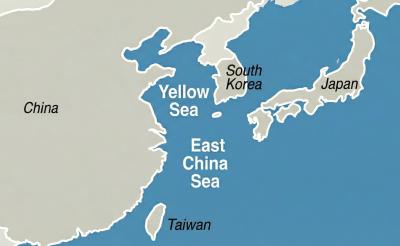
China has reserved offshore airspace in the Yellow Sea and East China Sea from March 27 to May 6, issuing alerts usually used to warn of military exercises, although no such exercises have been announced, the Wall Street Journal (WSJ) reported yesterday. Reserving such a large area for 40 days without explanation is an “unusual step,” as military exercises normally only last a few days, the paper said. These alerts, known as Notice to Air Missions (Notams), “are intended to inform pilots and aviation authorities of temporary airspace hazards or restrictions,” the article said. The airspace reserved in the alert is

South Korea is planning to revise its controversial electronic arrival card, a step Taiwanese officials said prompted them to hold off on planned retaliatory measures, a South Korean media report said yesterday. A Yonhap News Agency report said that the South Korean Ministry of Foreign Affairs is planning to remove the “previous departure place” and “next destination” fields from its e-arrival card system. The plan, reached after interagency consultations, is under review and aims to simplify entry procedures and align the electronic form with the paper version, a South Korean ministry official said. The fields — which appeared only on the electronic form

More than 6,000 Taiwanese students have participated in exchange programs in China over the past two years, despite the Mainland Affairs Council’s (MAC) “orange light” travel advisory, government records showed. The MAC’s publicly available registry showed that Taiwanese college and university students who went on exchange programs across the Strait numbered 3,592 and 2,966 people respectively. The National Immigration Agency data revealed that 2,296 and 2,551 Chinese students visited Taiwan for study in the same two years. A review of the Web sites of publicly-run universities and colleges showed that Taiwanese higher education institutions continued to recruit students for Chinese educational programs without

A bipartisan group of US senators has introduced a bill to enhance cooperation with Taiwan on drone development and to reduce reliance on supply chains linked to China. The proposed Blue Skies for Taiwan Act of 2026 was introduced by Republican US senators Ted Cruz and John Curtis, and Democratic US senators Jeff Merkley and Andy Kim. The legislation seeks to ease constraints on Taiwan-US cooperation in uncrewed aerial systems (UAS), including dependence on China-sourced components, limited access to capital and regulatory barriers under US export controls, a news release issued by Cruz on Wednesday said. The bill would establish a "Blue UAS


 RSS
RSS