


With the government raising the poverty line in most parts of the country, 60,000 more people are eligible for public subsidies for lower-income families this year, an official with the Ministry of Health and Welfare said, as she promoted a new hotline offering information on subsidies and welfare.
The ministry decided late last year that the poverty threshold — excluding the five main metropolitan areas and Kinmen and Lienchiang counties — should be raised to NT$10,869 per person per month from NT$10,244.
The five special municipalities have the discretion to set their own poverty lines, with New Taipei City, Greater Tainan and Greater Taichung raising the income levels defining the poor and near poor, while Taipei and Greater Kaohsiung kept theirs unchanged.
The new standards are expected to add 60,000 more people to the list of those who qualify for welfare programs, including living allowances and subsidies for children’s education and medical bills, ministry official Lee Mei-chen (李美珍) said on Monday.
At the same time, Lee introduced a “1957” hotline that citizens can use to find out if they qualify for government assistance.
Last year, the number of people eligible for lower-income subsidies stood at 696,156.
The figure included 361,765 low-income individuals who fell below the poverty line, and 334,391 near-poor individuals, whose income fell below 1.5 times the poverty line.
The poverty line is 60 percent of the median monthly disposable income in the region they live in.
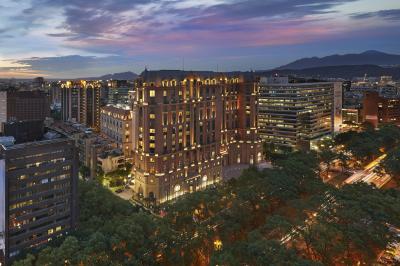
The first global hotel Keys Selection by the Michelin Guide includes four hotels in Taiwan, Michelin announced yesterday. All four received the “Michelin One Key,” indicating guests are to experience a “very special stay” at any of the locations as the establishments are “a true gem with personality. Service always goes the extra mile, and the hotel provides much more than others in its price range.” Of the four hotels, three are located in Taipei and one in Taichung. In Taipei, the One Key accolades were awarded to the Capella Taipei, Kimpton Da An Taipei and Mandarin Oriental Taipei. Capella Taipei was described by
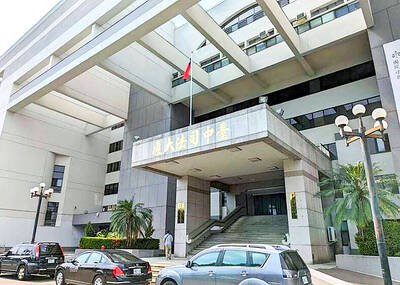
The Taichung District Court yesterday confirmed its final ruling that the marriage between teenage heir Lai (賴) and a man surnamed Hsia (夏) was legally invalid, preventing Hsia from inheriting Lai’s NT$500 million (US$16.37 million) estate. The court confirmed that Hsia chose not to appeal the civil judgement after the court handed down its ruling in June, making the decision final. In the June ruling, the court said that Lai, 18, and Hsia, 26, showed “no mutual admiration before the marriage” and that their interactions were “distant and unfamiliar.” The judge concluded that the couple lacked the “true intention of
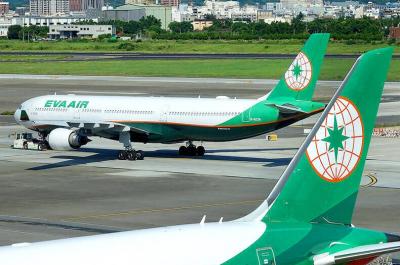
EVA Airways today confirmed the death of a flight attendant on Saturday upon their return to Taiwan and said an internal investigation has been launched, as criticism mounted over a social media post accusing the airline of failing to offer sufficient employee protections. According to the post, the flight attendant complained of feeling sick on board a flight, but was unable to take sick leave or access medical care. The crew member allegedly did not receive assistance from the chief purser, who failed to heed their requests for medical attention or call an ambulance once the flight landed, the post said. As sick
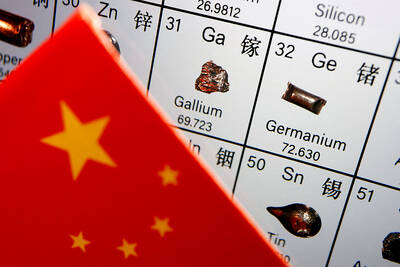
INDUSTRY: Beijing’s latest export measures go beyond targeting the US and would likely affect any country that uses Chinese rare earths or related tech, an academic said Taiwanese industries could face significant disruption from China’s newly tightened export controls on rare earth elements, as much of Taiwan’s supply indirectly depends on Chinese materials processed in Japan, a local expert said yesterday. Kristy Hsu (徐遵慈), director of the Taiwan ASEAN Studies Center at the Chung-Hua Institution for Economic Research, said that China’s latest export measures go far beyond targeting the US and would likely affect any country that uses Chinese rare earths or related technologies. With Japan and Southeast Asian countries among those expected to be hit, Taiwan could feel the impact through its reliance on Japanese-made semi-finished products and


 RSS
RSS