


Sixteen Taiwanese universities have made it into the top 200 of QS 2014 World University Rankings by Subject released on Wednesday by UK-based higher education information provider Quacquarelli Symonds (QS).
National Taiwan University (NTU) was the best performer in the nation with 26 subject categories, the most for any of the Taiwanese universities listed.
Twenty-two of the school’s subjects were included in the top 100 world rankings, with 10 listed in the top 50 and its electrical engineering program credited as the highest-ranked subject in Taiwan at 20th place.
A National Taiwan University spokesman said that the school’s overall performance this year is the best in its history. Finance made it into the top 50 rankings for the first time, highlighting the importance the university attaches to the social sciences and humanities, he said.
National Tsing Hua University and National Taiwan Normal University each had at least one subject listed among the top 50 schools. Tsing Hua’s chemical engineering was ranked 39th, while Taiwan Normal’s education was placed 42nd.
National Chiao Tung University had 10 subjects listed among the top 200 universities in the world, with electrical engineering, mechanical engineering, material science and statistics making the top 100 list.
Taipei Medical University’s medicine program placed 91st on that list.
QS Intelligence Unit head Ben Sowter said that National Taiwan University has moved up to be ranked among top universities in the world, with strong showings in some subjects.
The emergence of universities in Asia has posed strong competition to US and UK academic institutions in the areas of mathematics, engineering and science, Sowter said.
Asian universities account for 10 of the top 30 rankings in the subjects of chemical, civil and electronic engineering, showing that schools in the region are gaining a stronger influence in the world, he said.
Now in its third year, the annual QS World University Rankings by Subject identifies the world’s strongest universities in 30 different subject areas and is an extension of the overall QS World University Rankings. QS evaluated 3,002 universities this year.
The company used six indicators to determine the rankings: academic reputation, employer reputation, citations per faculty from SciVerse Scopus, faculty-student ratio, proportion of international students and proportion of international faculty.
The QS Web site says the by-subject rankings are designed to “provide comparative information at discipline level and to highlight the excellence of institutions in specialist areas.”
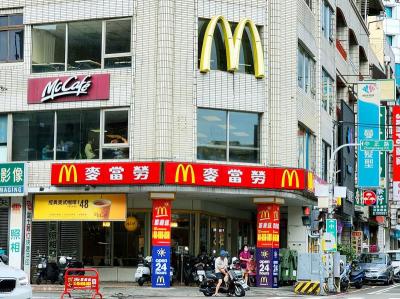
Fast food chain McDonald's is to raise prices by up to NT$5 on some products at its restaurants across Taiwan, starting on Wednesday next week, the company announced today. The prices of all extra value meals and sharing boxes are to increase by NT$5, while breakfast combos and creamy corn soup would go up by NT$3, the company said in a statement. The price of the main items of those meals, if ordered individually, would remain the same. Meanwhile, the price of a medium-sized lemon iced tea and hot cappuccino would rise by NT$3, extra dipping sauces for chicken nuggets would go up

FUKUOKA SITUATION: Japanese media reported that the pathogen is expected to be identified by the summer, while the CDC downplayed the idea that it was hMPV A “mysterious cold-like illness” reported in Japan’s Fukuoka Prefecture does not seem to be a new disease, but Japanese authorities have been asked about the situation, the Centers for Disease Control (CDC) said yesterday. The Fukuoka Prefectural Medical Association on Wednesday told a news conference that a “mystery cold” that has become a hot topic on social media is “highly likely to be caused by some kind of viral infection,” Japan’s KBC News reported. “Many people are experiencing symptoms starting with a sore throat, followed by a runny nose, phlegm and a severe cough,” KBC News reported, citing association officials. Health authorities are

Nvidia Corp CEO Jensen Huang (黃仁勳) arrived in Taiwan yesterday ahead of upcoming AI and technology events, saying he plans to meet with clients and Taiwan Semiconductor Manufacturing Co Chairman C.C. Wei (魏哲家) during his visit. After landing at Taipei Songshan Airport, Huang posed for photos with fans and handed out Yakult drinks to reporters and supporters waiting at the scene, saying he has “a lot to do” during the trip. Asked about reports that Nvidia’s planned headquarters site in Taipei’s Beitou Shilin Technology Park could break ground on May 27, Huang said that if the company holds an event, he would
Carrefour Taiwan is to begin using a new name from the start of July, but it cannot divulge the name until then, the chairman of the supermarket chain's parent company said today. President Chain Store Co chairman Lo Chih-hsien (羅智先) was asked by reporters after a shareholders' meeting to confirm whether the company has settled on a new name for the supermarket brand. In March, the government-registered name of two Carrefour Taiwan branches was quietly changed to "Le Chia Kang" (樂家康) in Chinese, raising speculation that has been selected as the name. Lo said that because of local regulations and contractual obligations, the


 RSS
RSS