


In response to the false labeling of packaged rice products by major rice mills and distributors, including the mixing of cheaper imported rice with domestic rice, Council of Agriculture Minister Chen Bao-ji (陳保基) said the council will set up an inventory system within two weeks to monitor imported rice.
Reporting to the Legislative Yuan’s Economic Committee yesterday, Chen said the council is planning to amend the Food Administration Act (糧食管理法) to ban mixing of imported rice and domestic rice in packaged rice products.
The planned amendment will also allow the council to order rice companies committing serious violations to halt operations immediately or have their food trading license withdrawn, he said, adding that the upper limit of fines imposed for serious cases will be increased from NT$200,000 (US$6,800) to a maximum of NT$3 million.
However, Democratic Progressive Party Legislator Lin Tai-hua (林岱樺) questioned how the council plans to manage the quality of rice that restaurants, snack bars and the catering industry serve — as the rice they use is not packaged.
She also questioned whether the council has any clue where the 144,000 tonnes of rice imported into Taiwan every year goes after passing customs inspections.
As 65 percent of imported rice is purchased by the government as public grain, and often ends up being donated to low-income families or used for school lunch programs, she said if the Council does not monitor its movement it may be taking the lead in mixing imported and domestic rice.
In response, Chen admitted that the council does not monitor the distribution of imported rice at present, but will develop an inventory system and standard operating procedures to do so within two weeks.
He also agreed that the COA will consult with the Ministry of Health and Welfare within a week on whether the catering industry should be required to reveal the sources of rice, similar to the mandatory labeling of beef sources.
Taiwan Solidarity Union Legislator Hsu Chung-hsin (許忠信) suggested that domestic rice grown in different areas should also be labeled to show where it was produced to avoid situations in which, for example, peaches from other parts of the nation are labeled as being from Lalashan (拉拉山) and sold at premium prices.
Chen said it is not as easy to distinguish rice grown in different parts of the same country as it is to identify imported rice, but the council has encouraged the establishment of local labeling systems at township levels.
So far this has helped in the establishment of nine local tea origin labeling schemes.

Kenting National Park service technician Yang Jien-fon (楊政峰) won a silver award in World Grand Prix Photography Awards Spring Season for his photograph of two male rat snakes intertwined in combat. Yang’s colleagues at Kenting National Park said he is a master of nature photography who has been held back by his job in civil service. The awards accept entries in all four seasons across six categories: architectural and urban photography, black-and-white and fine art photography, commercial and fashion photography, documentary and people photography, nature and experimental photography, and mobile photography. Awards are ranked according to scores and divided into platinum, gold and

More than half of the bamboo vipers captured in Tainan in the past few years were found in the city’s Sinhua District (新化), while other districts had smaller catches or none at all. Every year, Tainan captures about 6,000 snakes which have made their way into people’s homes. Of the six major venomous snakes in Taiwan, the cobra, the many-banded krait, the brown-spotted pit viper and the bamboo viper are the most frequently captured. The high concentration of bamboo vipers captured in Sinhua District is puzzling. Tainan Agriculture Bureau Forestry and Nature Conservation Division head Chu Chien-ming (朱健明) earlier this week said that the
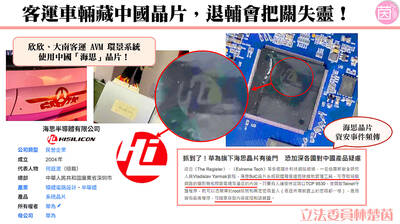
BREACH OF CONTRACT: The bus operators would seek compensation and have demanded that the manufacturer replace the chips with ones that meet regulations Two bus operators found to be using buses with China-made chips are to demand that the original manufacturers replace the systems and provide compensation for breach of contract, the Veterans Affairs Council said yesterday. Democratic Progressive Party Legislator Michelle Lin (林楚茵) yesterday said that Da Nan Bus Co and Shin-Shin Bus Co Ltd have fielded a total of 82 buses that are using Chinese chips. The bus models were made by Tron-E, while the systems provider was CYE Electronics, Lin said. Lin alleged that the buses were using chips manufactured by Huawei subsidiary HiSilicon Co, which presents a national security risk if the

The National Immigration Agency has banned two Chinese from returning to Taiwan, after they published social media content it described as disrespectful to national sovereignty. The agency imposed a two-month ban on a Chinese man surnamed Liang (梁) and a permanent ban on a woman surnamed Yang (楊), an influencer with 23 million followers, in October last year and last week respectively. Minister of the Interior Liu Shyh-fang (劉世芳) yesterday said on the sidelines of a legislative meeting that Chinese visitors to Taiwan are required to comply with the rules and regulations governing their entry permits. The government has handled the ban and


 RSS
RSS