


A wharf planned to be built on Itu Aba Island (Taiping Island, 太平島), in the South China Sea will help to greatly enhance Taiwan’s defensive capability in that area, when the project is completed in 2016, Chinese Nationalist Party (KMT) Legislator Lin Yu-fang (林郁方) said on Thursday.
Lin, a member of the legislature’s Foreign and National Defense Committee, said construction of the NT$3.37 billion (US$112.5 million) project will begin next year and an initial allocation of NT$1 billion has been made in the government’s fiscal 2014 budget for it.
He estimated that the wharf will be finished by 2016, two to three years ahead of schedule.
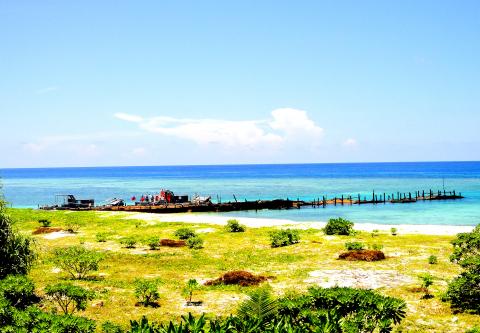
Photo: EPA
Currently, a broken trestle on Itu Aba Island is being used to dock coast guard cutters with a displacement of 6 tonnes or less, according to a press release issued by Lin’s office.
When the new wharf is completed, navy ships will be able to dock and unload heavy equipment and bulk goods, the lawmaker said.
Some large and medium-sized coast guard patrol boats and even some navy combat ships can be based there, he added.
The project means that Taiwan will eventually be able to deploy patrol boats and warships for considerable periods of time in the areas near Itu Aba Island, Lin said.
He said the new wharf will also help facilitate work on a project to extend the island’s 1,150m runway, which currently can only accommodate partially loaded C-130H transport aircraft in “extremely good” weather conditions.
The National Expressway Engineering Bureau has been commissioned by the Coast Guard Administration to build the wharf, Lin said.
Itu Aba Island, administered by Taiwan, is the largest of the Spratly Islands (Nansha Islands, 南沙群島) in the much-contested South China Sea. It is also the only island in the archipelago with fresh water.
China, Vietnam and the Philippines also make partial or total claim to the South China Sea area.
The island, which lies about 1,600km from Kaohsiung, is elliptical in shape, 1.4km long and 0.4km wide.

The military has spotted two Chinese warships operating in waters near Penghu County in the Taiwan Strait and sent its own naval and air forces to monitor the vessels, the Ministry of National Defense (MND) said. Beijing sends warships and warplanes into the waters and skies around Taiwan on an almost daily basis, drawing condemnation from Taipei. While the ministry offers daily updates on the locations of Chinese military aircraft, it only rarely gives details of where Chinese warships are operating, generally only when it detects aircraft carriers, as happened last week. A Chinese destroyer and a frigate entered waters to the southwest
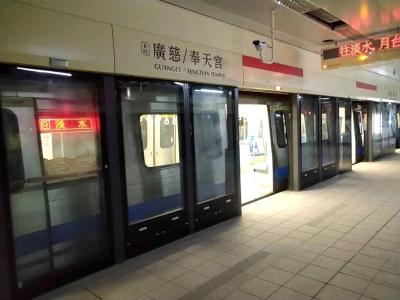
The eastern extension of the Taipei MRT Red Line could begin operations as early as late June, the Taipei Department of Rapid Transit Systems said yesterday. Taipei Rapid Transit Corp said it is considering offering one month of free rides on the new section to mark its opening. Construction progress on the 1.4km extension, which is to run from the current terminal Xiangshan Station to a new eastern terminal, Guangci/Fengtian Temple Station, was 90.6 percent complete by the end of last month, the department said in a report to the Taipei City Council's Transportation Committee. While construction began in October 2016 with an
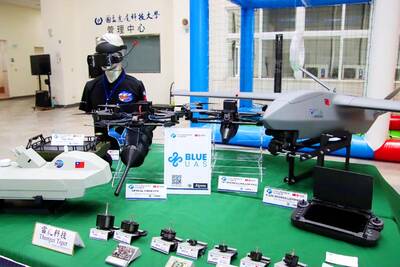
NON-RED SUPPLY: Boosting the nation’s drone industry is becoming increasingly urgent as China’s UAV dominance could become an issue in a crisis, an analyst said Taiwan’s drone exports to Europe grew 41.7-fold from 2024 to last year, with demand from Ukraine’s fight against Russian aggression the most likely driver of growth, a study showed. The Institute for Democracy, Society and Emerging Technology (DSET) in a statement on Wednesday said it found that many of Taiwan’s uncrewed aerial vehicle (UAV) sales were from Poland and the Czech Republic. These countries likely transferred the drones to Ukraine to aid it in its fight against the Russian invasion that started in 2022, it said. Despite the gains, Taiwan is not the dominant drone exporter to these markets, ranking second and fourth
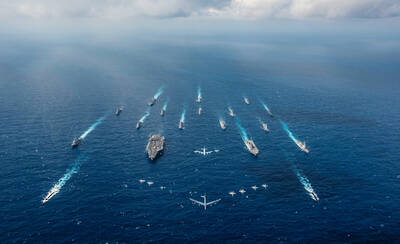
Japanese Prime Minister Sanae Takaichi’s comment last year on Tokyo’s potential reaction to a Taiwan-China conflict has forced Beijing to rewrite its invasion plans, a retired Japanese general said. Takaichi told the Diet on Nov. 7 last year that a Chinese naval blockade or military attack on Taiwan could constitute a “survival-threatening situation” for Japan, potentially allowing Tokyo to exercise its right to collective self-defense. Former Japan Ground Self-Defense Force general Kiyofumi Ogawa said in a recent speech that the remark has been interpreted as meaning Japan could intervene in the early stages of a Taiwan Strait conflict, undermining China’s previous assumptions


 RSS
RSS