


A biennial survey by the Council of Labor Affairs on youth employment has found that the nation’s job turnover is high among those aged between 15 and 29.
Young workers remain with the same employer for an average of only 1.3 years, according to the survey. Low pay and poor career prospects are the main reasons behind the high turnover rate, the survey found.
The council has conducted a survey of young workers every two years since 2006 to better understand employment trends among people in the 15 to 29 age group.
The latest survey collected nearly 4,000 valid samples. All respondents were employed, with 90 percent in full-time jobs. Three-quarters of the respondents were in the 25 to 29 age bracket.
The survey’s respondents earned an average of NT$27,425 a month last year, down NT$1,931, or 6.6 percent, from the level recorded in 2006, when the council conducted the survey for the first time. During that six-year period, the consumer price index rose 9 percent.
The latest survey found that respondents had spent an average of 3.1 years in the working world, having worked an average of 2.3 jobs.
That translates to an average of 1.3 years with the same employer, the shortest span in any of the four surveys conducted to date. The average length of time respondents have been in their current jobs was 1.6 years, also the shortest ever in the poll.
Moreover, 32 percent, or about one-third, of respondents, said they were planning to change jobs. Low pay and poor career prospects were the two reasons most frequently cited for wanting to change jobs.
A 25-year-old respondent surnamed Chen (陳) said he has changed jobs four times since entering the job market less than two years ago.
He said he stayed with his first job for 11 months, earning NT$23,000 per month.
He then took a job as a salesman for a month, with a salary of NT$22,000. He earned NT$29,000 a month in his third job, which he did for just three months.
National Taiwan University associate professor Hsin Ping-lung (辛炳隆) said low pay tends to lead to frequent changes of job.
“The survey findings shed light on young adults’ difficulties in securing an ideal job,” Hsin said, adding that frequent changes of job are closely related to low wages.
In his view, upgrading local industries’ added value and expanding markets are key to improving wage levels.

The military has spotted two Chinese warships operating in waters near Penghu County in the Taiwan Strait and sent its own naval and air forces to monitor the vessels, the Ministry of National Defense (MND) said. Beijing sends warships and warplanes into the waters and skies around Taiwan on an almost daily basis, drawing condemnation from Taipei. While the ministry offers daily updates on the locations of Chinese military aircraft, it only rarely gives details of where Chinese warships are operating, generally only when it detects aircraft carriers, as happened last week. A Chinese destroyer and a frigate entered waters to the southwest

The eastern extension of the Taipei MRT Red Line could begin operations as early as late June, the Taipei Department of Rapid Transit Systems said yesterday. Taipei Rapid Transit Corp said it is considering offering one month of free rides on the new section to mark its opening. Construction progress on the 1.4km extension, which is to run from the current terminal Xiangshan Station to a new eastern terminal, Guangci/Fengtian Temple Station, was 90.6 percent complete by the end of last month, the department said in a report to the Taipei City Council's Transportation Committee. While construction began in October 2016 with an
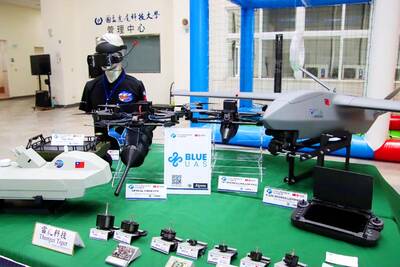
NON-RED SUPPLY: Boosting the nation’s drone industry is becoming increasingly urgent as China’s UAV dominance could become an issue in a crisis, an analyst said Taiwan’s drone exports to Europe grew 41.7-fold from 2024 to last year, with demand from Ukraine’s fight against Russian aggression the most likely driver of growth, a study showed. The Institute for Democracy, Society and Emerging Technology (DSET) in a statement on Wednesday said it found that many of Taiwan’s uncrewed aerial vehicle (UAV) sales were from Poland and the Czech Republic. These countries likely transferred the drones to Ukraine to aid it in its fight against the Russian invasion that started in 2022, it said. Despite the gains, Taiwan is not the dominant drone exporter to these markets, ranking second and fourth

Japanese Prime Minister Sanae Takaichi’s comment last year on Tokyo’s potential reaction to a Taiwan-China conflict has forced Beijing to rewrite its invasion plans, a retired Japanese general said. Takaichi told the Diet on Nov. 7 last year that a Chinese naval blockade or military attack on Taiwan could constitute a “survival-threatening situation” for Japan, potentially allowing Tokyo to exercise its right to collective self-defense. Former Japan Ground Self-Defense Force general Kiyofumi Ogawa said in a recent speech that the remark has been interpreted as meaning Japan could intervene in the early stages of a Taiwan Strait conflict, undermining China’s previous assumptions


 RSS
RSS