


Lawmakers yesterday questioned the Executive Yuan’s plan to restructure the government, saying that while the objective of the initiative is to make the central government smaller and more efficient, the plan would make it bigger instead.
The government reform project was started in 1987, and amendments to the Organic Act of the Executive Yuan (行政院組織法) were adopted in January 2010 to reduce the number of ministries from 37 to 29. However, since the organizational reforms started in January last year, the inauguration of as many as 13 ministries is pending.
Another challenging task will be carry out the 135 legal revisions needed to complete the restructuing. A provisionary law regulating the reorganization and readjustment of Cabinet agencies will become invalid by Dec. 31 next year, meaning that all administrative transformations must be done by that date.
The chairs of the legislature’s Judiciary, Organic Laws and Statutes Committee Yu Mei-nu (尤美女) of the Democratic Progressive Party (DPP) and Liao Cheng-ching (廖正井) of the Chinese Nationalist Party (KMT), both called the delay “a disaster.”
Liao accused the Executive Yuan of not understanding the point of restructuring the government and of being too idealistic. He said that government restructuring in Northern Europe a few years ago not only reduced the number of civil servants, but also lightened the state’s economic burden.
However, there was no real “reform” in the Cabinet’s restructuring, only the “moving around of ministries,” which has resulted in none of the ministries being happy with the reorganization, Liao said. He added that a genuine restructuring would close extraneous ministries at both central and local government levels, as well as reduce the number of counties and cities.
Many government bodies have expressed their discontent with the proposed realignments. For instance, the Construction and Planning Agency has lobbied lawmakers to stay under the auspices of the Ministry of the Interior, instead of being made part of the Ministry of Transportation and Communications. The Forestry Bureau has also pushed to be allowed to stay with the Council of Agriculture, rather than being transferred to the future ministry of environmental resources.
Yu said the government’s restructuring plan is illogical and fails to resolve the biggest issue: a lack of exit mechanisms for public servants. She said that without such mechanisms, non-essential government staff would continue to be employed, while new workers would have no positions to fill. Hence, after the bureaucratic realignments, the number of government employees would grow, increasing the state’s burden without improving its efficiency.
Liao urged the Executive Yuan to propose better solutions because its controversial plans to establish a ministry of environmental resources and a ministry of health and welfare are not likely to be carried out as planned.
DPP Legislator Wu Yi-chen (吳宜臻) said she only sees mergers, not functional readjustments, in the Cabinet’s plans.
Citing the future ministry of health and welfare as an example, Wu said that while the Cabinet proposed creating a directorate-general for social and family affairs to oversee the Department of Social Affairs and the Child Welfare Bureau, such an agency would be able to solve problems requiring coordination between social affairs and health sectors.
Without readjusting agencies’ and ministries’ functions, mergers would not fulfil the objectives of the Executive Yuan’s government restructuring, Wu said.

Taiwan must first strengthen its own national defense to deter a potential invasion by China as cross-strait tensions continue to rise, multiple European lawmakers said on Friday. In a media interview in Taipei marking the conclusion of an eight-member European parliamentary delegation’s six-day visit to Taiwan, the lawmakers urged Taipei to remain vigilant and increase defense spending. “All those who claim they want to protect you actually want to conquer you,” Ukrainian lawmaker Serhii Soboliev said when asked what lessons Taiwan could draw from Russia’s invasion of Ukraine. Soboliev described the Kremlin as a “new fascist Nazi regime” that justified
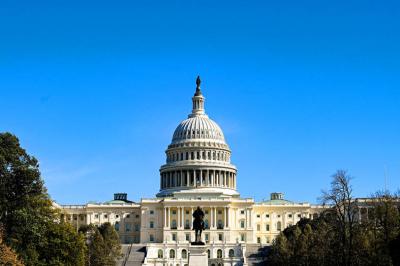
The US House of Representatives yesterday passed the PROTECT Taiwan Act, which stipulates that Washington would exclude China from participating in major global financial organizations if its actions directly threaten Taiwan’s security. The bill, proposed by Republican US Representative Frank Lucas, passed with 395 votes in favor and two against. It stipulates that if China’s actions pose any threat to Taiwan’s security, economic or social systems, the US would, “to the maximum extent practicable,” exclude China from international financial institutions, including the G20, the Bank for International Settlements and the Financial Stability Board. The bill makes it clear that China

‘T-DOME’: IBCS would increase Taiwan’s defense capabilities, enabling air defense units to use data from any sensor system and cut reaction time, a defense official said A defense official yesterday said that a purported new arms sale the US is assembling for Taiwan likely includes Integrated Battle Command Systems (IBCS). The anonymous official’s comments came hours after the Financial Times (FT) reported that Washington is preparing a US$20 billion arms sale encompassing “Patriot missiles and other weapons,” citing eight sources. The Taiwanese official said the IBCS is an advanced command and control system that would play a key role in President William Lai’s (賴清德) flagship defense program, the “T-Dome,” an integrated air defense network to counter ballistic missiles and other threats. The IBCS would increase Taiwan’s

NOMINAL NEWLYWEDS: A man’s family and his wife — his long-term caregiver — are engaged in a legal dogfight over the propriety and validity of the recent union A centenarian’s marriage to his caregiver unbeknownst to his children has prompted legal action, as the caregiver accuses the man’s children of violating her personal liberty and damaging her reputation, while the children have sought a legal option to have the marriage annulled. According to sources, the 102-year-old man surnamed Wang (王) lives in Taipei’s Zhongshan District (中山) and previously worked as a land registration agent. Wang reportedly owns multiple properties and parcels of land worth several hundred million New Taiwan dollars and has ten children. His caregiver, a 69-year-old surnamed Lai (賴), has been caring for him since about 1999,


 RSS
RSS