


The Paper Windmill Theatre Troupe is planning a series of stage performances called the “Save Faustus” program to help youngsters understand the perils of drug abuse.
The troupe plans to stage a three-act drama tentatively titled Young Faustus at 932 junior-high schools across the nation over the next three to five years to warn teenagers about the importance of refusing to “make deals with the devil of drug abuse.”
According to the results of annual tests for contraband materials conducted by the Ministry of Education, the number of urine samples found containing traces of third-grade banned drugs such as ketamine and nimetazepam increased from 104 in 2006 to 1,548 last year.
During that period, the number of junior-high school students caught using ketamine rose from 87 to 598, while the number of senior-high school students found using the banned substance increased from 141 to 1,174. Moreover, 39 elementary-school students were found to have used ketamine.
A 17-year-old from Taitung nicknamed A-ming (阿銘) said he started using ketamine during junior-high school.
“I dropped out of school during my third year. I left home to work and lived with other dropouts. After work, we would ride through the streets of the city, drink, smoke and try various kinds of illegal drugs ... I got addicted and went from using [drugs] a few times a month to once every few days, to once every day. If I didn’t, I would get anxious and easily irritated. Later, I couldn’t work,” A-ming said in an interview.
“I only thought about how to get the NT$3,000 to NT$4,000 needed to buy ketamine. I had neither job nor money. I committed burglaries with my friends or went home to squeeze money from my mother,” he said.
“I was caught stealing several times by police, and none of my relatives were talking to me,” he said.
A-ming did not change his ways until his mother died from cancer due to overwork. After six months of drug rehabilitation, he finally kicked the habit and has regained his health.
“I’m now attending night school and working during the day. The rehab process was arduous, but the memory of my mother helped me overcome the challenge,” A-ming said.
Paper Windmill Cultural Foundation executive director Lee Yung-feng (李永豐) said the idea of staging a play to advise young people to “say no” to drugs came to him during a recent visit to his hometown in Budai (布袋), Chiayi County, when his mother asked him if was using drugs.
“Her question surprised me and led me to understand the seriousness of the problem of drug abuse among teens,” Lee said.
Citing statistics compiled by the Ministry of Justice, Lee said 60 percent of juvenile delinquency was related to drug abuse.
Lee said he believed that through the Young Faustus play, “we can help underaged students find their inner strength and build values that will allow them to resist the temptation of drugs.”
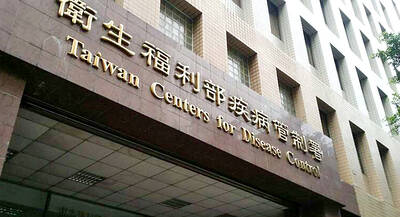
FUKUOKA SITUATION: Japanese media reported that the pathogen is expected to be identified by the summer, while the CDC downplayed the idea that it was hMPV A “mysterious cold-like illness” reported in Japan’s Fukuoka Prefecture does not seem to be a new disease, but Japanese authorities have been asked about the situation, the Centers for Disease Control (CDC) said yesterday. The Fukuoka Prefectural Medical Association on Wednesday told a news conference that a “mystery cold” that has become a hot topic on social media is “highly likely to be caused by some kind of viral infection,” Japan’s KBC News reported. “Many people are experiencing symptoms starting with a sore throat, followed by a runny nose, phlegm and a severe cough,” KBC News reported, citing association officials. Health authorities are

Nvidia Corp CEO Jensen Huang (黃仁勳) arrived in Taiwan yesterday ahead of upcoming AI and technology events, saying he plans to meet with clients and Taiwan Semiconductor Manufacturing Co Chairman C.C. Wei (魏哲家) during his visit. After landing at Taipei Songshan Airport, Huang posed for photos with fans and handed out Yakult drinks to reporters and supporters waiting at the scene, saying he has “a lot to do” during the trip. Asked about reports that Nvidia’s planned headquarters site in Taipei’s Beitou Shilin Technology Park could break ground on May 27, Huang said that if the company holds an event, he would
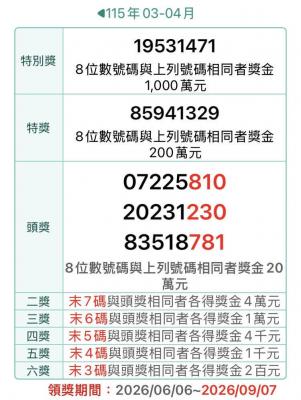
The Ministry of Finance this afternoon announced the winning numbers for the March-April uniform invoice lottery. The winning number for the NT$10 million (US$318,060) special prize is 19531471, and the winning number for the NT$2 million grand prize is 85941329. Three numbers were drawn for the NT$200,000 first prize: 07225810, 20231230 and 83518781. Those with receipts matching the last seven digits of any of the first-prize numbers will win the NT$40,000 second prize, while those matching the last six digits will win the NT$10,000 third prize. Those whose receipts match the last five digits of the first-prize numbers can claim the NT$4,000 fourth prize,

Former president Ma Ying-jeou (馬英九) yesterday expressed “shock and regret” over a statement issued by his wife without his consent, and rejected her assertion that his eldest sister, Ma Yi-nan (馬以南), would manage his medical care or act as his spokesperson amid an ongoing embezzlement probe into his foundation. Ma Ying-jeou in a statement said he was shocked by a statement by his wife, Chou Mei-ching (周美青), regarding his affairs. Ma Yi-nan “must not” be in charge of his healthcare and other personal affairs, nor can she be allowed to represent the Ma family, the former president said. He said he was also


 RSS
RSS