


Taiwanese have won a prototype prize at the European Satellite Navigation Competition, the state-funded Industrial Technology Research Institute (ITRI) said yesterday.
Taiwan’s entry, a “connected vehicle” prototype, was awarded the Galileo Pro title, the second-highest in the prototype category.
The project, called “Driving with Safety, Responsiveness and Courtesy,” uses integrated automobile and communication technology. It allows drivers to send warnings or thank-you signals to nearby vehicles by pressing a button, instead of using the common forms of traffic communication such as hand signals or horns, the ITRI said.
The prototype, submitted by Hua-chuang Automobile Information Technical Center Co and the ITRI, vied with 64 other entries in that category, the institute said.
The overall winner was a project from Portugal that aimed to offer seamless, reliable navigation, even indoors, by means of ultra-low-frequency magnetic field communication (ULF-MC), according to the competition Web site.
The European Satellite Navigation Competition is an international competition aimed at stimulating ideas, incubation and development of applications and services made possible by the European satellite navigation system Galileo.
Organized by Germany’s Application Center for Satellite Navigation Oberpfaffenhofen (AZO) since 2004, the competition is geared toward companies, entrepreneurs, research institutes, universities and private individuals.
This year, a total of 406 entries from more than 40 countries were submitted.
At the award ceremony, Thorsten Rudolph, managing director of the AZO, pointed out that the competition has enjoyed a very successful partnership with Taiwan and the ITRI since 2008.
He said that a total of 400 submissions from Taiwan have established the country as the competition’s most valuable partner. Moreover, a Taiwanese initiative led to the start of a new chapter for the competition last year — the inauguration of a prototyping prize, he said. With the integration of the prototyping prize, the competition has expanded its scope to include both ideas and their development into fully fledged products, he said.
Asked about the innovation power of the ITRI, Rudolph said the institute was good at transforming ideas or concepts into substantial products, which was evidenced by its cooperation with Hua-chuang to win this year’s prototyping prize.
“They really want to work with the industry at the beginning,” he said.
“The risk of a development to fail can be reduced by the strategy,” Rudolph said
“This is very important also for European companies to use these prototypes and come to Taiwan and cooperate with the ITRI,” he said.

UNREASONABLE SURVEILLANCE: A camera targeted on an road by a neighbor captured a man’s habitual unsignaled turn into home, netting him dozens of tickets The Taichung High Administrative Court has canceled all 45 tickets given to a man for failing to use a turn signal while driving, as it considered long-term surveillance of his privacy more problematic than the traffic violations. The man, surnamed Tseng (曾), lives in Changhua County and was reported 45 times within a month for failing to signal while driving when he turned into the alley where his residence is. The reports were filed by his neighbor, who set up security cameras that constantly monitored not only the alley but also the door and yard of Tseng’s house. The surveillance occurred from July

A Japan Self-Defense Forces vessel entered the Taiwan Strait yesterday, Japanese media reported. After passing through the Taiwan Strait, the Ikazuchi was to proceed to the South China Sea to take part in a joint military exercise with the US and the Philippines, the reports said. Japan Self-Defense Force vessels were first reported to have passed through the strait in September, 2024, with two further transits taking place in February and June last year, the Asahi Shimbun reported. Yesterday’s transit also marked the first time since Japanese Prime Minister Sanae Takaichi took office that a Japanese warship has been sent through the Taiwan

‘SAME OLD TRICK’: Even if Beijing resumes individual travel to Taiwan, it would only benefit Chinese tourism companies, the Economic Democracy Union convener said China’s 10 new “incentives” are “sugar-coated poison,” an official said yesterday, adding that Taiwanese businesses see them clearly for what they are, but that Beijing would inevitably find some local collaborators to try to drums up support. The official, speaking on condition of anonymity, made the remark ahead of a news conference the General Chamber of Commerce is to hold today. The event, titled “Industry Perspectives on China’s Recent Pro-Taiwan Policies,” is expected to include representatives from industry associations — such as those in travel, hotels, food and agriculture — to request the government cooperate with China’s new measures, people familiar with
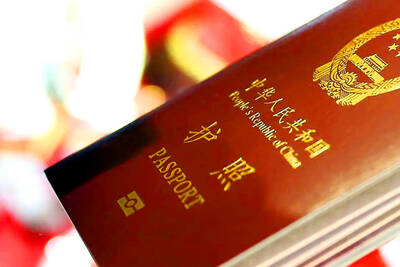
ANOTHER OPTION: The 13-year-old, whose residency status was revoked for holding a Chinese passport, could still apply for residency on humanitarian grounds, the government said The Executive Yuan has rejected an appeal from a 13-year-old Chinese student surnamed Lu (陸), whose permanent residency was revoked after immigration officers discovered he held a Chinese passport. Lu in December 2023 applied to settle in Taiwan to be with his mother, surnamed Lin (林), who is a Taiwan resident, an appeal decision released this month by the Executive Yuan showed. Lin settled in Taiwan after marrying a Taiwanese man in 2003, but the two divorced in 2011, and after marrying a Chinese man, she had Lu, the Executive Yuan’s appeals committee said. Lu’s application was approved in December 2024, and in


 RSS
RSS