


Senior US defense and diplomatic officials will not attend this year’s Taiwan-US Defense Industry Conference, organizers said on Sunday, an unexpected absence that has given rise to speculation about the reason why, ranging from a dispute over aggressive efforts to secure the sale of F-16 aircraft to Taiwan’s role in the Diaoyutai Islands (釣魚台) dispute.
The annual event, organized by the US-Taiwan Business Council, is a forum to address future US defense cooperation with Taiwan as well as Taiwan’s defense and national security needs and arms procurement plans.
Deputy Minister of National Defense Andrew Yang (楊念祖) is heading the Taiwanese delegation at this year’s conference, which opened on Sunday in Hershey, Pennsylvania.
US-Taiwan Business Council chairman Paul Wolfowitz is hosting the conference, which ends today.
In the past, the US has sent assistant secretary-level officials from the US Departments of State and Defense to attend the conference and deliver keynote speeches.
US-Taiwan Business Council president Rupert Hammond-Chambers said on Sunday that US Assistant Secretary of Defense for Asian and Pacific Security Affairs Mark Lippert had originally planned to attend the annual meeting.
However, the council was informed on Friday that Lippert could not attend because of “scheduling issues,” Hammond-Chambers said, adding that the council also received a similar notice from the State Department the same day.
Sources say the information was also relayed to the Taipei Economic and Cultural Representative Office (TECRO).
The council said it had not received confirmation from Department of State Assistant Secretary of State for East Asian and Pacific Affairs Kurt Campbell on whether he would attend.
When the conference opened on Sunday, the absence of both officials was noticed, given that since 2002 the deputy secretaries of the Department of State and the Department of Defense usually represented the US government at the conference.
They were the ones who explained US policy to the representatives, academics and members from the national defense industry from both the US and Taiwan, the council said.
It also marked the first time since 2002 that a senior official from the State Department did not attend the conference.
According to the Liberty Times (the Taipei Times’ sister paper), the absence of US senior officials was the result of Washington’s displeasure with the President Ma Ying-jeou (馬英九) administration’s policy on the Diaoyutais.
However, Ministry of Foreign Affairs officials said the absence had nothing to do with Taiwan’s recent handling of its territorial dispute with Japan.
Sources said the State Department would explain why it chose not send a senior official to attend the conference when the time was right.
Meanwhile, TECRO attributed the senior officials’ absence to a campaign by the US-Taiwan Business Council to persuade US Senators and representatives to support sales of F-16C/D aircraft to Taiwan, which Taipei has requested on several occasions since 2006.
The council asked members of Congress and the Senate to write a letter to US Secretary of State Hillary Rodham Clinton on the matter, with US Senator John Cornyn pressuring US President Barack Obama’s administration to make a clear stance on the sale of F-16C/Ds by holding up the nomination of Lippert for the job of US assistant secretary for Asian and Pacific security affairs.
Though the Obama administration finally announced its stance on the arms sale at last year’s Taiwan Defense Industry Conference — stating that it would not sell the F-16C/D, but would offer an upgrade package for Taiwan’s existing fleet of F-16A/Bs — Cornyn and others have not ceased pressuring the Obama administration on the issue.
The overtly active pressure may have annoyed the administrative department, TECRO officials said, adding that whether the absence of senior US officials at this year’s conference would lead to the discontinuation of the 10 year-old conference remained to be seen.
The US has never expressed dissatisfaction with Taipei’s policy regarding the Diaoyutai Islands, the TECRO officials said, adding that senior US officials were still willing to meet Yang in Washington after he attended the conference.
US-Taiwan relations have not changed, they said, adding that the incident nevertheless highlighted the conflicting views of the Ma administration and the business council on the F-16C/D issue.
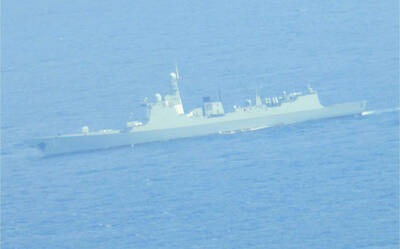
The military has spotted two Chinese warships operating in waters near Penghu County in the Taiwan Strait and sent its own naval and air forces to monitor the vessels, the Ministry of National Defense (MND) said. Beijing sends warships and warplanes into the waters and skies around Taiwan on an almost daily basis, drawing condemnation from Taipei. While the ministry offers daily updates on the locations of Chinese military aircraft, it only rarely gives details of where Chinese warships are operating, generally only when it detects aircraft carriers, as happened last week. A Chinese destroyer and a frigate entered waters to the southwest

The eastern extension of the Taipei MRT Red Line could begin operations as early as late June, the Taipei Department of Rapid Transit Systems said yesterday. Taipei Rapid Transit Corp said it is considering offering one month of free rides on the new section to mark its opening. Construction progress on the 1.4km extension, which is to run from the current terminal Xiangshan Station to a new eastern terminal, Guangci/Fengtian Temple Station, was 90.6 percent complete by the end of last month, the department said in a report to the Taipei City Council's Transportation Committee. While construction began in October 2016 with an

NON-RED SUPPLY: Boosting the nation’s drone industry is becoming increasingly urgent as China’s UAV dominance could become an issue in a crisis, an analyst said Taiwan’s drone exports to Europe grew 41.7-fold from 2024 to last year, with demand from Ukraine’s fight against Russian aggression the most likely driver of growth, a study showed. The Institute for Democracy, Society and Emerging Technology (DSET) in a statement on Wednesday said it found that many of Taiwan’s uncrewed aerial vehicle (UAV) sales were from Poland and the Czech Republic. These countries likely transferred the drones to Ukraine to aid it in its fight against the Russian invasion that started in 2022, it said. Despite the gains, Taiwan is not the dominant drone exporter to these markets, ranking second and fourth
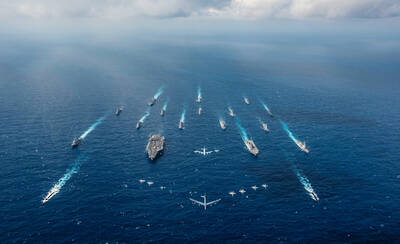
Japanese Prime Minister Sanae Takaichi’s comment last year on Tokyo’s potential reaction to a Taiwan-China conflict has forced Beijing to rewrite its invasion plans, a retired Japanese general said. Takaichi told the Diet on Nov. 7 last year that a Chinese naval blockade or military attack on Taiwan could constitute a “survival-threatening situation” for Japan, potentially allowing Tokyo to exercise its right to collective self-defense. Former Japan Ground Self-Defense Force general Kiyofumi Ogawa said in a recent speech that the remark has been interpreted as meaning Japan could intervene in the early stages of a Taiwan Strait conflict, undermining China’s previous assumptions


 RSS
RSS