


President Ma Ying-jeou’s (馬英九) administration has ignored the severity of Taiwan’s worsening fiscal situation, while the discrepancy shown in the draft budget plan for next year poses major concerns for the administration’s fiscal outlook, academics said yesterday.
“Our suggestion is that not only are financial reforms necessary, but a new budget drafting process and method might be equally as important,” said Chen Jin-ji (陳錦稷), a researcher at the Taiwan Brain Trust think tank which organized a forum to examine next year’s budget.
The estimated budget deficit for next year is NT$214.4 billion (US$7.16 billion) — the largest since 2004 — and this is not solely attributable to the global financial crisis, but is the result of poor fiscal discipline, including thoughtless tax cuts, the squandering of public funds and the misallocation of resources, Chen said.
The government should face the reality of a difficult fiscal situation and try to generate concrete measures to resolve the problems, rather than making up numbers to deceive people, Chen said.
With Taiwan’s public debt reaching its ceiling of 40 percent of the average GNP of the previous three years, amending the Public Debt Act (公共債務法) and raising the debt ceiling could be an option to resolve short-term fiscal problems, said Su Chien-jung (蘇建榮), a professor at National Taipei University.
“However [the amendment] should go hand-in-hand with a more transparent report on the national fiscal status ... because there have been too many hidden debts that the government chose not to reveal in the past,” Su said.
In examination of the draft budget plan of the Executive Yuan, Su said that the discrepancy was intriguing.
“The estimated revenue from individual income tax increased by NT$50 billion when the economy was slowing. Is that possible? Revenue submitted by state-run companies’ decreased by NT$6.8 billion despite the raising of fuel and electricity prices this year. Does that make sense?” Su asked.
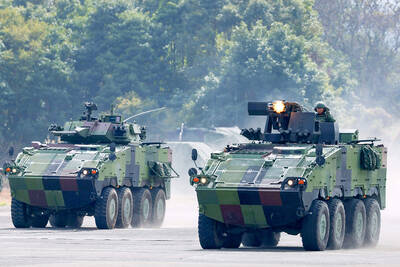
Taiwan must first strengthen its own national defense to deter a potential invasion by China as cross-strait tensions continue to rise, multiple European lawmakers said on Friday. In a media interview in Taipei marking the conclusion of an eight-member European parliamentary delegation’s six-day visit to Taiwan, the lawmakers urged Taipei to remain vigilant and increase defense spending. “All those who claim they want to protect you actually want to conquer you,” Ukrainian lawmaker Serhii Soboliev said when asked what lessons Taiwan could draw from Russia’s invasion of Ukraine. Soboliev described the Kremlin as a “new fascist Nazi regime” that justified
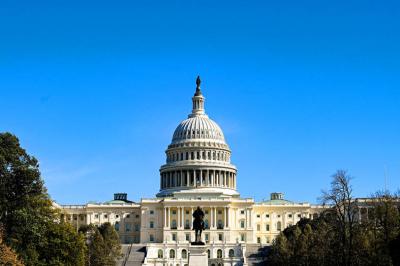
The US House of Representatives yesterday passed the PROTECT Taiwan Act, which stipulates that Washington would exclude China from participating in major global financial organizations if its actions directly threaten Taiwan’s security. The bill, proposed by Republican US Representative Frank Lucas, passed with 395 votes in favor and two against. It stipulates that if China’s actions pose any threat to Taiwan’s security, economic or social systems, the US would, “to the maximum extent practicable,” exclude China from international financial institutions, including the G20, the Bank for International Settlements and the Financial Stability Board. The bill makes it clear that China

‘T-DOME’: IBCS would increase Taiwan’s defense capabilities, enabling air defense units to use data from any sensor system and cut reaction time, a defense official said A defense official yesterday said that a purported new arms sale the US is assembling for Taiwan likely includes Integrated Battle Command Systems (IBCS). The anonymous official’s comments came hours after the Financial Times (FT) reported that Washington is preparing a US$20 billion arms sale encompassing “Patriot missiles and other weapons,” citing eight sources. The Taiwanese official said the IBCS is an advanced command and control system that would play a key role in President William Lai’s (賴清德) flagship defense program, the “T-Dome,” an integrated air defense network to counter ballistic missiles and other threats. The IBCS would increase Taiwan’s

NOMINAL NEWLYWEDS: A man’s family and his wife — his long-term caregiver — are engaged in a legal dogfight over the propriety and validity of the recent union A centenarian’s marriage to his caregiver unbeknownst to his children has prompted legal action, as the caregiver accuses the man’s children of violating her personal liberty and damaging her reputation, while the children have sought a legal option to have the marriage annulled. According to sources, the 102-year-old man surnamed Wang (王) lives in Taipei’s Zhongshan District (中山) and previously worked as a land registration agent. Wang reportedly owns multiple properties and parcels of land worth several hundred million New Taiwan dollars and has ten children. His caregiver, a 69-year-old surnamed Lai (賴), has been caring for him since about 1999,


 RSS
RSS