


Political parties yesterday launched a joint effort to regulate cross-media ownership, calling for measures that would bar firms that own more than 10 percent of the shares in newspapers ot TV or radio stations from operating cable TV services or holding more than 10 percent of the shares in cable TV service providers.
The amendment to the Cable Television Act (有線廣播電視法), proposed by lawmakers from the Chinese Nationalist Party (KMT), the Democratic Progressive Party (DPP) and the Taiwan Solidarity Union (TSU), seeks to prevent any media outlet from monopolizing the sector.
The cross-media ownership case that has garnered most media attention recently is the Want Want Group’s bid to acquire the cable TV services owned by China Network Systems (CNS).
The proposed amendment was discussed at a public hearing by the legislature’s Transportation Committee, attended by National Communications Commission (NCC) Chairperson Su Herng (蘇蘅), media experts and lawmakers.
The bill was also supported by lawmakers who had initially been neutral on the CNS bid, including KMT Legislator Lo Shu-lei (羅淑蕾).
Luo said she was opposing the deal after seeing what Want Want had done to DPP Legislator Yeh Yi-jin (葉宜津), who convened a special session on the cross-media -acquisition at the legislature on Monday.
Despite an official invitation, Want Want Group chairman Tsai Eng-meng (蔡衍明) did not attend the committee meeting on Monday, sending his special assistant, Chao Yu-pei (趙育培), to represent him instead.
However, Yeh barred Chao from speaking because Tsai did not send any official notification informing the legislature that Chao would be his representative.
Following Yeh’s action, CtiTV, a subsidiary of Want Want China Times Group, assailed Yeh and accused her of having double standards.
A CtiTV report, which was aired three days in a row, said Yeh hated China, despite the fact that her husband had obtained an MBA degree in China.
“I came here to show my support for Yeh, even though I don’t like her very much sometimes,” Lo said. “I did not know how horrible it [cross-media acquisition] could be, but now I know.”
Lo said one should not underestimate the power of people who control the cable TV system.
She said the Yeh incident showed that powerful media could destroy anyone who holds a different opinion, using every means possible.
“What happened to Yeh could happen to other legislators or other experts,” she said.
“Let me tell you, chairman Tsai, whoever at Cti proposed the idea [of targeting Yeh] was putting you in an unfavorable position ... Any person can buy [CNS], but not Want Want Group,” she added.

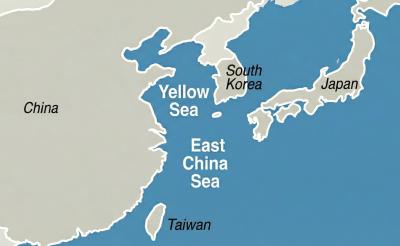
China has reserved offshore airspace in the Yellow Sea and East China Sea from March 27 to May 6, issuing alerts usually used to warn of military exercises, although no such exercises have been announced, the Wall Street Journal (WSJ) reported yesterday. Reserving such a large area for 40 days without explanation is an “unusual step,” as military exercises normally only last a few days, the paper said. These alerts, known as Notice to Air Missions (Notams), “are intended to inform pilots and aviation authorities of temporary airspace hazards or restrictions,” the article said. The airspace reserved in the alert is

More than 6,000 Taiwanese students have participated in exchange programs in China over the past two years, despite the Mainland Affairs Council’s (MAC) “orange light” travel advisory, government records showed. The MAC’s publicly available registry showed that Taiwanese college and university students who went on exchange programs across the Strait numbered 3,592 and 2,966 people respectively. The National Immigration Agency data revealed that 2,296 and 2,551 Chinese students visited Taiwan for study in the same two years. A review of the Web sites of publicly-run universities and colleges showed that Taiwanese higher education institutions continued to recruit students for Chinese educational programs without
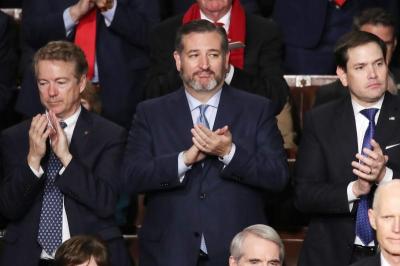
A bipartisan group of US senators has introduced a bill to enhance cooperation with Taiwan on drone development and to reduce reliance on supply chains linked to China. The proposed Blue Skies for Taiwan Act of 2026 was introduced by Republican US senators Ted Cruz and John Curtis, and Democratic US senators Jeff Merkley and Andy Kim. The legislation seeks to ease constraints on Taiwan-US cooperation in uncrewed aerial systems (UAS), including dependence on China-sourced components, limited access to capital and regulatory barriers under US export controls, a news release issued by Cruz on Wednesday said. The bill would establish a "Blue UAS
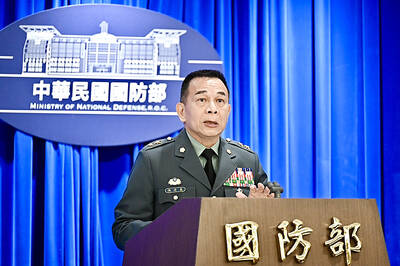
The Republic of China Army Command yesterday relieved Kinmen Defense Battalion commander after authorities indicted the officer on charges connected to using methamphetamine. The Kinmen District Prosecutors’ Office on Wednesday detained Colonel He (何) after the Coast Guard linked him to drug shipments and proceeded to charge him yesterday for using and possessing crystal meth. The man was released on a NT$50,000 bail and banned from leaving Kinmen, the office said. Army Chief of Staff Lieutenant General Chen Chien-yi (陳建義) told a news conference yesterday that He has been removed and another officer is taking over the unit as the acting commander. The military


 RSS
RSS