


Greater Taichung’s “love-locks bridge” will be preserved and moved to another location thanks to a campaign by scores of netizens to save it from demolition, the Railway Reconstruction Bureau announced last week.
Located next to the railway station in Fongyuan District (豐原), the fencing on the so-called “love-locks bridge” is covered with thousands of padlocks inscribed with wishes from couples hoping for long, loving relationships, as well as from family members hoping for a safe year.
About a decade ago, rumors began circulating that bridges that cross over railway tracks retain energy from the trains that pass beneath them and grant people their wishes.

Photo: Chang Jui-chen
Since then, throngs of people, especially couples, have inscribed all sorts of wishes on padlocks and attached them to the iron fencing, giving the bridge the name “love-locks bridge,” or “heart-locks bridge.”
However, in autumn last year, it looked like the bridge would be torn down to make room for an elevated railway project.
Following the news, Jen She Association chief Lin Hsuan-hung (林宣宏) and netizen Lin Shou-shan (林壽山) joined hands to launch a campaign and an online petition, calling for the bridge to be preserved.
On Monday, as several netizens arrived at the bridge hoping to attach their locks, Lin surprised the visitors with some good news.
“Officials from the bureau paid me a visit on Thursday and told me they have decided that public art funds will be used to preserve the ‘love-locks bridge’ by moving it to a different location,” Lin said.
“The officials also said they anticipate that the bridge will be transformed into public artwork for local residents,” Lin said.
It is the only “love-locks bridge” in the country, and is only one of five in the world, Lin said. The other four are in South Korea, Japan, Germany and Italy.
However, Yeh Jen-ho (葉仁和), stationmaster at Fongyuan Railway Station, said the bridge would lose its meaning if it were moved to a location away from the trains.
“Still, it’s the mighty power of the ‘love-locks bridge’ that fulfilled my wish to receive the much-needed funds to ensure its preservation,” Yeh said.
Translated by Stacy Hsu, Staff Writer

The military has spotted two Chinese warships operating in waters near Penghu County in the Taiwan Strait and sent its own naval and air forces to monitor the vessels, the Ministry of National Defense (MND) said. Beijing sends warships and warplanes into the waters and skies around Taiwan on an almost daily basis, drawing condemnation from Taipei. While the ministry offers daily updates on the locations of Chinese military aircraft, it only rarely gives details of where Chinese warships are operating, generally only when it detects aircraft carriers, as happened last week. A Chinese destroyer and a frigate entered waters to the southwest

A magnitude 6.1 earthquake struck off the coast of Yilan County at 8:39pm tonight, the Central Weather Administration (CWA) said, with no immediate reports of damage or injuries. The epicenter was 38.7km east-northeast of Yilan County Hall at a focal depth of 98.3km, the CWA’s Seismological Center said. The quake’s maximum intensity, which gauges the actual physical effect of a seismic event, was a level 4 on Taiwan’s 7-tier intensity scale, the center said. That intensity level was recorded in Yilan County’s Nanao Township (南澳), Hsinchu County’s Guansi Township (關西), Nantou County’s Hehuanshan (合歡山) and Hualien County’s Yanliao (鹽寮). An intensity of 3 was

Japanese Prime Minister Sanae Takaichi’s comment last year on Tokyo’s potential reaction to a Taiwan-China conflict has forced Beijing to rewrite its invasion plans, a retired Japanese general said. Takaichi told the Diet on Nov. 7 last year that a Chinese naval blockade or military attack on Taiwan could constitute a “survival-threatening situation” for Japan, potentially allowing Tokyo to exercise its right to collective self-defense. Former Japan Ground Self-Defense Force general Kiyofumi Ogawa said in a recent speech that the remark has been interpreted as meaning Japan could intervene in the early stages of a Taiwan Strait conflict, undermining China’s previous assumptions
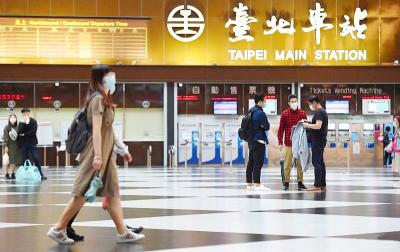
Taiwan Railways Corp (TRC) today announced that Shin Kong Mitsukoshi has been selected as the preferred bidder to operate the Taipei Railway Station shopping mall, replacing the current operator, Breeze Development Co Ltd. Among eight qualified firms that delivered presentations and were evaluated by a review committee, Shin Kong Mitsukoshi was ranked first, while Breeze was named the runner-up, the rail company said in a statement. Contract negotiations are to proceed in accordance with regulations, it said, adding that if negotiations with the top bidder fail, it could invite the second-ranked applicant to enter talks. Breeze in a statement today expressed doubts over


 RSS
RSS