


The military has suspended its regular missile and artillery tests in response to the death of North Korean leader Kim Jong-il and will stay abreast of the situation on the Korean Peninsula, a military official said yesterday.
“Upon learning of the death of Kim Jong-il, Minister of National Defense Kao Hua-chu (高華柱) called a meeting of senior military officials and gave a directive on Taiwan’s response,” Major-General Hau Yi-chih (郝以知) said at a press briefing.
In an effort to help maintain security in the East Asia region, the ministry has now suspended missile tests launched from Taiwan proper and artillery tests conducted on Taiwan’s outlying islands, Hau said.
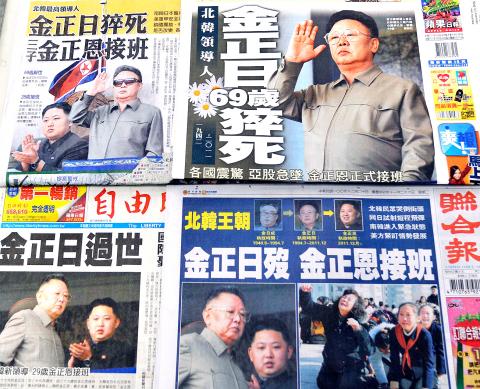
Photo: PATRICK LIN/AFP
“This will help avoid any inappropriate speculation,” he said.
The ministry’s overseas officials and its intelligence agency will also continue to keep a close eye on the developments in North Korea and its neighboring countries, Hau said.
The navy, air force and army will stay on alert and will “maintain regular combat readiness,” he said.
When asked about Taiwan’s plans in the event of rising tensions between the two Koreas, ministry spokesperson Colonel David Lo (羅紹和) declined to comment.
In response to an op-ed published in Defense News last month, in which military analyst Roger Cliff said China might test fire an anti-ship missile before the presidential election on Jan. 14, Lo said the ministry had a full grasp and understanding of the developments across the Taiwan Strait.
Meanwhile, Minister of Foreign Affairs Timothy Yang (楊進添) said he expects the situation on the Korean Peninsula to move toward stability, rather than falling into turmoil in the wake of Kim’s death.
“It seems like the situation is stable. There shouldn’t be a major convulsion. The possibility of an incident cannot be ruled out, but the situation is more likely to remain stable,” Yang told reporters.
Yang, who attended a meeting organized by the National Security Council on Monday in response to the announcement of Kim’s death, said his comments were based on an initial estimate of the situation.
There could be a possibility that “North Korea continues to resort to brinkmanship to divert attention away from its own internal problems and for the sake of national consolidation,” a scenario that the government would pay close attention to, but would not want to see, Yang said.
“What the government of the Republic of China is concerned most about is security and peace in North Asia. I believe many countries hold the same view,” Yang said.
Yang said the Ministry of Foreign Affair’s missions in South Korea, Japan and the US were keeping in close contact with their host countries to keep abreast of the situation.
Meanwhile, despite the fact that South Korea has put its military on high alert, the foreign ministry has no plan to elevate its travel alert for the country, Ministry of Foreign Affairs spokesperson James Chang (章計平) said.
Travel schedules of local tour groups to South Korea have not been affected and an estimated 23,000 Taiwanese living in South Korea, including 100 students and between 20 and 30 businesspeople, remain safe, Chang said.

SECURITY: Starlink owner Elon Musk has taken pro-Beijing positions, and allowing pro-China companies to control Taiwan’s critical infrastructure is risky, a legislator said Starlink was reluctant to offer services in Taiwan because of the nation’s extremely high penetration rates in 4G and 5G services, the Ministry of Digital Affairs said yesterday. The ministry made the comments at a meeting of the legislature’s Transportation Committee, which reviewed amendments to Article 36 of the Telecommunications Management Act (電信管理法). Article 36 bans foreigners from holding more than 49 percent of shares in public telecommunications networks, while shares foreigners directly and indirectly hold are also capped at 60 percent of the total, unless specified otherwise by law. The amendments, sponsored by Chinese Nationalist Party (KMT) Legislator Ko
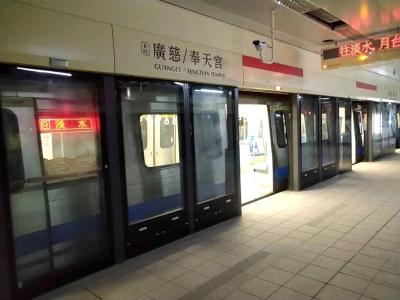
The eastern extension of the Taipei MRT Red Line could begin operations as early as late June, the Taipei Department of Rapid Transit Systems said yesterday. Taipei Rapid Transit Corp said it is considering offering one month of free rides on the new section to mark its opening. Construction progress on the 1.4km extension, which is to run from the current terminal Xiangshan Station to a new eastern terminal, Guangci/Fengtian Temple Station, was 90.6 percent complete by the end of last month, the department said in a report to the Taipei City Council's Transportation Committee. While construction began in October 2016 with an
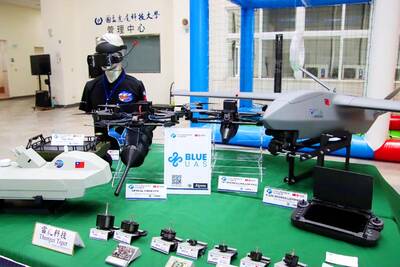
NON-RED SUPPLY: Boosting the nation’s drone industry is becoming increasingly urgent as China’s UAV dominance could become an issue in a crisis, an analyst said Taiwan’s drone exports to Europe grew 41.7-fold from 2024 to last year, with demand from Ukraine’s fight against Russian aggression the most likely driver of growth, a study showed. The Institute for Democracy, Society and Emerging Technology (DSET) in a statement on Wednesday said it found that many of Taiwan’s uncrewed aerial vehicle (UAV) sales were from Poland and the Czech Republic. These countries likely transferred the drones to Ukraine to aid it in its fight against the Russian invasion that started in 2022, it said. Despite the gains, Taiwan is not the dominant drone exporter to these markets, ranking second and fourth
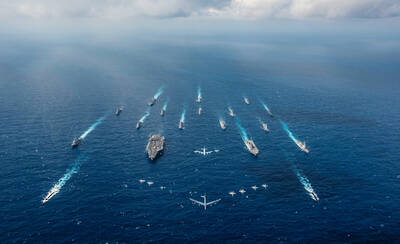
Japanese Prime Minister Sanae Takaichi’s comment last year on Tokyo’s potential reaction to a Taiwan-China conflict has forced Beijing to rewrite its invasion plans, a retired Japanese general said. Takaichi told the Diet on Nov. 7 last year that a Chinese naval blockade or military attack on Taiwan could constitute a “survival-threatening situation” for Japan, potentially allowing Tokyo to exercise its right to collective self-defense. Former Japan Ground Self-Defense Force general Kiyofumi Ogawa said in a recent speech that the remark has been interpreted as meaning Japan could intervene in the early stages of a Taiwan Strait conflict, undermining China’s previous assumptions


 RSS
RSS