


Because of domestic differences in Taiwan, the winner of next year’s presidential election will face more hurdles in talks with China because of a diminished political mandate, former National Security Council secretary-general Su Chi (蘇起) said on Thursday in the US.
Su made the remarks in a speech at the University of Maryland in memory of the late Chiu Hungdah (丘宏達), who was a professor at the university and a well-known academic of international law.
Su said he did not agree with the views of some who think cross-strait relations would be under heightened tensions next year.
In China, there will be a political transfer in which the leadership of the nation would be handed to the next generation of officials, while on the economic front it would transition from an export-oriented economy to a consumer-based one, he said.
These factors, coupled with rising calls for political participation, would be enough to occupy China’s attention, Su said.
However, he also predicted that whether it’s the pan-blue or pan-green camp that wins the Jan. 14 presidential election, it would be only by a small margin.
This narrow margin means the winner’s mandate would be diminished and there would be more obstacles in future talks with China, he said.
Many of those who attended the speech expressed concern about how the sovereignty dispute would affect the progress of cross-strait relations.
China’s concept of sovereignty has been too rigid, Su said. Similarly, he added, everything in Taiwan could be related to sovereignty and one could often hear the phrase “selling out sovereignty.”
He said many countries in Europe are more flexible on the issue and that “the two sides of the Taiwan Strait should not be too rigid on the issue of sovereignty.”
He said the unification versus independence issue occupies the political lives of Taiwanese, but in reality, their lives have nothing to do with the issue.
The development of cross-strait relations should cast aside the disputes on unification versus independence so as to find space for coexistence in the gray areas, Su said.
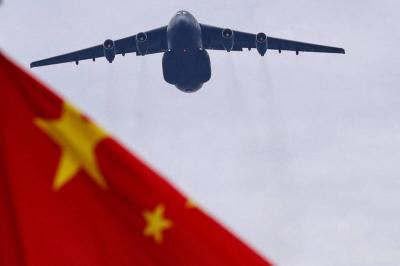
Beijing could eventually see a full amphibious invasion of Taiwan as the only "prudent" way to bring about unification, the US Department of Defense said in a newly released annual report to Congress. The Pentagon's "Annual Report to Congress: Military and Security Developments Involving the People's Republic of China 2025," was in many ways similar to last year’s report but reorganized the analysis of the options China has to take over Taiwan. Generally, according to the report, Chinese leaders view the People's Liberation Army's (PLA) capabilities for a Taiwan campaign as improving, but they remain uncertain about its readiness to successfully seize

Taiwan is getting a day off on Christmas for the first time in 25 years. The change comes after opposition parties passed a law earlier this year to add or restore five public holidays, including Constitution Day, which falls on today, Dec. 25. The day marks the 1947 adoption of the constitution of the Republic of China, as the government in Taipei is formally known. Back then the Chinese Nationalist Party (KMT) governed China from Nanjing. When the KMT, now an opposition party in Taiwan, passed the legislation on holidays, it said that they would help “commemorate the history of national development.” That

Taiwan has overtaken South Korea this year in per capita income for the first time in 23 years, IMF data showed. Per capita income is a nation’s GDP divided by the total population, used to compare average wealth levels across countries. Taiwan also beat Japan this year on per capita income, after surpassing it for the first time last year, US magazine Newsweek reported yesterday. Across Asia, Taiwan ranked fourth for per capita income at US$37,827 this year due to sustained economic growth, the report said. In the top three spots were Singapore, Macau and Hong Kong, it said. South

Snow fell on Yushan (Jade Mountain, 玉山) yesterday morning as a continental cold air mass sent temperatures below freezing on Taiwan’s tallest peak, the Central Weather Administration (CWA) said. Snowflakes were seen on Yushan’s north peak from 6:28am to 6:38am, but they did not fully cover the ground and no accumulation was recorded, the CWA said. As of 7:42am, the lowest temperature recorded across Taiwan was minus-5.5°C at Yushan’s Fengkou observatory and minus-4.7°C at the Yushan observatory, CWA data showed. On Hehuanshan (合歡山) in Nantou County, a low of 1.3°C was recorded at 6:39pm, when ice pellets fell at Songsyue Lodge (松雪樓), a


 RSS
RSS