


Locally developed unmanned aerial vehicles (UAVs) will be commissioned early next year as part of the military’s efforts to build up asymmetric/innovative defense capabilities, local media reported on Monday.
A total of 32 UAVs have been produced in the initial stage of the program, with eight to be deployed in each of the country’s four major combat sectors, the Chinese-language China Times said, citing unnamed senior officials as saying the indigenously produced UAVs can fly as high as 6,000 feet (1,829m) and stay in the air for up to 12 hours.
If Taiwan is threatened, the daily quoted the officials as saying that the remotely piloted aircraft would be able to fly into China’s southeastern coastal airspace to conduct instant reconnaissance missions.
The UAVs were developed by the military-run Chungshan Institute of Science and Technology under a plan code-named “Chunghsiang No. 1.”
They were unveiled at a Double Ten National Day military parade in 2007. Over the following three years, they underwent numerous test flights during the annual Hankuang and Changsheng military exercises. The vehicles managed to meet combat requirements early this year.
In April, eight of them were deployed into two squadrons for experimental service at various army bases around the country. They will be displayed during the National Day military parade on Monday.
Military officials said the institute had spent 10 years developing the UAVs. Initially, the aircraft were supposed to be deployed on the outlying islands to give them access to Chinese airspace in the event of a cross-strait war. However, as tension in the Taiwan Strait has eased in recent years, the military has decided to deploy them only at various military bases on Taiwan proper.
Intelligence sources said China’s People’s Liberation Army (PLA) already deployed 11 JWP-2 unmanned aerial vehicles and command vehicles at its base at Meizhou Airport in Guangdong Province early this year.
According to the sources, the PLA’s JWP-2 UAVs were showcased in China’s 60th National Day military review in 2009. The Chinese-developed UAVs can be used for wartime reconnaissance and can also be disguised as cruise missiles to consume Taiwan’s expensive and limited number of air-to-air defense missiles, the sources said.
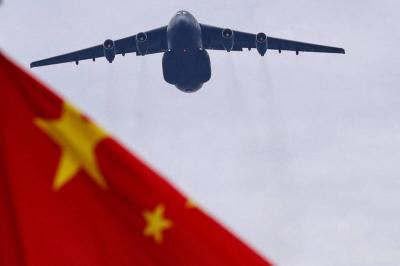
Beijing could eventually see a full amphibious invasion of Taiwan as the only "prudent" way to bring about unification, the US Department of Defense said in a newly released annual report to Congress. The Pentagon's "Annual Report to Congress: Military and Security Developments Involving the People's Republic of China 2025," was in many ways similar to last year’s report but reorganized the analysis of the options China has to take over Taiwan. Generally, according to the report, Chinese leaders view the People's Liberation Army's (PLA) capabilities for a Taiwan campaign as improving, but they remain uncertain about its readiness to successfully seize

Taiwan is getting a day off on Christmas for the first time in 25 years. The change comes after opposition parties passed a law earlier this year to add or restore five public holidays, including Constitution Day, which falls on today, Dec. 25. The day marks the 1947 adoption of the constitution of the Republic of China, as the government in Taipei is formally known. Back then the Chinese Nationalist Party (KMT) governed China from Nanjing. When the KMT, now an opposition party in Taiwan, passed the legislation on holidays, it said that they would help “commemorate the history of national development.” That

Taiwan has overtaken South Korea this year in per capita income for the first time in 23 years, IMF data showed. Per capita income is a nation’s GDP divided by the total population, used to compare average wealth levels across countries. Taiwan also beat Japan this year on per capita income, after surpassing it for the first time last year, US magazine Newsweek reported yesterday. Across Asia, Taiwan ranked fourth for per capita income at US$37,827 this year due to sustained economic growth, the report said. In the top three spots were Singapore, Macau and Hong Kong, it said. South

Snow fell on Yushan (Jade Mountain, 玉山) yesterday morning as a continental cold air mass sent temperatures below freezing on Taiwan’s tallest peak, the Central Weather Administration (CWA) said. Snowflakes were seen on Yushan’s north peak from 6:28am to 6:38am, but they did not fully cover the ground and no accumulation was recorded, the CWA said. As of 7:42am, the lowest temperature recorded across Taiwan was minus-5.5°C at Yushan’s Fengkou observatory and minus-4.7°C at the Yushan observatory, CWA data showed. On Hehuanshan (合歡山) in Nantou County, a low of 1.3°C was recorded at 6:39pm, when ice pellets fell at Songsyue Lodge (松雪樓), a


 RSS
RSS