


An endemic subspecies of Australasian grass owls (Tyto longimembris pithecops) is feared be on the verge of extinction in Taiwan, because there may be only about 100 left in the wild, specialists and local birdwatchers’ associations said yesterday.
Panelists expressed their concern at a forum hosted by the Council of Agriculture (COA) Forestry Bureau that centered on grass owl conservation.
The owl has been nicknamed the “monkey-faced owl” by local hunters and elderly residents because its face is thought to resemble that of Formosan rock monkeys.
Yao Cheng-te (姚正得), director of the Medium Altitude Experimental Station under the council’s Taiwan Endemic Species Research Institute (TESRI), said the bird of prey is about 38cm to 42cm in length, inhabits low-altitude (below 500m) dense grasslands in the south-west of the country and hunts for rodents at night.
Noting that the owl is listed in Appendix II of the Convention on International Trade in Endangered Species of Wild Fauna and Flora (CITES, also known as the Washington Convention), and is a first-level endangered species in the Wildlife Conservation Act (野生動物保育法), Yao said there have been less than 50 recorded sightings of the owl in the past 30 years.
He said that in the past decade, the center has received 12 injured Australasian grass owls from southern Taiwan, eight of which were hurt when they became entangled in netting at airports.
Both Yao and Kaohsiung Wild Bird Society chairperson Lin Shih-chung (林世忠) said the reduction in size and fragmentation of their habitats was because of urban development, the elimination of rodents by poisoning, improper use of -pesticides and netting at airport, and that such problems had threatened the survival of the owls in recent years.
Veterinarian Chan Fang-tse (詹芳澤) said that the breeding of injured owls after they have recovered has been successful and that the institute has been able to learn a lot about the behavior of the bird.
However, Forestry Bureau’s Wildlife Conservation Section chief Lin Kuo-chang (林國彰) added that successful breeding was not the same as restoration and rehabilitation of the wild owl population and that more understanding of the species in the wild was needed so that better conservation plans could be mapped out.
At a specialists’ meeting held following the forum to discuss possible action plans, Liu suggested that a number of factors needed to be observed and recorded to gain more knowledge about the Australasian grass owl’s behavior, current population and the state of its habitat.
“Only when we can clarify the condition of the species can we work out an effective action plan to protect the owls,” he said.

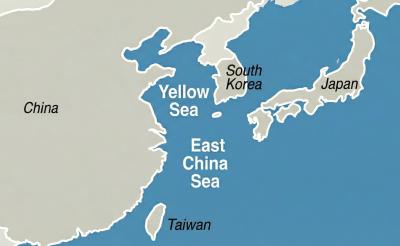
China has reserved offshore airspace in the Yellow Sea and East China Sea from March 27 to May 6, issuing alerts usually used to warn of military exercises, although no such exercises have been announced, the Wall Street Journal (WSJ) reported yesterday. Reserving such a large area for 40 days without explanation is an “unusual step,” as military exercises normally only last a few days, the paper said. These alerts, known as Notice to Air Missions (Notams), “are intended to inform pilots and aviation authorities of temporary airspace hazards or restrictions,” the article said. The airspace reserved in the alert is

South Korea is planning to revise its controversial electronic arrival card, a step Taiwanese officials said prompted them to hold off on planned retaliatory measures, a South Korean media report said yesterday. A Yonhap News Agency report said that the South Korean Ministry of Foreign Affairs is planning to remove the “previous departure place” and “next destination” fields from its e-arrival card system. The plan, reached after interagency consultations, is under review and aims to simplify entry procedures and align the electronic form with the paper version, a South Korean ministry official said. The fields — which appeared only on the electronic form

More than 6,000 Taiwanese students have participated in exchange programs in China over the past two years, despite the Mainland Affairs Council’s (MAC) “orange light” travel advisory, government records showed. The MAC’s publicly available registry showed that Taiwanese college and university students who went on exchange programs across the Strait numbered 3,592 and 2,966 people respectively. The National Immigration Agency data revealed that 2,296 and 2,551 Chinese students visited Taiwan for study in the same two years. A review of the Web sites of publicly-run universities and colleges showed that Taiwanese higher education institutions continued to recruit students for Chinese educational programs without

A bipartisan group of US senators has introduced a bill to enhance cooperation with Taiwan on drone development and to reduce reliance on supply chains linked to China. The proposed Blue Skies for Taiwan Act of 2026 was introduced by Republican US senators Ted Cruz and John Curtis, and Democratic US senators Jeff Merkley and Andy Kim. The legislation seeks to ease constraints on Taiwan-US cooperation in uncrewed aerial systems (UAS), including dependence on China-sourced components, limited access to capital and regulatory barriers under US export controls, a news release issued by Cruz on Wednesday said. The bill would establish a "Blue UAS


 RSS
RSS