


China’s growing military strength, from stealth jets to aircraft carriers and anti-satellite missiles, has shifted the balance of power in the Taiwan Strait to Beijing’s advantage and this will not be materially affected by an imminent US arms deal with Taiwan.
The duration of any potential conflict between China and Taiwan will be a matter of days, not weeks or months, analysts and experts say.
US President Barack Obama’s administration is expected to formally notify the US Congress next week on an arms package including F-16 upgrades for Taiwan, but not the new fighters Taipei wants.
Beijing, meanwhile, has shown no sign of ending an arms build-up that is strategically focused on Taiwan, and analysts say the arms deal will do little to alter the balance.
China’s military advances have continued despite a warming of ties across the narrow Taiwan Strait that followed the election of President Ma Ying-jeou (馬英九) in 2008, and his signing of landmark trade and economic pacts.
Taiwan’s military can do little to disguise its unease.
“There have also been no signs of adjustments to military deployments facing our country,” Minister of National Defense Kao Hua-chu (高華柱) wrote in July in the foreword to the ministry’s annual White Paper.
“We must build forces that are as impregnable as a rock,” he said.
The US Department of Defense’s annual assessment to Congress last month warned that China “remains focused on developing the pre-requisite military capabilities to eventually settle the dispute on Beijing’s terms.”
Taiwan once held the military edge against a backward Chinese People’s Liberation Army (PLA). Today, experts generally agree that in the event of conflict, Taiwan would have at most only a few days to hold off China and get help from outside, most likely the US, if they were to stand any chance.
“No one’s really asking the question: Could Taiwan beat China in an all-out conflict?” said Matt Durnin, a researcher with the World Security Institute.
“The question they’re asking is whether or not Taiwan could survive long enough in a conflict [before] it would be able to recruit other countries to support it politically or militarily,” he said.
China has not compromised on its long-term demand that Taiwan is sovereign Chinese territory and must eventually come under its control.
Beijing’s military strategy, despite the warming of ties, remains focused on securing Taiwan, wrote security analyst Dean Cheng (成斌) of the Heritage Foundation in Washington.
“Coupled with limitations on US weapons sales, Taiwan is falling behind,” Cheng said. “Worse, the steady modernization of the PLA has not been matched by Taiwan.”
Taiwan in the past was able to rely on China’s inability to project power across the Strait, its own technological superiority and the help of the US armed forces in the event of conflict, who would easily outclass China.
“China’s increasingly modern weapons and platforms threaten to negate many of those factors upon which Taiwan has depended,” the Pentagon said, pointing to China’s rapidly modernizing navy and air force and new, formidable ballistic missiles.
Unlike China, Taiwan has no nuclear weapons, and only a small number of Patriot missiles to defend against any missile attack.
Meanwhile, China’s military spending spree continues. Beijing in March said it would boost defense spending by 12.7 percent this year to 600 billion yuan (US$94 billion), marking a return to double-digit growth.
China downplays its spending, saying it is upgrading its outmoded forces and that its plans do not pose a threat to any country. It also notes its defense budget is far lower than that of the US.
However, Chinese President Hu Jintao (胡錦濤) has made modernizing the navy a priority. China is upgrading its destroyers and frigates to provide capability to sail further and strike harder, and is developing fearsome anti-ship ballistic missiles to take out US carriers.
Last month, China’s first aircraft carrier made its maiden run.
Taiwan, which for years relied on better equipment and better training, has been hobbled by the refusal of any country aside from the US to sell it weapons, fearing an angry response from China. The advantages it once maintained in the air slipped away over the past decade as China modernized.
Despite Taiwan’s public calls for weaponry, defense spending has not kept pace. The NT$300 billion (US$10 billion) earmarked for this year is just 2.2 percent of GDP. Ma had promised in his 2008 election campaign to raise that to 3 percent.
The aging of Taiwan’s fleet of fighters came into stark focus last week with the crash of two US-built F-5 aircraft, which it first put into service in the 1970s and still uses for training and reconnaissance missions.
The backbone of Taiwan’s air force is made up of about 140 US-made F-16A/Bs, about 60 French-built Mirage 2000s and about 130 Ching-kuo Indigenous Defense Fighters. Jets lost in accidents over the years are nearly impossible to replace.

Actor Darren Wang (王大陸) was sentenced to six months in prison, commutable to a fine, by the New Taipei District Court today for contravening the Personal Data Protection Act (個人資料保護法) in a case linked to an alleged draft-dodging scheme. Wang allegedly paid NT$3.6 million (US$114,380) to an illegal group to help him evade mandatory military service through falsified medical documents, prosecutors said. He transferred the funds to Chen Chih-ming (陳志明), the alleged mastermind of a draft-evasion ring, although he lost contact with him as he was already in detention on fraud charges, they said. Chen is accused of helping a
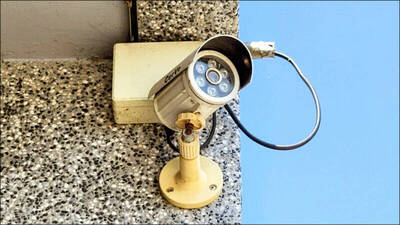
UNREASONABLE SURVEILLANCE: A camera targeted on an road by a neighbor captured a man’s habitual unsignaled turn into home, netting him dozens of tickets The Taichung High Administrative Court has canceled all 45 tickets given to a man for failing to use a turn signal while driving, as it considered long-term surveillance of his privacy more problematic than the traffic violations. The man, surnamed Tseng (曾), lives in Changhua County and was reported 45 times within a month for failing to signal while driving when he turned into the alley where his residence is. The reports were filed by his neighbor, who set up security cameras that constantly monitored not only the alley but also the door and yard of Tseng’s house. The surveillance occurred from July

SECURITY: Starlink owner Elon Musk has taken pro-Beijing positions, and allowing pro-China companies to control Taiwan’s critical infrastructure is risky, a legislator said Starlink was reluctant to offer services in Taiwan because of the nation’s extremely high penetration rates in 4G and 5G services, the Ministry of Digital Affairs said yesterday. The ministry made the comments at a meeting of the legislature’s Transportation Committee, which reviewed amendments to Article 36 of the Telecommunications Management Act (電信管理法). Article 36 bans foreigners from holding more than 49 percent of shares in public telecommunications networks, while shares foreigners directly and indirectly hold are also capped at 60 percent of the total, unless specified otherwise by law. The amendments, sponsored by Chinese Nationalist Party (KMT) Legislator Ko
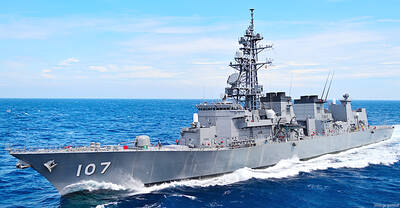
A Japan Self-Defense Forces vessel entered the Taiwan Strait yesterday, Japanese media reported. After passing through the Taiwan Strait, the Ikazuchi was to proceed to the South China Sea to take part in a joint military exercise with the US and the Philippines, the reports said. Japan Self-Defense Force vessels were first reported to have passed through the strait in September, 2024, with two further transits taking place in February and June last year, the Asahi Shimbun reported. Yesterday’s transit also marked the first time since Japanese Prime Minister Sanae Takaichi took office that a Japanese warship has been sent through the Taiwan


 RSS
RSS