


A leaked US diplomatic cable shows that Chinese academics praised President Ma Ying-jeou’s (馬英九) use of zhonghua minzu to describe the “Chinese nation,” adding that Beijing had also adopted the formulation instead of “one China.”
Zhou Zhihuai (周志懷), vice president of the Chinese Academy of Social Sciences’ Institute of Taiwan Studies, made the point at the US embassy in Beijing during a meeting on Aug. 20, 2008, according to a cable dated the following day and released by WikiLeaks, along with thousands of others, on Aug. 30.
Chinese President Hu Jintao (胡錦濤) has been “compromising and yielding” on Taiwan and “the attitude has permeated China’s approach” to Taiwan during its presidential election in 2008 and “has been reciprocated by Ma,” the cable quotes Zhou as saying.
“China is not insisting that the [so-called] ‘92 consensus’ is founded on the ‘one China principle’ and Ma is no longer pushing for ‘respective interpretations,’” he said.
“The Mainland [China] has also adopted the formulation of the ‘Chinese nation’ (zhonghua minzu) as opposed to ‘one China,’” the cable quoted Zhou as saying.
Ma used the phrase in his inaugural speech, in which he said he believed that people in Taiwan and China have the wisdom to find solutions to live in peace.
In his inauguration address, Ma said he believed that in light of the wisdom of zhonghua minzu, Taiwan and China would surely find ways to live in peace and prosperity.
Zhonghua minzu is generally translated as meaning “Chinese nation,” but the official English translation of Ma’s inaugural speech said “in light of our common Chinese heritage.”
Another cable, dated June 2, 2008, from the US consulate in Shanghai showed Yang Jiemian (楊潔勉), then-president of the Shanghai Institute for International Studies, and its vice president, Chen Dongxiao (陳東曉), telling visiting US Department of State official David Shear that Ma’s inaugural speech was a positive response to Hu’s 16-character prescription for cross-strait relations.
Ma’s inaugural speech was favorably received in China and one of the reasons was that “Ma had spoken about the Chinese people (zhonghua minzu) rather than use a term like ‘compatriots’ in discussing the Chinese in the mainland [China],” said the cable, which recorded the meeting with Shear.
Hu coined a 16-character guideline for cross-strait relations when he met vice-president elect Vincent Siew (蕭萬長) on April 29, 2008, at the Boao Forum. The guidelines called for “building mutual trust, shelving controversies, finding commonalities despite differences and creating together a win-win solution.”
The American Institute in Taiwan (AIT) registered concerns highlighted by the Democratic Progressive Party (DPP) over the phrase in another cable dated June 6, 2008, when AIT officials met Hsiao Bi-khim (蕭美琴) and Lin Chen-wei (林成蔚), both attending to the party’s international affairs.
At the meeting, Hsiao voiced reservations about Ma’s use of the term “Chinese nation (zhonghua minzu), a term which, in her opinion, the KMT had inaccurately translated into English as ‘common Chinese heritage,’” the cable said.
Beijing is grateful to Ma for using “Chinese nation,” which has now become popular in China, Hsiao said. “For Beijing, Lin observed, ‘Chinese nation’ applies to all inhabitants within its territory, including minorities. However, there is no consensus about this term within Taiwan.”
“For example, the DPP objects to the concept, and ‘Chinese nation’ clearly does not include Taiwan’s indigenous peoples. Ma’s use of ‘Chinese nation’ will gradually become an issue in Taiwan, producing resistance to the term, Lin predicted,” the cable said.
Frank Jannuzi, a then-senior staff member at the AIT, said “Ma had used the word ‘minzu,’ which means ‘nation’ in the sense of ‘nationality,’ which is different than the Chinese word for state (guojia), the cable showed.
A cable dated June 2, 2008, from the US consulate Shanghai, quoted Shen Dingli (沈丁立), director of the American Studies Center at Fudan University in Shanghai, as saying that Chinese academics were “thrilled” that Ma had used the phrase “Chinese nation” (zhonghua minzu) in his inaugural address.

Taiwanese can file complaints with the Tourism Administration to report travel agencies if their activities caused termination of a person’s citizenship, Mainland Affairs Council Minister Chiu Chui-cheng (邱垂正) said yesterday, after a podcaster highlighted a case in which a person’s citizenship was canceled for receiving a single-use Chinese passport to enter Russia. The council is aware of incidents in which people who signed up through Chinese travel agencies for tours of Russia were told they could obtain Russian visas and fast-track border clearance, Chiu told reporters on the sidelines of an event in Taipei. However, the travel agencies actually applied
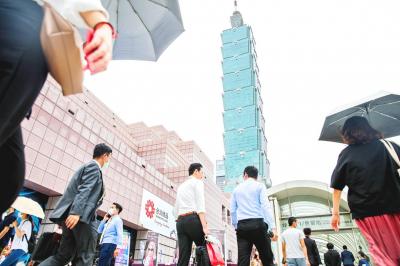
Japanese footwear brand Onitsuka Tiger today issued a public apology and said it has suspended an employee amid allegations that the staff member discriminated against a Vietnamese customer at its Taipei 101 store. Posting on the social media platform Threads yesterday, a user said that an employee at the store said that “those shoes are very expensive” when her friend, who is a migrant worker from Vietnam, asked for assistance. The employee then ignored her until she asked again, to which she replied: "We don't have a size 37." The post had amassed nearly 26,000 likes and 916 comments as of this

New measures aimed at making Taiwan more attractive to foreign professionals came into effect this month, the National Development Council said yesterday. Among the changes, international students at Taiwanese universities would be able to work in Taiwan without a work permit in the two years after they graduate, explainer materials provided by the council said. In addition, foreign nationals who graduated from one of the world’s top 200 universities within the past five years can also apply for a two-year open work permit. Previously, those graduates would have needed to apply for a work permit using point-based criteria or have a Taiwanese company
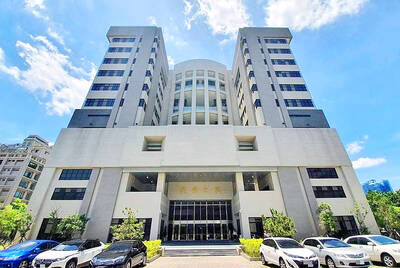
The Shilin District Prosecutors’ Office yesterday indicted two Taiwanese and issued a wanted notice for Pete Liu (劉作虎), founder of Shenzhen-based smartphone manufacturer OnePlus Technology Co (萬普拉斯科技), for allegedly contravening the Act Governing Relations Between the People of the Taiwan Area and the Mainland Area (臺灣地區與大陸地區人民關係條例) by poaching 70 engineers in Taiwan. Liu allegedly traveled to Taiwan at the end of 2014 and met with a Taiwanese man surnamed Lin (林) to discuss establishing a mobile software research and development (R&D) team in Taiwan, prosecutors said. Without approval from the government, Lin, following Liu’s instructions, recruited more than 70 software


 RSS
RSS