


Taiwan sought assistance in a proposed bid to join the UN Framework Convention on Climate Change (UNFCCC) as an “emissions entity,” a leaked US cable shows.
WikiLeaks on Thursday last week published a confidential cable dated Sept. 9, 2009, from the American Institute in Taiwan (AIT), which showed President Ma Ying-jeou (馬英九) and various officials had all directly raised the matter of Taiwan’s participation in the UNFCCC before the bid was made public with the AIT.
The cable shows that Taiwan was hoping the US could play a “helpful” role in supporting UNFCCC participation for the country, and proposed a strategy whereby Taiwan should take part in the mechanism as an “emissions entity” as opposed to a “state.”
This strategy was largely based on Taiwan’s success in joining international fisheries agreements as a “fishing entity” and aimed to circumvent the rule that only states could join the UNFCCC, the AIT cable quoted Paul Chang (章文樑), then the director-general of the Department of International Affairs at the Ministry of Foreign Affairs, as saying.
Environmental Protection Administration Minister Stephen Shen (沈世宏) told the AIT that Beijing objected to Taiwan’s participation in the UNFCCC because China did not have specific carbon emission reduction targets while Taiwan did, and that Taiwan’s positive stance and active participation in the UNFCCC would thus be an “embarrassment” to China, the cable says.
In a non-paper submitted to the AIT, Taipei said climate change was a transborder issue that required a global solution and it was therefore appropriate to define contributors to the problem (and solution) as “emissions entities,” rather than necessarily as states, the cable says.
The cable shows that the AIT was supportive of the “emissions entity” strategy to be used in Taiwan’s participation in international organizations “outside the UN system.”
“Based on precedent, Taiwan’s reliance on the ‘fishing entity’ argument may not work in the UN context ... Indeed, when Taiwan has attempted to join a UN fisheries agency as a ‘fishing entity,’ China has blocked Taiwan’s participation,” the AIT cable says.
“In cases where Taiwan has joined international organizations under apolitical nomenclature, such as an ‘economic entity’ in APEC or a ‘separate customs territory’ in the WTO, the apparent ‘red line’ of membership in a UN organization was not crossed,” it says.
The AIT said the “emissions entity” strategy could work for Taiwan in the context of international environmental organizations outside the UN system and was worth supporting to further Taiwan’s meaningful participation in global environmental forums.

Taiwanese can file complaints with the Tourism Administration to report travel agencies if their activities caused termination of a person’s citizenship, Mainland Affairs Council Minister Chiu Chui-cheng (邱垂正) said yesterday, after a podcaster highlighted a case in which a person’s citizenship was canceled for receiving a single-use Chinese passport to enter Russia. The council is aware of incidents in which people who signed up through Chinese travel agencies for tours of Russia were told they could obtain Russian visas and fast-track border clearance, Chiu told reporters on the sidelines of an event in Taipei. However, the travel agencies actually applied
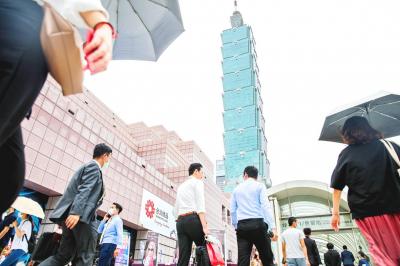
Japanese footwear brand Onitsuka Tiger today issued a public apology and said it has suspended an employee amid allegations that the staff member discriminated against a Vietnamese customer at its Taipei 101 store. Posting on the social media platform Threads yesterday, a user said that an employee at the store said that “those shoes are very expensive” when her friend, who is a migrant worker from Vietnam, asked for assistance. The employee then ignored her until she asked again, to which she replied: "We don't have a size 37." The post had amassed nearly 26,000 likes and 916 comments as of this

New measures aimed at making Taiwan more attractive to foreign professionals came into effect this month, the National Development Council said yesterday. Among the changes, international students at Taiwanese universities would be able to work in Taiwan without a work permit in the two years after they graduate, explainer materials provided by the council said. In addition, foreign nationals who graduated from one of the world’s top 200 universities within the past five years can also apply for a two-year open work permit. Previously, those graduates would have needed to apply for a work permit using point-based criteria or have a Taiwanese company
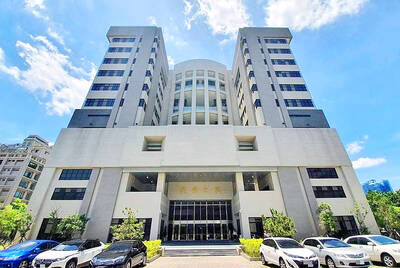
The Shilin District Prosecutors’ Office yesterday indicted two Taiwanese and issued a wanted notice for Pete Liu (劉作虎), founder of Shenzhen-based smartphone manufacturer OnePlus Technology Co (萬普拉斯科技), for allegedly contravening the Act Governing Relations Between the People of the Taiwan Area and the Mainland Area (臺灣地區與大陸地區人民關係條例) by poaching 70 engineers in Taiwan. Liu allegedly traveled to Taiwan at the end of 2014 and met with a Taiwanese man surnamed Lin (林) to discuss establishing a mobile software research and development (R&D) team in Taiwan, prosecutors said. Without approval from the government, Lin, following Liu’s instructions, recruited more than 70 software


 RSS
RSS