


A leaked US cable shows the American Institute in Taiwan (AIT) strongly suggested that the US grant Taiwan visa-waiver status, saying it was in Washington’s “national interests” and could fend off the “threat” to US predominance in Taiwanese society amid Taipei’s warming ties with Beijing.
Encouraging a process designed to bring Taiwan into the US’ Visa Waiver Program would advance fundamental US security, as well as commercial and political interests, AIT Director William Stanton said in a cable dated Oct 5, 2009, which was released by WikiLeaks on Thursday.
Describing Taiwan as “one of the most pro-United States places in the world,” Stanton said in the cable that “Taiwan has a highly literate, technologically advanced, and well-educated population, no links to terrorism, a low rate of fraud related to US visas and immigration, and strong commercial, travel and educational links to the United States.”
The cable said the de facto US embassy established a working group, chaired by AIT Deputy Director Eric Madison and coordinated by the consular section chief and including other offices and agencies, to develop a strategy and oversee the AIT’s engagement on the visa-waiver issue.
If Taiwan showed progress in key areas of concern, including personal appearances for passport applications and improved mechanisms for reporting lost and stolen passports, the US should designate Taiwan as an official candidate for its visa-waiver program, the cable said.
One of the reasons cited by the AIT to advocate Taiwan’s inclusion in the program was to strengthen US-Taiwan ties to prevent Taiwan from becoming overly dependent on China.
China’s rising economic importance and the relaxation of tensions between Taipei and Beijing had threatened the US’ predominance in Taiwanese society, the cable said.
“One result of this [cross-strait] rapprochement is that, in the little more than one year since Taiwan and China agreed to direct cross-Strait flights, there are now 270 such flight [sic] each week ... We should be concerned, however, that it is now easier and cheaper for people here to obtain a travel document to visit the PRC [People’s Republic of China] than to apply for a US visa,” the cable said.
Another cable dated Oct. 2, 2009, showed Stanton advocating for Washington to begin negotiations with Taiwan on an extradition agreement.
“Starting extradition agreement negotiations as soon as possible would advance key US law enforcement interests and, perhaps just as important, would serve as a low-risk way to underscore our commitment to strong ties with Taiwan,” Stanton said.
He said that President Ma Ying-jeou (馬英九) had made clear that a stronger US-Taiwan relationship was essential to his effort to reduce tensions with China, the Oct. 2 cable showed.
“The other items on Ma’s ‘short list’ — acquiring F-16C/Ds, negotiating an FTA [free-trade agreement] and gaining entry to the Visa Waiver Program — may be more difficult to achieve in the near future,” it said.

Taiwanese can file complaints with the Tourism Administration to report travel agencies if their activities caused termination of a person’s citizenship, Mainland Affairs Council Minister Chiu Chui-cheng (邱垂正) said yesterday, after a podcaster highlighted a case in which a person’s citizenship was canceled for receiving a single-use Chinese passport to enter Russia. The council is aware of incidents in which people who signed up through Chinese travel agencies for tours of Russia were told they could obtain Russian visas and fast-track border clearance, Chiu told reporters on the sidelines of an event in Taipei. However, the travel agencies actually applied
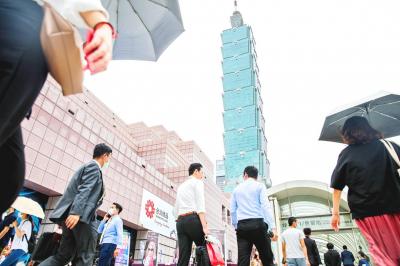
Japanese footwear brand Onitsuka Tiger today issued a public apology and said it has suspended an employee amid allegations that the staff member discriminated against a Vietnamese customer at its Taipei 101 store. Posting on the social media platform Threads yesterday, a user said that an employee at the store said that “those shoes are very expensive” when her friend, who is a migrant worker from Vietnam, asked for assistance. The employee then ignored her until she asked again, to which she replied: "We don't have a size 37." The post had amassed nearly 26,000 likes and 916 comments as of this

New measures aimed at making Taiwan more attractive to foreign professionals came into effect this month, the National Development Council said yesterday. Among the changes, international students at Taiwanese universities would be able to work in Taiwan without a work permit in the two years after they graduate, explainer materials provided by the council said. In addition, foreign nationals who graduated from one of the world’s top 200 universities within the past five years can also apply for a two-year open work permit. Previously, those graduates would have needed to apply for a work permit using point-based criteria or have a Taiwanese company
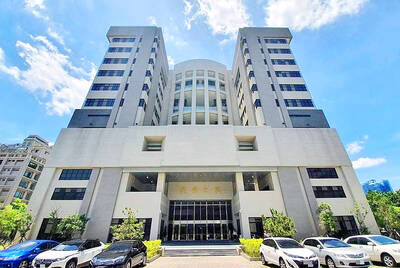
The Shilin District Prosecutors’ Office yesterday indicted two Taiwanese and issued a wanted notice for Pete Liu (劉作虎), founder of Shenzhen-based smartphone manufacturer OnePlus Technology Co (萬普拉斯科技), for allegedly contravening the Act Governing Relations Between the People of the Taiwan Area and the Mainland Area (臺灣地區與大陸地區人民關係條例) by poaching 70 engineers in Taiwan. Liu allegedly traveled to Taiwan at the end of 2014 and met with a Taiwanese man surnamed Lin (林) to discuss establishing a mobile software research and development (R&D) team in Taiwan, prosecutors said. Without approval from the government, Lin, following Liu’s instructions, recruited more than 70 software


 RSS
RSS